CIVISA Raises Faial-Pico Channel Volcanic Alert to V1 at 12:06 on Saturday 16 May as Seismicity Climbs Along the Madalena-Lagido Submarine Line — Cachorro System Under Eight-Day Watch
CIVISA raised the Faial-Pico channel volcanic alert from V0 to V1 at 12:06 on Saturday 16 May 2026 as low-magnitude seismicity returned to the Madalena-Lagido submarine line. The watch holds for eight days; the Cachorro Submarine Volcanic System is the structure under observation.
The Centro de Informação e Vigilância Sismovulcânica dos Açores (CIVISA) raised the volcanic alert level for the Faial-Pico submarine channel from V0 to V1 at 12:06 on Saturday 16 May 2026, citing a renewed run of low-magnitude seismicity along the same NE-SW structural line that took the alert to V1 in early April before it was rolled back to V0. The V1 classification — "system in metastable equilibrium" — flags weak activity slightly above reference levels of tectonic, hydrothermal and/or magmatic origin and remains in force for eight days unless new information triggers a review.
Where the activity sits
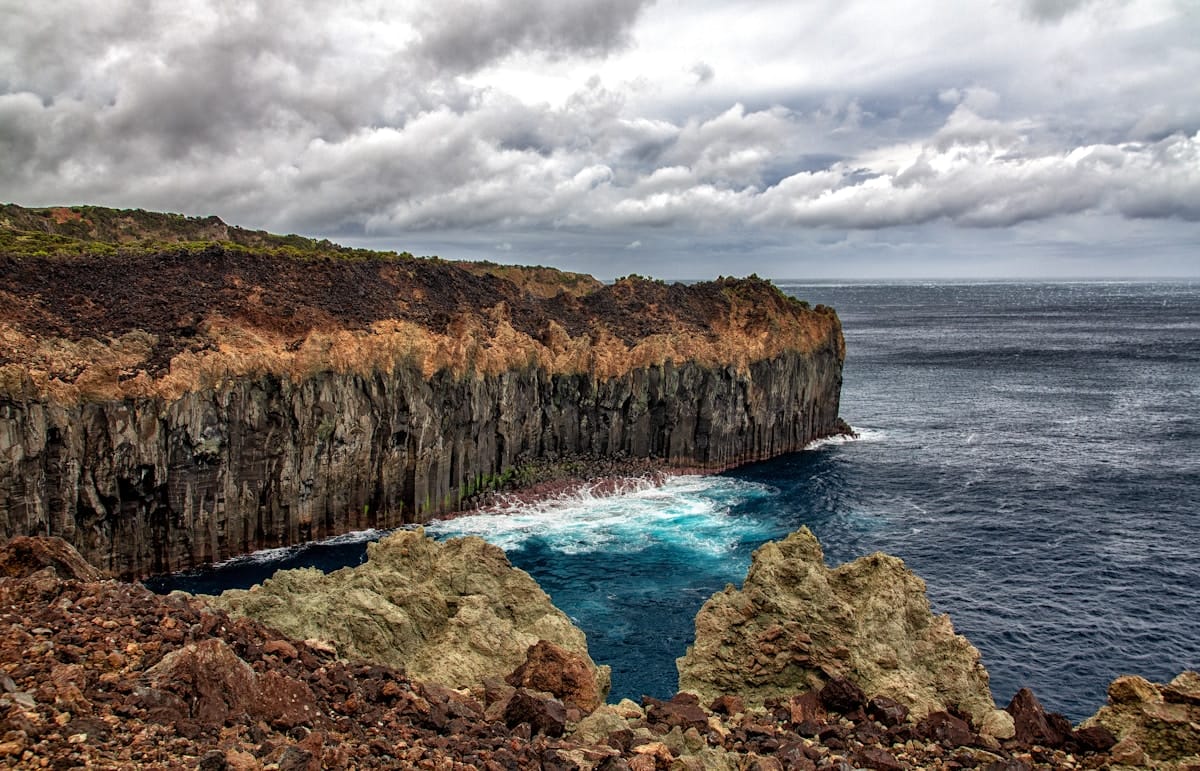
The flagged structural line runs from west of Madalena, on the western shore of Pico, to north of Lagido, on the southern coast of Faial — the seabed corridor that hosts the Cachorro Submarine Volcanic System. CIVISA's note repeats the standing warning that a submarine eruption in this system could occur without other detectable surface signs, which is why an alert escalation here moves faster than the surface-volcano protocol.
The April episode that first took the channel to V1 began on 1 April with a swarm of low-magnitude tremors along the same line. A magnitude 3.0 quake felt on the islands of Pico and Faial at 02:13 on the Wednesday of that week — epicentre roughly seven kilometres northwest of Bandeiras (Madalena) — was the strongest single event of the spring. CIVISA stepped the alert back to V0 once activity returned to reference levels; today's note signals that the line has woken up again.
What V1 means in practice
V1 is a watch level, not an evacuation order. The Serviço Regional de Proteção Civil e Bombeiros dos Açores (SRPCBA) keeps a precautionary posture and CIVISA's monitoring network shifts to a higher cadence on the channel's stations. No civil-protection restrictions on residents, ferry traffic on the Faial-Pico crossing, or coastal access have been issued at the V1 level. The alert auto-expires in eight days unless extended.
The Volcanic Alert Scale used by CIVISA runs V0 (reference levels), V1 (metastable equilibrium), V2 (elevated activity), V3 (eruption probable in days/weeks) and V4 (eruption in progress). The system has only crossed V1 in the Central Group a handful of times in the past two decades; today's escalation is the second in the Faial-Pico channel in six weeks.
Why expats on Pico and Faial should care — but not panic
For residents of Madalena, São Roque, Lajes do Pico, Horta and the broader Faial-Pico crossing, V1 is the signal to keep IPMA's seismic feed and CIVISA's boletins within easy reach — and to register with the local câmara's emergency contact list if you have not already done so. The Cachorro system has not erupted in historical time, but the geological record of the channel includes the 1957-58 Capelinhos eruption on the western edge of Faial, which created an entire new headland and triggered emergency emigration to North America under the Azorean Refugee Acts.
Ferry operator Atlânticoline continues to run the regular Horta-Madalena schedule. The Aeroporto da Horta and Aeroporto do Pico are operating to plan. The Portugal Brief will watch CIVISA's next bulletin and SRPCBA's posture and flag any move toward V2 or any civil-protection action affecting the channel.