Chega Urges the Government to Track a University Study Into Contamination Around the Azores' Lajes Air Base
The long-running question of what decades of military fuel storage have left in the ground around the Lajes Air Base has returned to Portugal's Parliament. Chega, the third-largest party in the Assembleia da República (Assembly of the Republic), has...
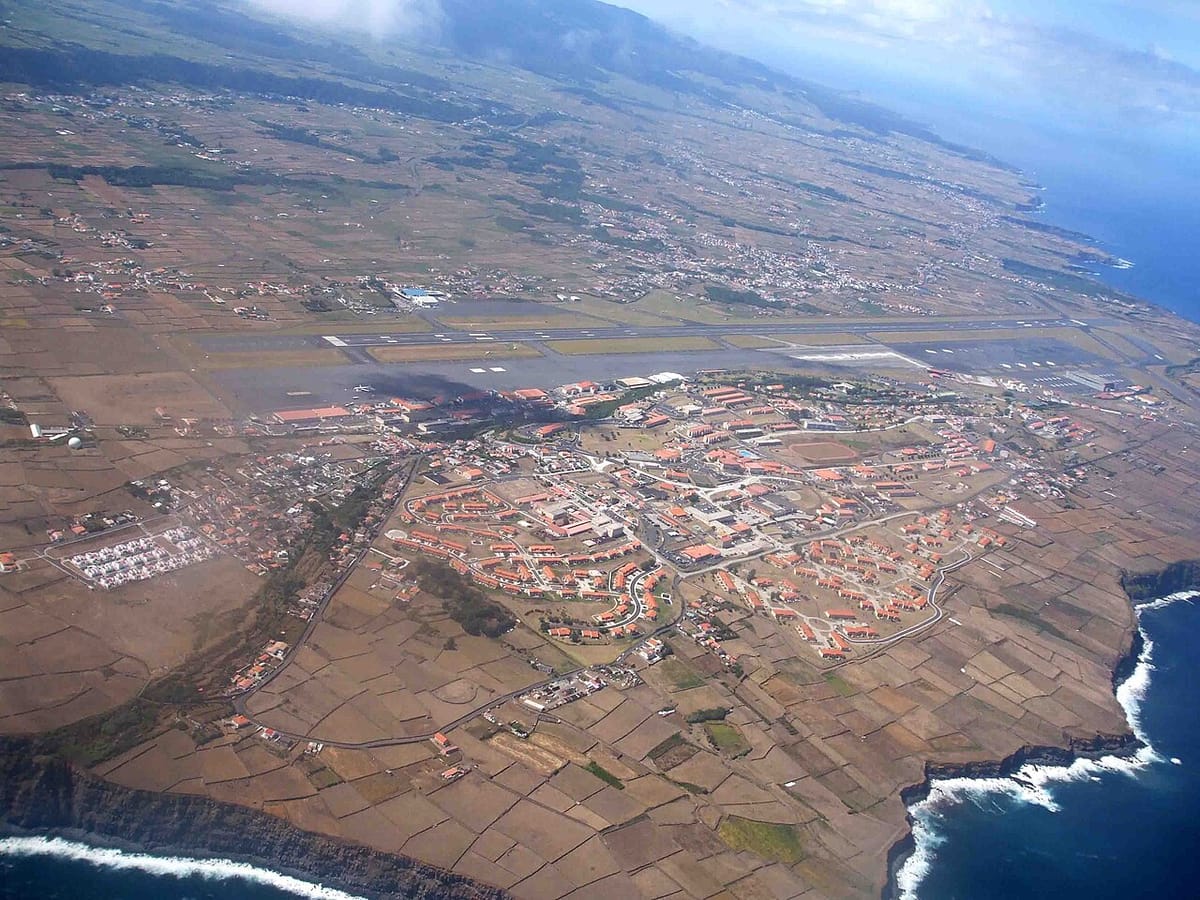
The long-running question of what decades of military fuel storage have left in the ground around the Lajes Air Base has returned to Portugal's Parliament. Chega, the third-largest party in the Assembleia da República (Assembly of the Republic), has tabled a recommendation urging the government to formally track a new University of Coimbra (Universidade de Coimbra) study into contamination around the base, on the Azorean island of Terceira, and to keep lawmakers informed of what it finds.
The party wants the government to request the study's data, methodology and conclusions from the university, to coordinate the work of the relevant state departments, and to report back to Parliament. Chega deputy Ana Martins said the oversight should be carried out "with rigour, transparency and a sense of responsibility on the part of the State" — language that reflects long-standing frustration in Praia da Vitória, the town next to the base, over how slowly the contamination issue has moved.
The concern is not new. Soil and aquifer contamination linked to the storage and handling of fuels and other pollutants at the base was first identified in 2005 and confirmed in 2009, with monitoring beginning in 2012. A March 2025 investigation found elevated concentrations of heavy metals in the population of Praia da Vitória, which researchers said was "probably due to environmental contamination from the Lajes base." The Azores regional government has since announced its own epidemiological study, and an independent technical commission is due to begin work on 1 January 2027.
Running underneath the science is a diplomatic knot. Lajes Field is operated under the Acordo de Cooperação e Defesa (Cooperation and Defence Agreement) between Portugal and the United States, and the American military's presence there has shrunk dramatically over the past decade. Between 2020 and 2022, Washington declined to carry out remediation work, arguing the contamination posed no health risk — a position that has done little to reassure local residents or regional officials.
The political pressure is cross-party. Artur Lima, vice-president of the Azores regional government, and António Lima, a deputy for the Bloco de Esquerda (Left Bloc), have both pressed for firmer action, and the issue cuts across the usual left-right divide because it touches residents' health, environmental liability and the terms of a security relationship with a major ally. For the roughly 20,000 people of Praia da Vitória, the immediate question is narrower and more personal: whether the studies now under way will finally establish what is in their soil and water, who is responsible, and who will pay to clean it up.