Campolide Parish Will Cover Up to 60 Percent of Small Home Repairs for Low-Income Residents, Capped at 2,500 Euros a Job
A new Campolide parish regulation helps low-income residents pay for leaking roofs, unsafe wiring, broken windows and other small repairs. Who qualifies, what is covered, and how the refund works.
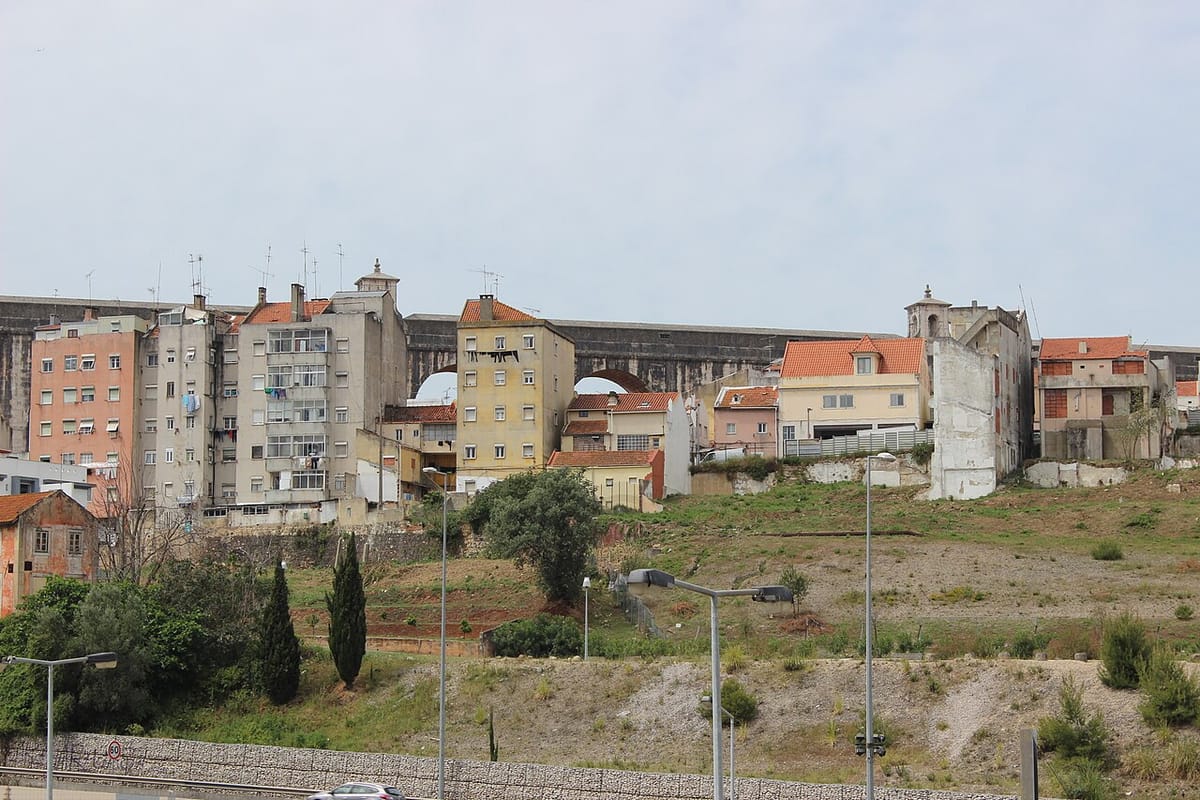
Low-income residents of Campolide, the Lisbon parish crossed by the Águas Livres aqueduct, can ask their junta de freguesia (parish council) for help paying for small repairs to their homes. The Regulamento de Pequenas Obras em Habitações (Small Home Repairs Regulation) was published in the Diário da República (the official gazette) on 22 October as Regulamento n.º 1422/2026.
The parish can pay up to 60 percent of the cost, with a ceiling of 2,500 euros per job. It can also supply materials or services, or give technical help. Applications are, as a rule, open all year.
What work is covered
The scheme is for small repair, conservation or adaptation work that removes a risk, damp or other unhealthy conditions. The regulation lists, among others:
- repairing roofs and stopping leaks that affect health or safety;
- repairing or replacing essential bathroom fittings;
- essential repairs to water pipes, drains and their connections inside the home;
- essential repairs to electrical wiring inside the home where it is a safety risk;
- repairing or replacing doors and windows for safety, to keep water out or for minimum insulation;
- essential accessibility work inside the home.
It does not pay for new building, extensions, cosmetic or luxury work, homes that are not a main residence, or work that needs specific council planning permission. Work finished before the parish approves the application is not covered, except in exceptional cases the parish accepts.
Who can apply
Applicants must meet all of these conditions:
- live permanently in Campolide, in the home to be repaired, and occupy it lawfully (as owner or tenant, for example);
- have no other home, nor anyone in the household, in the Lisbon Metropolitan Area or a neighbouring municipality;
- receive no other housing support or benefit for the same purpose;
- have a household income per person no higher than half the IAS, the Indexante dos Apoios Sociais (Social Support Index).
The IAS is 537.13 euros in 2026, under Portaria n.º 480-A/2025/1, so the limit works out at 268.57 euros per household member. The regulation does not set out how income is counted, so check with the parish before applying. Our guide to the IAS explains how this index sets thresholds for many Portuguese benefits.
Priority goes to safety risks, unhealthy conditions that affect health, and households with older people, disabled or dependent people, people with a chronic illness, or children.
Tenants and landlords
Tenants may be asked for the owner's permission. The parish can also contact the landlord to find out why the repairs were not done, for example because rent was unpaid or the home was misused.
How the money is paid
- You pay at least 40 percent. Support never covers the full cost.
- The cash part is a refund. It is paid by bank transfer after the work is finished, on invoices in the applicant's name, proof of payment and photographs or a parish inspection.
- If you cannot pay up front, the parish can provide materials or services instead.
- Once every two years: each home and household can receive support only once in any two-year period.
Applications are made on the parish's own form, in person or online. They need proof of identity and residence, the right to occupy the home, income documents, a description and photographs of the problem, ideally two quotes, the owner's authorisation where needed, and an IBAN for the refund. Support depends on the parish's budget. False statements or misuse of the support can lead to repayment with interest and a temporary ban on applying again.
The parish executive approved the regulation on 22 June and the parish assembly on 13 July.