Building a New Home in Portugal Cost 7.5 Percent More in August Than a Year Earlier, the Steepest Climb Since February 2023
Materials rose 7.1 percent and labour 8.0 percent, with diesel and copper wire up about 30 percent and not one tracked material cheaper. The INE also revised July down to 6.5 percent.
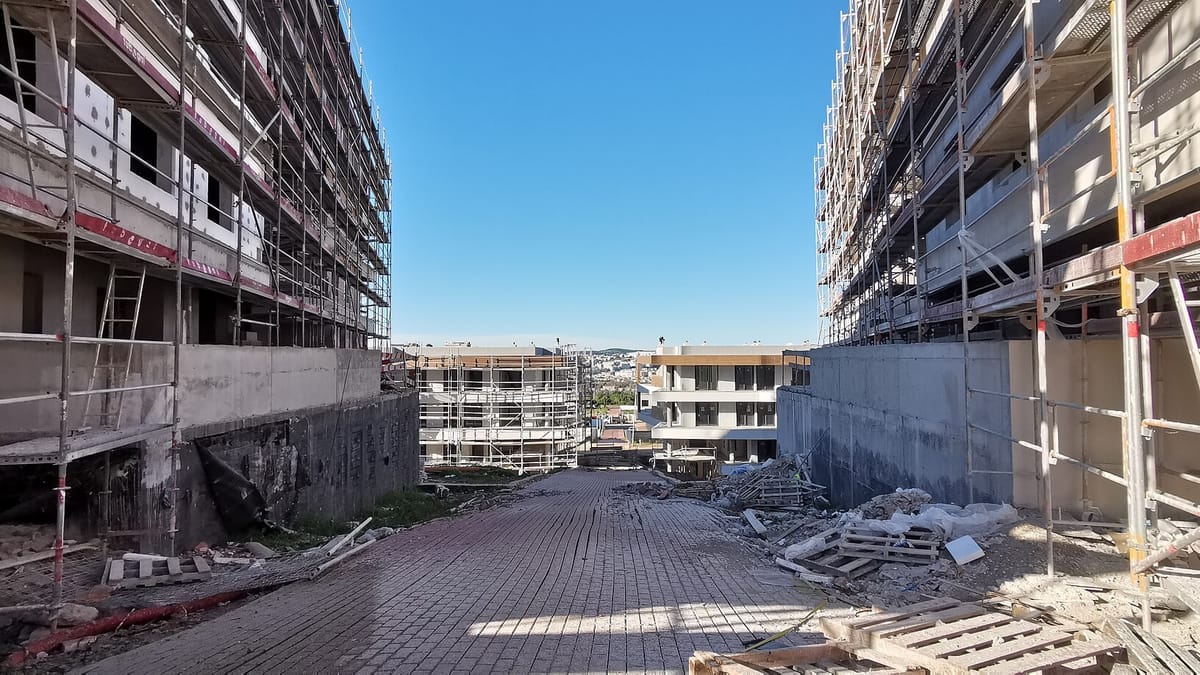
The cost of building a new home in Portugal rose 7.5 percent in August compared with a year earlier, the Instituto Nacional de Estatística (National Statistics Institute, INE) said on Friday. That is the fastest annual rise since February 2023, when the index was climbing 9.3 percent, and a full percentage point above July.
Both halves of the bill went up faster. Materials cost 7.1 percent more than a year before, against 6.3 percent in July and only 0.9 percent in August 2025. Labour costs rose 8.0 percent, up from 6.8 percent.
Diesel and copper lead the rise
The INE singles out the materials that pushed the index up most. Diesel and bare and coated copper wire were both about 30 percent dearer than a year earlier. PVC pipes were up about 20 percent. Wall and floor tiles, external thermal insulation systems, and steel and cast iron pipes and plumbing fittings were about 15 percent dearer. None of the materials the INE tracks was cheaper than a year before.
Labour and materials contributed almost equally to the annual rate: 3.7 points from labour and 3.8 points from materials. In the index, materials carry a weight of 56 and labour 44.
From July to August alone, costs rose 0.5 percent, after a 0.2 percent fall the month before. Labour rose 0.6 percent in the month and materials 0.4 percent.
A third above 2021
The index stood at 134.88 in August, on a base of 2021 equal to 100, so building a new home now costs about 35 percent more than it did on average in 2021. Over the last 12 months, costs have risen 5.6 percent on average, with labour up 8.0 percent and materials 3.6 percent.
The trend has steepened through 2026. The annual rate was 4.2 percent in January, 5.9 percent in March and 6.9 percent in May. Most of that acceleration came from materials, whose annual rise went from 1.2 percent in January to 7.1 percent in August, while labour costs have been climbing at 7 to 9 percent a year throughout.
July was revised down
The INE publishes the index about 40 days after the end of each month and revises it twice, because the labour data are administrative and arrive late. The first estimate for July, which we reported in September as a slowdown to 6.8 percent, has now been revised to 6.5 percent, with labour cut from 7.3 to 6.8 percent. The August figures are a first estimate and may change in the same way.
The index measures what it costs a builder to put up a residential building, not what buyers pay for a finished home. Rising costs feed into the price of new homes and into the cost of the state's own housing programmes. Developers have already lined up large schemes this autumn, such as Thomas Piron's 432 million euros for three housing schemes, led by 700 flats in Sacavém.