Banco de Portugal Pegs the Decade's Housing-Construction Shortfall Near 300,000 Homes — 2025 Closes the Demographic-Supply Gap for the First Time in 11 Years as Santos Pereira Preaches 'Supply, Supply, Supply'
The Banco de Portugal's June bulletin puts the decade's accumulated housing-construction deficit near 300,000 homes — but 2025 finally tipped supply ahead of demographic demand for the first time in 11 years.

Portugal spent a decade building too few homes, and the bill now runs to roughly 300,000 missing dwellings. That is the headline estimate in the Banco de Portugal's (Bank of Portugal) June Economic Bulletin, which quantifies the gap that opened up over ten years between the homes the country built and the households it actually formed. Governor Álvaro Santos Pereira put the figure in blunt terms: the shortfall is equivalent to “practically all of Lisbon's housing stock plus double Porto's.”
Yet the bulletin's more striking finding is that the slide has, for now, stopped. In 2025, new supply finally pulled ahead of demographic demand for the first time in 11 years — the first positive annual balance in over a decade. The accumulated deficit does not vanish in a single year, the central bank cautions, but the direction of travel has reversed.
What turned the tide
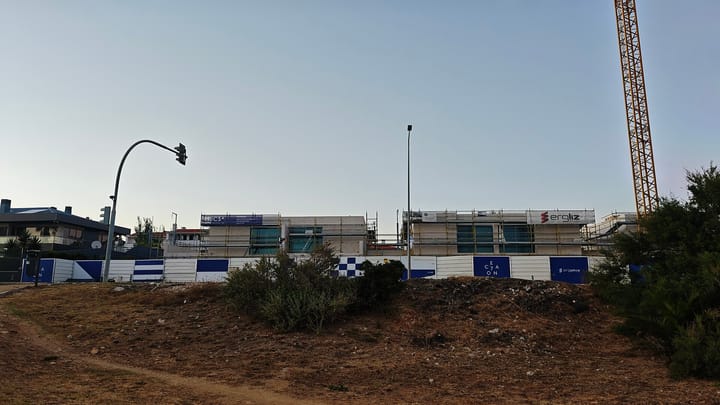
Two forces did the work. The first was a sharp cooling in migration: net immigration fell from around 13,200 people a month in 2024 to about 6,200 in 2025, roughly halving the pace at which new households were forming. The second was a genuine pick-up in building. Some 26,700 homes were completed during the year, while 41,900 new construction licences were issued — the highest licensing total since 2008. After years in which demand consistently outran the cranes, the two lines finally crossed.
The price record behind the squeeze remains stark. House prices climbed 86% between 2019 and 2025, even as the stock of housing loans grew just 22.2% — a sign that buyers leaned on savings and equity rather than leverage. Between 2017 and 2024, median sale prices per square metre rose 88% and rents 81%. The Banco de Portugal reads that near-parallel movement of prices and rents as evidence of supply-and-demand fundamentals at work rather than a speculative bubble inflating ahead of incomes.
The constraints on building, however, are stubborn. The bulletin lists slow and unpredictable licensing, a shortage of available land, rising material costs — construction costs accelerated 5.9% in April 2026 — and a chronic labour squeeze. The sector's dependence on foreign workers has surged: 32% of construction workers were foreign-born in 2025, against just 6% in 2010. It is also highly fragmented, with 98% of firms classified as micro or small enterprises, limiting the scale needed to deliver large projects quickly.
The Governor's prescription was a single word, repeated: “our focus must be supply, supply, supply.” The bank made a particular case for social and cooperative housing, arguing that countries with a larger public housing base tend to be more resilient to economic shocks and less vulnerable to speculation, while easing pressure on rents and improving labour mobility. The 2025 reversal shows the gap can be closed. Whether Portugal can keep building fast enough to chip away at a 300,000-home backlog — rather than merely stop it growing — is the test of the years ahead.