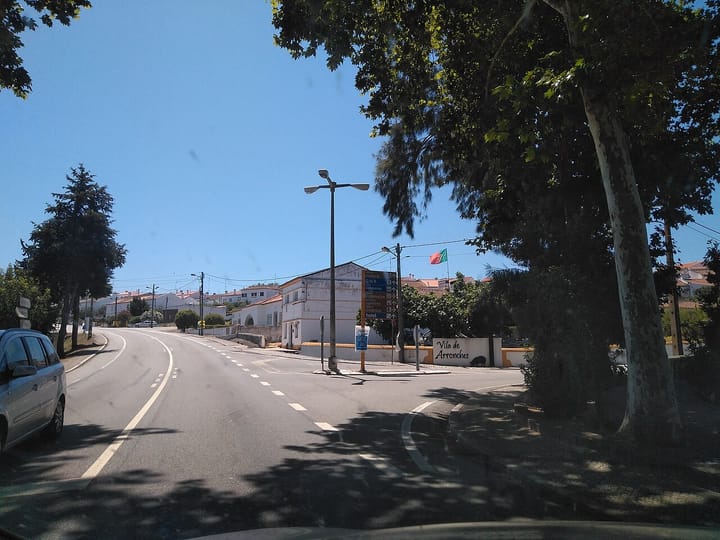
Assembleia da República Reaches Cross-Bench Consensus on Reopening the Linha do Corgo — 96-Kilometre Régua-Vila Real-Chaves Trás-os-Montes Spine Last Operated in 2009 Heads Back to the Plano Ferroviário Nacional Pipeline
The Comissão de Infraestruturas, Mobilidade e Habitação closed its 7 June hearing on the Linha do Corgo reopening petition with cross-bench support — left wants an accelerated calendar, right wants viability studies first, and each party now files a resolution project for the plenary vote.
The Comissão de Infraestruturas, Mobilidade e Habitação (Commission on Infrastructure, Mobility and Housing) of the Assembleia da República (Assembly of the Republic) closed the parliamentary hearing on the Linha do Corgo (Corgo Line) reopening petition with unanimous cross-bench support — a rare alignment from the far-left Bloco de Esquerda and PCP to the centre-right PSD, CDS-PP and Iniciativa Liberal and the far-right Chega — although deputies split on tempo. The petition, filed by Daniel Conde, a self-described transmontano raiano (border-region native of Trás-os-Montes), carries over 1,068 signatures defending the full reopening of the 96-kilometre Régua-Vila Real-Chaves spine that ran continuously from 1921 until two stage-wise closures in 1990 (Vila Real-Chaves, Cavaco Silva government) and 2009 (Régua-Vila Real, Sócrates government under State Secretary for Transport Ana Paula Vitorino).
The cross-bench split: where the consensus actually sits
The PS rapporteur, deputy José Carlos Barbosa — himself a railway-company employee in his pre-parliamentary career — prepared the commission report endorsing the reopening principle. The left bloc (BE, PCP, Livre and PAN inside the Geringonça-adjacent track) pushed for an accelerated reopening calendar without further études supplémentaires, anchoring the political argument in the original 2009 closure document that promised modernisation 'within five years' and never delivered. The right bloc (PSD, CDS-PP, IL) and Chega supported the reopening principle but pushed back on the timeline, insisting on a fresh estudo de viabilidade técnica, ambiental e territorial (technical, environmental and territorial viability study) before construction commitments. The procedural follow-on: each party now files a separate projeto de resolução (resolution project) for plenary voting, with an Assembly-level resolution carrying political — not legally binding — weight on the Government to advance the file.
The 96-kilometre line and the 1990 / 2009 stage-wise closures
The Linha do Corgo reached Vila Real in 1906 and Chaves in 1921 as a metric-gauge (via reduzida) branch off the Linha do Douro at the Régua railway junction. The northern Vila Real-Chaves section was closed in 1990 under the Cavaco Silva administration on operating-cost grounds; the remaining Régua-Vila Real section was closed in March 2009 under the Sócrates government, citing safety conditions on the metric-gauge infrastructure and bridge-load uncertainty. The closure note promised electrification, broad-gauge regauging and modernisation within a five-year horizon — none of which materialised across the four government cycles that followed. The disused apeadeiros (small stations) and estações (main stations) were partially repurposed: the Câmara Municipal de Chaves (Chaves City Council) confirmed in March 2026 that the dormant Chaves-area station buildings will become alojamento turístico (tourist accommodation) under a concession contract scheduled to open in Q3 2026, a parallel-track repurposing that the petition's defenders argue does not preclude rail reactivation on the same right-of-way.
The Plano Ferroviário Nacional frame
The reopening sits inside the Plano Ferroviário Nacional (PFN, National Railway Plan) approved by the Conselho de Ministros (Council of Ministers) in 2022 under the António Costa government and partially restated in the current PRR (Plano de Recuperação e Resiliência, Recovery and Resilience Plan) rail envelope. The PFN explicitly contemplates a viability study for the full Régua-Vila Real-Chaves corridor on a 71.4-kilometre metric-gauge alignment (a shorter routing than the historical 96-km path), with a placeholder budget line inside the Infraestruturas de Portugal (IP) ferrovia capex programme. The petition's significance is procedural: an Assembly-level resolution would shift the file from PFN-study horizon to active project pipeline, with IP carrying the design contract and the Ministério das Infraestruturas the financing.
The Trás-os-Montes connectivity argument the petitioner anchored
Daniel Conde's petition argument lands on two pillars. First, the demographic and economic decline of the Vale do Corgo (Corgo Valley) and Alto Trás-os-Montes corridor — a region that has lost roughly 35% of its population since the 1990 first-stage closure, per INE (Instituto Nacional de Estatística, National Statistics Institute) census data. Second, the case for the Universidade de Trás-os-Montes e Alto Douro (UTAD, University of Trás-os-Montes and Alto Douro) at Vila Real, which has expanded student enrolment to over 8,500 over the same period and currently relies entirely on the Rodonorte regional bus network for student mobility from the Régua railhead onward. Conde's argument is that a reopened Linha do Corgo would shift roughly 4,000 daily student trips from road to rail at the Régua-Vila Real-Chaves spine, with first-order knock-on effects on Vila Real's housing market and UTAD's catchment area for students from the Lisbon and Porto metropolitan rings.
The Linha do Douro tie-in and the broader Trás-os-Montes pipeline
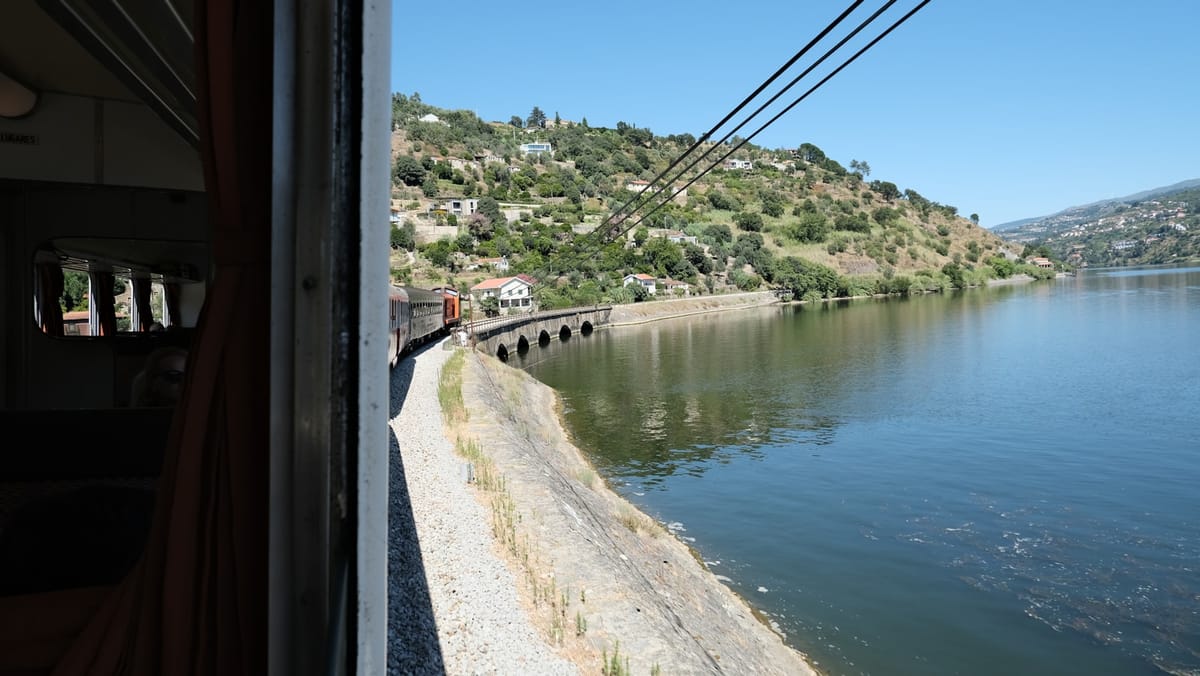
The Linha do Corgo branches off the Linha do Douro at Régua, the same line whose recently-restored Pocinho extension reopened in 2023 and whose long-trailed Pocinho-Barca de Alva-Salamanca cross-border re-opening sits in the Spanish ADIF and Portuguese IP joint working group for late-2027 service launch. A reopened Linha do Corgo would therefore feed a Régua transfer node that connects to (i) a Porto-bound Linha do Douro service every two hours, (ii) the planned cross-border Pocinho-Salamanca route via Vilar Formoso, and (iii) the cargo-side regauging of the Linha do Norte to UIC-standard at the Régua interchange. The petition's deepest second-order argument is that the Corgo reopening is the missing northbound branch in a coherent Trás-os-Montes rail spine that has otherwise advanced piecemeal. On the rail and interior-mobility side of the file, Parliament's push to reopen the Corgo railway sets the latest reference.
What this means for residents and observers
- Vila Real- and Chaves-resident commuters and students: No immediate change. The plenary vote on resolution projects is the next checkpoint; if passed, the Government carries political (not legal) weight to advance the IP design contract. Operational service launch sits years out — a 2030+ horizon on the most optimistic resolution-to-construction reading.
- Property and housing-market observers: The reopening signal — even at the resolution-vote stage — has historically anchored Vila Real and Régua property markets. The 2022 PFN announcement preceded a 14% Vila Real residential price increase over the next two years per Confidencial Imobiliário; a parliamentary resolution is the next material catalyst.
- UTAD-affiliated students and faculty: The university administration backed the petition in writing in March 2026, framing the reopening as a structural mobility win for the catchment. Watch for an Assembly resolution that would unlock the IP design contract on the Régua-Vila Real first phase.
- Trás-os-Montes regional economy: The Comunidade Intermunicipal do Alto Tâmega e Barroso (CIM-ATB, Intermunicipal Community of Alto Tâmega and Barroso) and the Câmara Municipal de Chaves are the load-bearing local political actors; both have formally backed the reopening. The procedural read is that local-level political weight is aligned with the parliamentary consensus.
- Cross-border rail watchers: The Corgo reopening, if advanced, would close one of three missing branches in a coherent northern-Portuguese cross-border rail spine — alongside the Pocinho-Salamanca file and the long-trailed Tâmega line file. The three together form the long-promised 'Iberian rail re-integration' programme that has stalled at the political-will leg for over a decade.