Asked What Each of 2025's Megafires Cost, Civil Protection Could Produce Only One Number for the Whole Year
Parliament's independent commission on the August 2025 wildfires asked what each one cost. The ANEPC could supply only an annual aggregate of about €18.8 million. No cost per fire, per expense type or per operational phase exists, and the command post's finance cell was never activated.
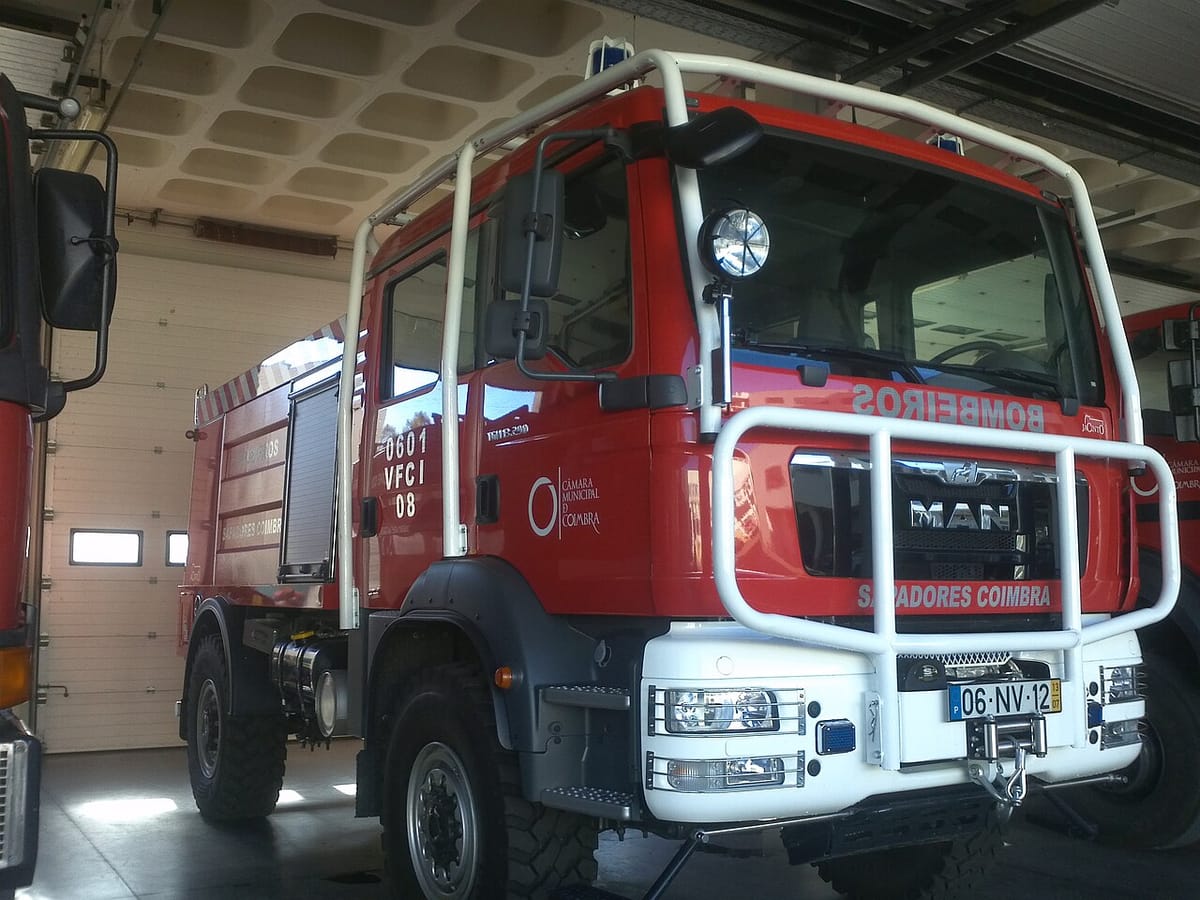
Parliament's independent commission on the August 2025 wildfires asked a simple question and could not get an answer: how much did each of the big fires cost? The Autoridade Nacional de Emergência e Proteção Civil (National Emergency and Civil Protection Authority) supplied one figure, roughly €18.8 million in extraordinary expenditure for the whole of 2025, and confirmed that it holds nothing more granular. There is no way, from the state's own records, to say what any individual fire cost the taxpayer.
The finding sits in the report of the Comissão Técnica Independente (Independent Technical Commission), created by Lei n.º 5/2026 with twelve members nominated by parliamentary groups, the universities, the polytechnics and the municipal and parish associations. It was installed on 22 April. ECO reported the cost passage on Monday.
1,720 pages of paperwork and no usable number
The commission read eleven full occurrence reports covering 1,720 pages. Of those, 209 pages, twelve percent of the total, dealt purely with the administrative processing of extraordinary expenses, damages and their validation. One fire generated 79 pages of it.
So the paperwork exists in volume. What does not exist is any mechanism to read it. The commission's table of what it could and could not obtain is stark. Available: the annual total of extraordinary expenses, and the DECIR 2025 spend by receiving organisation. Not available: the cost of any single fire, the cost by type of expense, the cost by phase of the operation, and any link between money spent and either the resources deployed or the result achieved.
The commission also notes that the Sistema Integrado de Operações de Proteção e Socorro (Integrated System of Protection and Relief Operations) already provides for a finance cell inside the operational command post. In the eleven fires examined, it was never stood up.
Why this is more than a bookkeeping complaint
Most of the ANEPC's budget is not spent by the ANEPC. It is redistributed to the agents of the system, above all to the corpos de bombeiros (fire brigades), and that is precisely the money the commission could not trace back to a specific fire. Without the trace there is no way to weigh aircraft hours against ground crews, and no evidence base for the next reform.
The scale is not small. August 2025 alone brought 8,256 fires and 271,587 hectares burned. Across the eleven fires examined, 2,557 separate damage records were logged for equipment sent to the fireground, more than a third of them at Piódão, in Arganil.
This year has gone far better on the ground. To mid-August, ICNF counted 6,572 rural fires burning 60,572 hectares, against 5,824 fires and 245,760 hectares in the same window of 2025: more ignitions on roughly a quarter of the area. Even so, 2026 ranks fifth worst of the decade, and the first serious rain has now landed on the burn scars.
What this means for residents
- Budget debates will stay unanchored. The ANEPC has argued for a substantially larger budget, but without per-fire costing neither the request nor any objection to it can be tested against evidence.
- Volunteer brigades carry the float. Reimbursement of extraordinary expenses runs through the same unstructured process, which is one reason payments to bombeiros have historically arrived months late.
- Expect the Tribunal de Contas (Court of Auditors) to take an interest. The commission's wording, that the gap restricts transparency in the use of public resources, is standard audit-trigger language.
- Nothing here changes the response you get. This is an accountability failure after the fact, not a gap in the firefighting.
The commission was not asked to cost the fires; it says so explicitly. It went looking anyway, found the state could not tell it, and put that in the report. Whether the plumbing between the financial systems and the operational ones ever gets connected is the practical test of whether the inquiry changed anything.