APA Reads National Reservoir Storage at 92% Average in Mid-2026 — Bravura Crosses 99%, Storm-Driven Recharge Erases the Algarve-Alentejo Deficit and an Above-Normal Heat Outlook Recasts the Hydro and Bathing-Season Setup
APA's mid-June 2026 read prints national reservoir storage at a 92% average — Bravura at 99% — the best position on the SNIRH series. Inside the recharge, what it means for hydro, irrigation and the IPMA above-normal summer outlook.
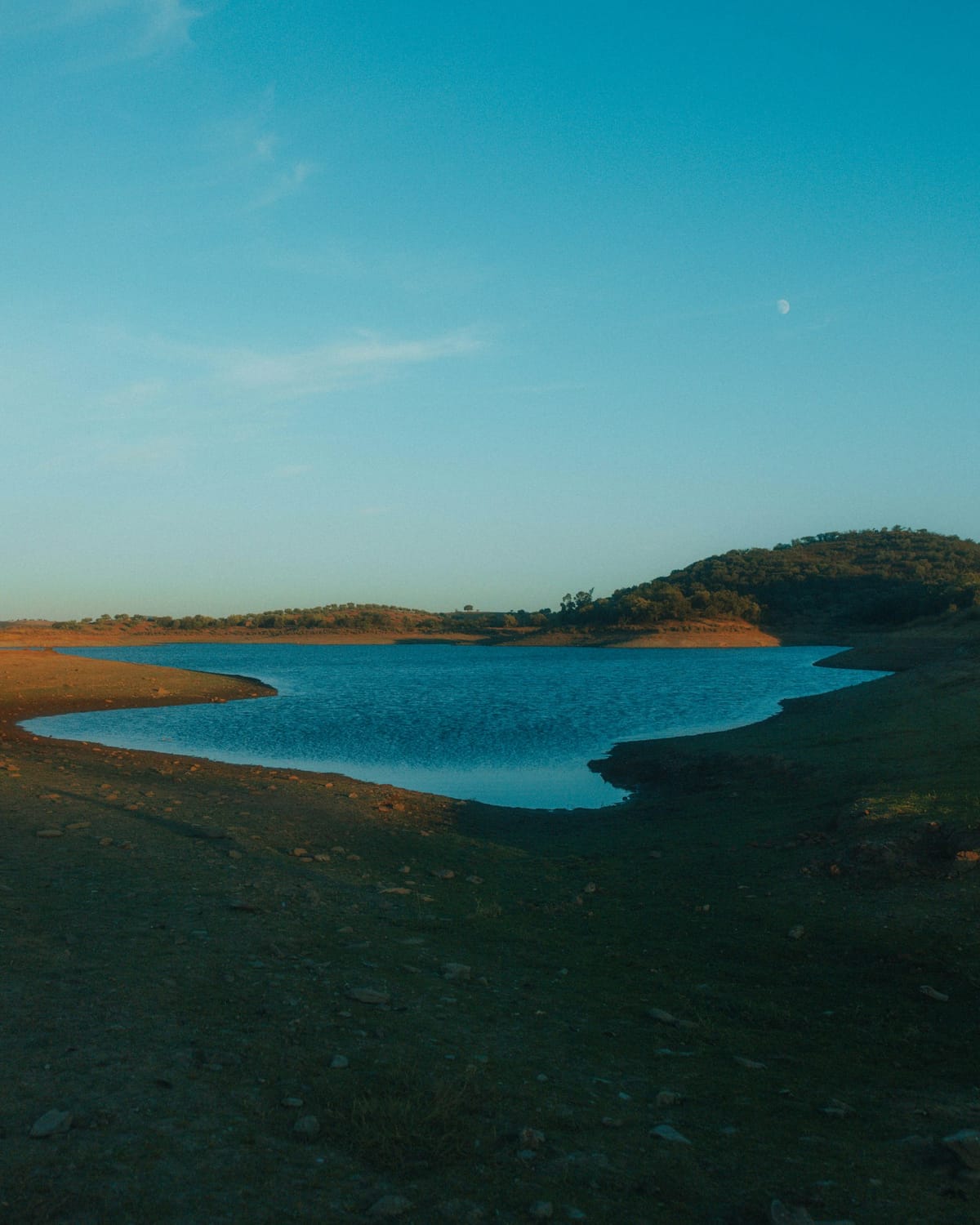
The Agência Portuguesa do Ambiente (APA — Portuguese Environment Agency) prints national reservoir storage at a 92% average across monitored reservoirs as Portugal moves into the second half of June 2026. APA president José Pimenta Machado has called the read "the best situation ever" — the highest mid-June level on record across the Sistema Nacional de Informação de Recursos Hídricos (SNIRH — National Water Resources Information System) monitoring series.
How the recharge ran
The unprecedented level reflects an unusually wet winter-and-spring cycle. A sequence of frontal systems — including the late-spring storm complex whose debris is still being cleared by sub-regional civil-protection commands in Médio Tejo — replenished aquifers and pushed surface inflows above the 30-year median for multiple river basins. The signature gain has been across the Algarve and Baixo Alentejo, where structurally drought-exposed reservoirs sat below the chronic threshold through 2024. The Barragem da Bravura (Bravura Dam) in the western Algarve, historically Portugal's most water-stressed major reservoir, now sits at around 99% capacity — a print without precedent in the SNIRH series for this basin in mid-year.
What it does to the electricity mix
The recharge changes the marginal-electricity calculation for the summer peak. APREN's (Associação Portuguesa de Energias Renováveis — Portuguese Renewable Energy Association) 2025 wind audit, published this week, recorded wind covering 25.4% of consumption. Pair that with the hydro storage now available across the Cabril, Castelo de Bode and Alqueva systems, and Rede Energética Nacional (REN — National Electricity Grid Operator) heads into July with a higher renewable-share envelope than in any year since 2014. That, in turn, eases the gas-thermal call across the daytime peak and softens Mercado Ibérico de Electricidade (MIBEL — Iberian Electricity Market) spot-price exposure at a moment when Brent has just retraced toward $83 on the Trump-Iran Hormuz accord.
Irrigation read
For irrigation, the read is similarly favourable. The Empresa de Desenvolvimento e Infra-estruturas do Alqueva (EDIA — Alqueva Development and Infrastructure Company) network is opening the high-demand window from near-full reservoir backing. Almond, olive and rice growers across the Alentejo enter peak draw with no scheduled rationing — a sharp contrast to summer 2023 and to the early-2024 Algarve restrictions package that capped municipal water deliveries through Loulé and Albufeira.
The IPMA caveat
That is, however, only the supply side. The Instituto Português do Mar e da Atmosfera (IPMA — Portuguese Sea and Atmosphere Institute) seasonal outlook for June-July-August signals above-normal temperatures across the southern half of the country, with Madeira and South-Atlantic wind patterns already driving the Funchal cancellation cluster covered on Monday. Environment Minister Maria da Graça Carvalho has cautioned that even a 92% start can erode rapidly under a high-evapotranspiration July, and APA has not lifted the standing drought-watch framework — only paused its more aggressive restriction triggers.
Bathing-season frame
Today's European Environment Agency 2025 Bathing-Water Report places 559 Portuguese sites at excelente, but it is the combination of high reservoir levels and the IPMA above-normal outlook that decides whether the summer reads as a one-off recovery year or the start of a multi-year reset for Portugal's water balance. APA's next weekly Boletim, due 23 June, will frame the answer for the first half of the bathing window.
Sources: APA — SNIRH Boletim de Recursos Hídricos; Público (interview with APA president); IPMA seasonal outlook; APREN 2025 wind audit; EEA 2025 Bathing-Water Report.