Algarve's Two Landfills Near Full as Government Commissions an 11-Month Study on Incineration or Sorting Plants
The Algarve's two landfills, at Portimão and Loulé, are close to full. The APA signed an 11-month study in Faro on 30 October to choose between incineration and sorting plants, and the minister says the solution will take four to five years to build.
The Algarve's two landfills are close to full, and the government has given itself 11 months to decide what replaces them. On Friday 30 October in Faro, the Portuguese Environment Agency (APA) signed a contract with the Faculty of Science and Technology of NOVA University Lisbon for a study on how to treat the region's residual waste, the mixed rubbish that cannot be avoided, separated, recycled or reused. The Environment and Energy Minister, Maria da Graça Carvalho, said a decision will follow as soon as the study is delivered, Lusa reported via Notícias ao Minuto.
"These landfills are going to be full very soon, so we need a quick solution," she told reporters, adding that whatever is chosen will take "four to five years" to be ready. RTP described both as on the verge of collapse.
Where the waste goes now
The region's waste company, Algar, runs two sanitary landfills (aterros sanitários): the Barlavento landfill at Chão Frio, Porto de Lagos, in Portimão, and the Sotavento landfill at Cortelha, Salir, in Loulé. Algar handles over 400,000 tonnes of municipal waste a year, and more than 80 percent goes straight to landfill, Lusa reported. A new replacement cell (an additional lined section of landfill) is planned at each site.
Figures presented at the signing put the Algarve's waste at 2.06 kilos per resident per day, against a national average of 1.35; the minister blamed tourism. In August, Lusa reported via Observador that the minister had said the two landfills could take waste for two years at most. In September she ruled out building new landfills anywhere in Portugal, citing the target of sending only 10 percent of waste to landfill by 2035, Observador reported.
Incinerator or sorting plants
The study, coordinated by NOVA with the universities of the Algarve and Aveiro, must answer three questions, said APA president José Pimenta Machado: which solution is best, where it goes and what its impacts are. The minister listed the options as incineration, energy recovery and mechanical and biological treatment (TMB), plants that sort mixed waste and process its organic part.
She first floated an incinerator in August. The environmental group ZERO instead proposes two TMB plants, one in front of each Algar landfill. ZERO says the minister has confirmed in writing that its plan will be assessed. By ZERO's own estimates, the plants would divert about 70 percent of mixed waste from landfill, take up to three years to build and cost no more than 150 million euros, against at least seven years and at least 300 million euros for incineration. These are the association's figures.
The minister said 3.2 billion euros is available for the waste sector, with the Algarve "the most urgent" case. Portugal is rewriting where its waste tax goes from 2027.
What it means for you
- Nothing changes at the bin yet. The choice is about 11 months away and building it would take years more.
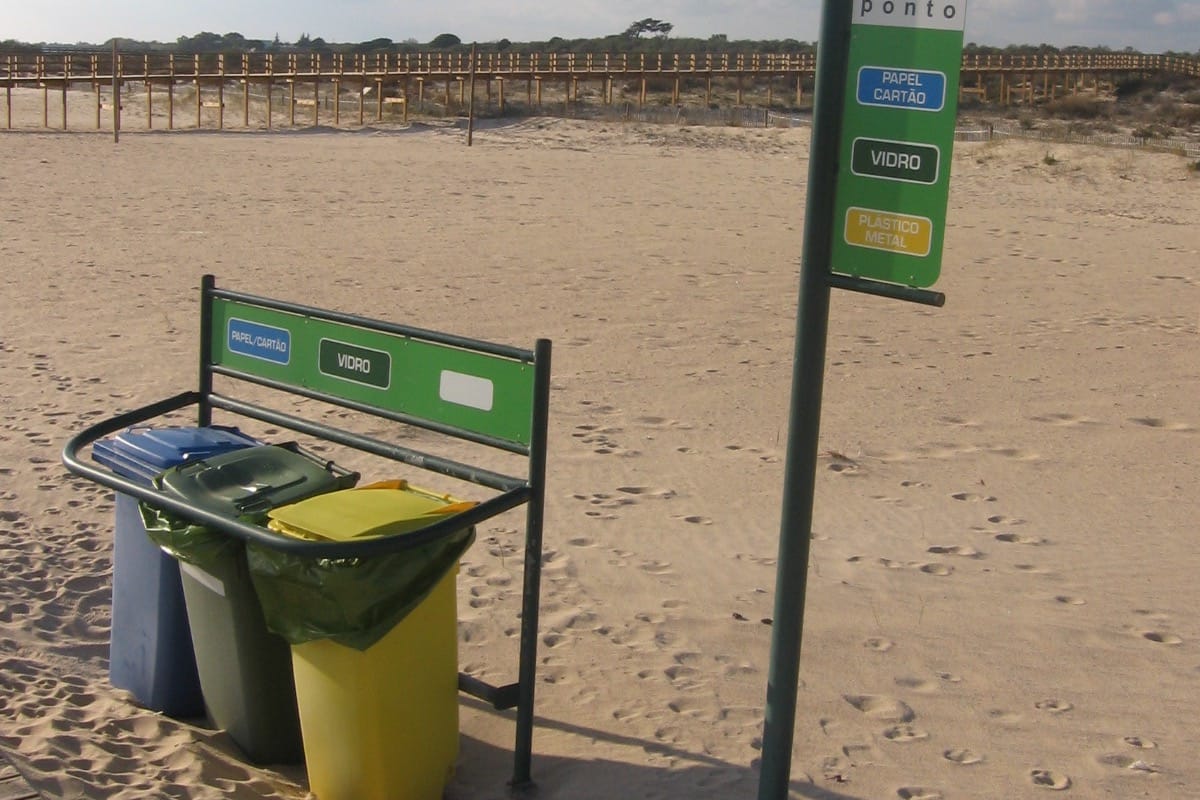
- Sorting matters more in the Algarve. Packaging, paper and glass put in the recycling bins (ecopontos), and food waste in a separate collection where your council offers one, stay out of the two landfills.
- Living near Porto de Lagos? A residents' association from Odelouca, Porto de Lagos and Rasmalho met the minister in Faro to demand the closure of the Barlavento landfill over smells and flies. She asked affected residents to file complaints with the regional authorities or the environment inspectorate, IGAMAOT.
- Costs are an open question. ZERO warns that incineration would bring a steep rise in what Algarve councils pay to treat waste; the minister has promised a solution with "no negative impacts" for residents and visitors.