Living in the Algarve: Complete Expat Guide 2026
Everything you need to know about living in the Algarve — from the best towns and neighborhoods to costs, healthcare, and daily life.
The Algarve is Portugal's southernmost region and its most popular destination for expats, retirees, and sun-seekers. With over 300 days of sunshine per year, dramatic Atlantic coastline, world-class golf, and a well-established English-speaking community, it's easy to see why. But living here full-time is different from holidaying — this guide covers the realities.
Where to Live in the Algarve
Faro
The Algarve's capital and administrative centre. Faro has the region's airport, university, and main hospital. The old town (Cidade Velha) is charming, with cobbled streets inside medieval walls. It's more authentically Portuguese than the resort towns — less touristy, better value, and the best option for those who want urban amenities. The Ria Formosa lagoon system on its doorstep is a natural wonder.
Rent: €800–€1,200 for a 2-bed apartment. Best for: Professionals, families wanting Portuguese integration, budget-conscious expats.
Lagos
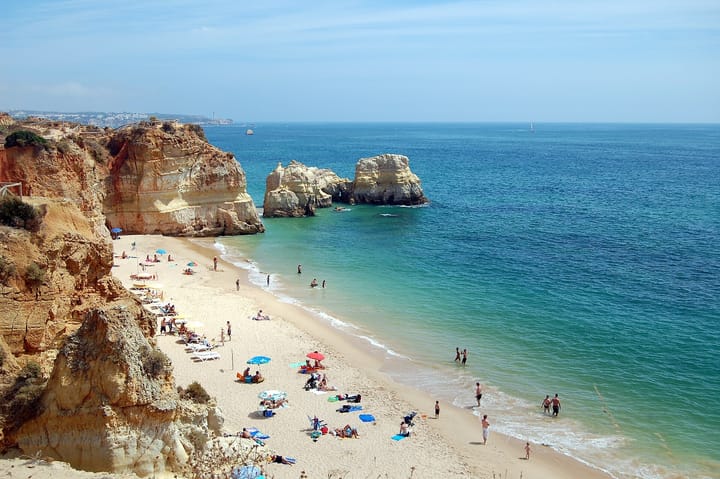
The western Algarve's main town, combining a historic centre with a vibrant social scene. Popular with younger expats and digital nomads. The dramatic cliff-backed beaches (Ponta da Piedade, Dona Ana) are among Europe's most spectacular. Good restaurants, lively nightlife, and a strong international community.
Rent: €900–€1,500 for a 2-bed apartment. Best for: Young professionals, couples, social expats.
Albufeira
The Algarve's largest resort town — bustling in summer, quieter in winter. The old town has character, but the strip and surrounding developments are heavily tourist-oriented. Excellent beaches and amenities, but less "authentic Portugal" than other options.
Rent: €800–€1,400 for a 2-bed apartment. Best for: Those who enjoy resort-style living, families with young children (plenty of activities).
Tavira
Often called the prettiest town in the Algarve. Whitewashed houses, a Roman bridge, excellent restaurants, and the stunning Ilha de Tavira beach. More traditional and quieter than western Algarve towns. Growing expat community that trends older and more culturally engaged.
Rent: €700–€1,100 for a 2-bed apartment. Best for: Retirees, couples, culture lovers, anyone seeking a quieter pace.
Loulé
An inland market town 20 minutes from the coast. Loulé offers better value than coastal towns while keeping beaches accessible. The Saturday market is one of Portugal's best. More Portuguese-speaking environment than the coast — good for language immersion.
Rent: €650–€1,000 for a 2-bed apartment. Best for: Families, budget-conscious expats, those wanting more Portuguese daily life.
Vilamoura and the Golden Triangle
Vilamoura, Quinta do Lago, and Vale do Lobo form the Algarve's luxury belt. World-class golf courses, marinas, and upscale dining. Heavily international (particularly British), with prices to match. Beautiful but can feel like a wealthy enclave disconnected from Portuguese life.
Rent: €1,500–€3,500+ for a 2-bed apartment. Best for: Golf enthusiasts, luxury seekers, those prioritising amenities over authenticity.
Cost of Living
The Algarve is more expensive than most of Portugal (except Lisbon), particularly in coastal/resort areas. Typical monthly costs for a couple in 2026:
- Rent (2-bed apartment): €800–€1,500 (inland/Faro) to €1,200–€2,500 (prime coastal)
- Utilities: €100–€180 (electricity, water, gas, internet)
- Groceries: €400–€600 (supermarkets are well-stocked; Continente, Pingo Doce, Aldi, Lidl)
- Eating out: €10–€15 for a prato do dia (daily special); €25–€40 per person at a good restaurant
- Health insurance: €80–€200 per person (private; public healthcare is also available)
- Car costs: Essential outside Faro. Fuel ~€1.65/litre, insurance €300–€600/year, IUC road tax €50–€200/year
- Total (couple, comfortable): €2,200–€3,500/month including rent
Healthcare
The Algarve has one main public hospital — Centro Hospitalar Universitário do Algarve, with campuses in Faro and Portimão. For routine care, centros de saúde (health centres) are in every municipality. Wait times for specialists can be long (weeks to months).
Private healthcare is widely available and commonly used by expats. HPA Health Group operates hospitals in Alvor and Gambelas (Faro) with English-speaking staff. Hospital Particular do Algarve in Faro is another popular choice. A private consultation costs €50–€100; annual health insurance for an expat couple runs €2,000–€4,000 depending on age and coverage.
Transport and Getting Around
A car is essentially mandatory in the Algarve unless you live in central Faro. Public transport exists but is limited:
- Trains: The Algarve line runs along the coast from Lagos to Vila Real de Santo António, stopping at major towns. Useful but infrequent (roughly hourly).
- Buses: Vamus Algarve operates regional services. Coverage is reasonable between main towns but limited for rural areas and beaches.
- A22 motorway: The main east-west highway. Tolled (electronic only — you need a Via Verde transponder or temporary permit). Faro to Lagos takes about 50 minutes.
Faro airport connects to most European cities, with frequent flights to London, Paris, Amsterdam, and German cities. Ryanair and easyJet dominate. A car rental for the first few months is advisable while you get oriented.
The Seasonal Reality
The Algarve has two distinct personalities:
Summer (June–September): Population swells 3–5x with tourists. Beaches are packed, restaurants have queues, traffic on the EN125 is heavy, and rental prices spike. It's vibrant and social, but can feel overwhelming if you're used to the quiet months.
Winter (November–March): Many tourist businesses close or reduce hours. Expat social life intensifies — this is when the resident community bonds through clubs, dinners, and activities. Weather is mild (12–18°C) with occasional rain. Some expats love the quiet; others find it too quiet, especially in resort areas that empty out.
The shoulder seasons (April–May, October) are arguably the best time to be in the Algarve — warm enough for beaches, uncrowded, and everything is open.
The Expat Community
The Algarve has one of Europe's most established expat communities, predominantly British, but increasingly diverse with Dutch, German, French, Scandinavian, and American residents.
- Social clubs: Algarve Expats, InterNations Algarve, various national clubs (British, Dutch, Scandinavian)
- Facebook groups: "Algarve Expats," "Brits in the Algarve," "Americans in Portugal" — active and helpful for practical questions
- Activities: Golf (30+ courses), tennis, walking groups, art classes, book clubs, volunteer organisations
- English widely spoken: In tourist areas, you can live entirely in English. This is a double-edged sword — convenient but can prevent Portuguese integration.
Property Market
The Algarve property market has boomed since 2015, with prices doubling in many areas. In 2026:
- Apartments (2-bed): €200,000–€400,000 (coastal); €150,000–€250,000 (inland/Faro)
- Villas (3-bed with pool): €400,000–€800,000; luxury properties in the Golden Triangle start at €1M+
- New builds: Limited supply, strong demand, particularly from Northern European buyers
- Rental yields: 4–6% long-term; short-term/holiday lets can yield 6–10% but face increasing regulation (AL licence required)
Pros and Cons of Algarve Living
Pros:
- 300+ days of sunshine — even winter is mild
- Stunning coastline and natural beauty
- Established English-speaking infrastructure (doctors, lawyers, services)
- Excellent golf, water sports, and outdoor lifestyle
- Safe, low crime, family-friendly
- Direct flights to most of Europe from Faro
Cons:
- Seasonal extremes — busy/expensive in summer, very quiet in winter
- Can feel like an expat bubble rather than "real Portugal"
- Car dependency for most locations
- Rising property prices and rents
- Water scarcity is a growing concern (dam levels regularly below 50%)
- Limited job market outside tourism and hospitality
What This Means for Expats
The Algarve is ideal if you prioritise sunshine, outdoor lifestyle, and an English-friendly environment. It's particularly well-suited for retirees, remote workers, and families who don't need local employment. The established expat infrastructure means fewer bureaucratic headaches — there are English-speaking lawyers, accountants, doctors, and estate agents everywhere.
The trade-off is authenticity. If you want deep immersion in Portuguese culture and language, the Algarve's tourist-oriented coastal towns may not deliver that. Consider Faro, Tavira, or Loulé for a more balanced experience — or look at the Alentejo or central Portugal for a more "Portuguese" daily life at lower cost.
Last updated: March 2026. Have questions about moving to the Algarve? Subscribe to The Portugal Brief for weekly guides and updates.
Essential guides for moving to the Algarve:
👉 Related: UTAO Sounds the Alarm: Portugal Owes Up to 21.7 Thousand Million Annually Through 2039
👉 Related: Insurance in Portugal: Health, Home, Car, and Life Cover Explained for Residents and Newcomers
Related reading: Jet2 Boeing 737 Makes Emergency Landing at Faro After Crew Reports Cabin Smoke — All 141 Passengers Safe
- Renting in Portugal in 2026: Contracts, Rights, and How to Avoid Scams
- Buying Property in Portugal in 2026
- Cost of Living in Portugal in 2026
- Healthcare in Portugal in 2026
- Internet, Phone, and Utilities in Portugal in 2026
- NIF Explained: How to Get Your Portuguese Tax Number
- Opening a Bank Account in Portugal in 2026
- Driving in Portugal: Licence Exchange, Tolls, and Importing a Car
- Taxes in Portugal Explained in 2026
- D7 and D8 Visas Explained