After 33 Break-Ins, a Braga Fashion Chain's Owner Turns to Shoppers: If You Do Not Know Where It Came From, Do Not Buy It
Nuno Forte, who runs about 80 Forte Store shops and employs the households behind 470 families, says the resale market is what keeps the raids coming. National figures show 5,164 break-ins at commercial premises in 2025 and 7,911 thefts without forced entry, up 3%.
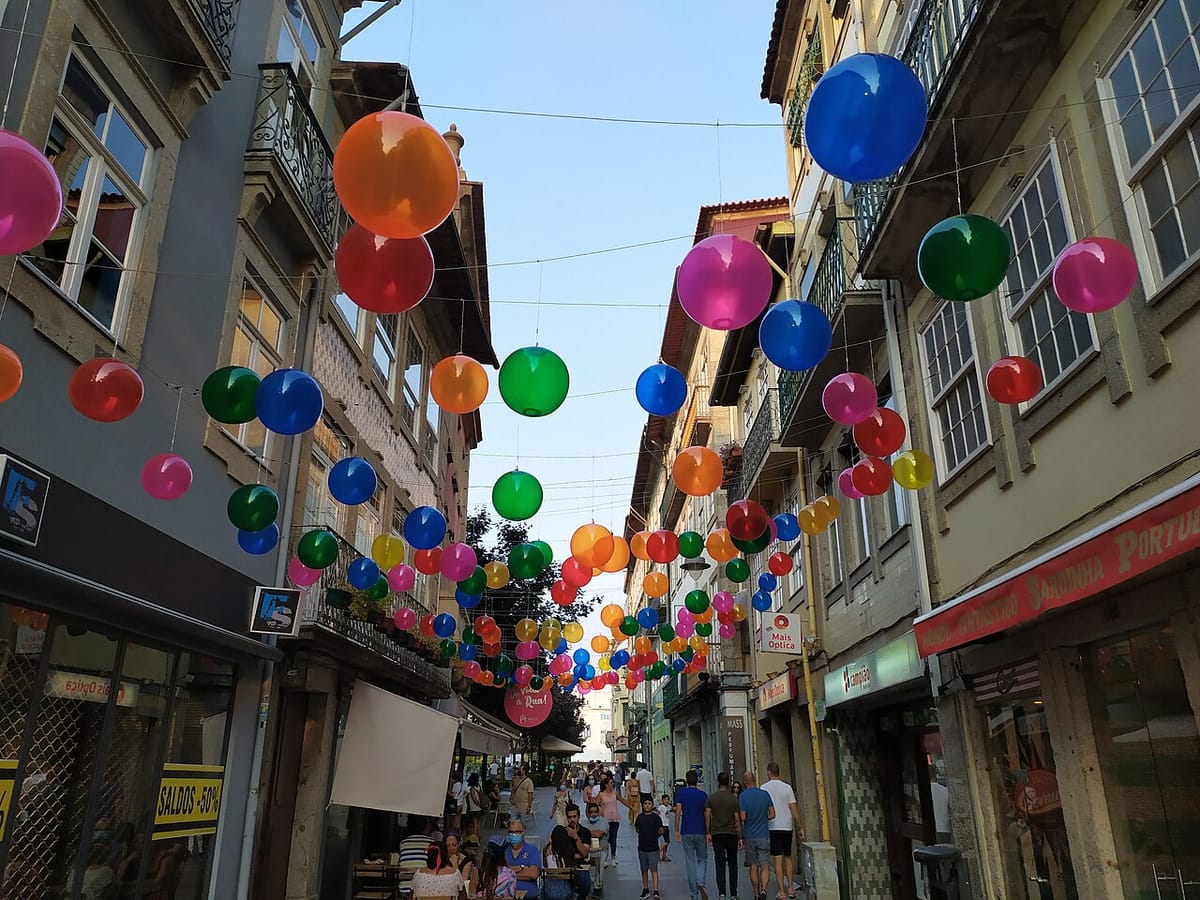
Nuno Forte runs about 80 clothing shops in Portugal. On Saturday he stopped counting quietly and started counting in public: 33 break-ins, and a question aimed squarely at the people who buy what comes out of them.
"Por detrás de uma montra partida, não está apenas mercadoria," the founder and chief executive of the Braga-based Forte Store chain said in a statement reported by Jornal de Negócios on Saturday. "Estão anos de investimento, postos de trabalho e mais de 470 famílias que dependem diretamente destas empresas." Behind a smashed shop window there is not just merchandise; there are years of investment, jobs and more than 470 families who depend directly on these businesses.
His second line is the one that turns a retailer's complaint into something wider. "Quem rouba precisa de quem compre": whoever steals needs someone to buy.
The chain, and the count
Forte Store is a multibrand fashion retailer headquartered in Braga, with roughly 80 shops spread across the country and a heavy concentration in the north. The 470 families Forte refers to are the households behind the group's direct payroll.
Thirty-three break-ins is not a figure a chain of that size absorbs as background noise. Each one is a night shift lost, a shopfront boarded, an insurance excess paid and a stock count that no longer matches the system. The chain's complaint is not that the police failed to attend; it is that attending is not the same as stopping it.
What the national numbers say
The 2025 Relatório Anual de Segurança Interna (Annual Internal Security Report), published by the Sistema de Segurança Interna in March 2026, puts Forte's experience inside a national trend that is moving in two directions at once.
Three separate categories cover theft from shops, and in 2025 they read:
- 5,164 thefts from a commercial or industrial building with breaking, climbing or false keys, down 7.9% on 2024. This is the qualified offence: the smashed window, the forced shutter, the copied key.
- 7,911 thefts from a commercial or industrial building without breaking, climbing or false keys, up 3.0%, or 229 more cases than the year before. This is now one of the sixteen most-reported crimes in the entire country.
- 2,574 supermarket thefts, up 7.7%.
Robbery, the violent cousin of theft, is rarer and falling: 421 robberies in commercial or industrial buildings in 2025, down 6.0% from 448.
The report also carries a number the retail sector itself produces rather than the police: distribution-sector estimates put the direct cost of shop theft in Portugal at more than €300 million a year.
The report's own warning about who is doing it
The most striking passage in the internal-security report is not a statistic. It is a description of how the offence is changing.
Shop theft, the authors write, has historically been associated with "pequena criminalidade local", small-scale local crime, driven by people looking for goods they can immediately swap or sell. That paradigm is shifting year after year, and what is emerging in its place are "grupos organizados itinerantes que se dedicam em exclusivo ao furto em estabelecimentos comerciais": itinerant organised groups working exclusively on theft from commercial premises.
For the break-in category specifically, the report goes further, describing a "forte ligação a grupos criminais organizados, nacionais e internacionais, que atuam de forma estruturada e muitas vezes em rede". The decade-long fall in break-ins, it suggests, may partly reflect those groups migrating to the categories they judge less risky, which is exactly where the numbers are rising.
Geographically, the crimes cluster. Lisbon accounts for 37% of reports, Porto 20%, Setúbal 8% and Faro 7%: 72% of the national total in four districts. Braga district, where Forte Store is based, recorded 19,005 criminal reports of all kinds in 2025, a 0.6% fall on the year. Porto district recorded 57,453, up 4%, or 2,220 more reports.
The report's forecast for the coming years is not comforting for shopkeepers: it anticipates a worsening in thefts without breaking and in supermarket thefts.
Why the appeal to shoppers is a legal argument, not just a moral one
Forte's appeal, in his own framing, is that the resale market is the engine. Stolen branded clothing has to reach a buyer, and a great deal of it now reaches that buyer through social media, marketplace apps and messaging groups rather than a market stall.
Portuguese law already addresses this, and more sharply than most people realise. Article 231 of the Código Penal (Criminal Code) creates the offence of recetação, receiving stolen goods.
Its first paragraph covers the knowing handler: anyone who, intending to obtain a financial advantage for themselves or another, conceals, takes in pledge, acquires by any title, holds, keeps or transmits something obtained by someone else through an unlawful act against property faces up to five years in prison or a fine of up to 600 days.
Its second paragraph is the one that matters for an ordinary shopper. Anyone who, without first making sure of its legitimate origin, acquires or receives an item that, by its quality, by the character of the person offering it, or by the price proposed, reasonably raises the suspicion that it came from an unlawful act against property, faces up to six months in prison or a fine of up to 120 days.
In other words, the law does not require you to know the jacket was stolen. It requires you to have asked, when the circumstances should have prompted the question. A habitual receiver faces one to eight years under paragraph 4.
That is the legal shape of "se não sabe de onde vem, não compre": if you do not know where it came from, do not buy it. It is advice, but it also describes a criminal threshold.
What a retailer can actually do
There is no single national reporting channel for retail crime in Portugal, which is part of the frustration. A shop that is broken into files a queixa with the PSP or the GNR, depending on which force covers the area, and the case goes to the Ministério Público (Public Prosecution Service) like any other property offence. Where an organised itinerant group is suspected across several districts, the Polícia Judiciária (Judicial Police) can take the investigation.
For a chain hit 33 times, the practical difficulty is that each incident enters the system as a separate local file, and linking them is a decision someone has to take. The internal-security report's own language about structured, networked groups operating across regions is, read one way, an argument for taking that decision earlier.
Which leaves Forte where his statement ends: not asking customers to feel sorry for a retailer, but pointing out that the market for a stolen jacket is made of individual purchases, and that each of those purchases is a choice someone makes.