A Wind Lull, Not Cloud, Lifts Portugal's Wholesale Power Price to More Than Four Times Last November's
While northern Europe's dark, still spell is about missing sun, Portugal's is about missing wind: wind output fell 47 percent in early November, gas and imports filled the gap, and wholesale power averaged 215 euros a megawatt-hour. Who feels it, and who does not.
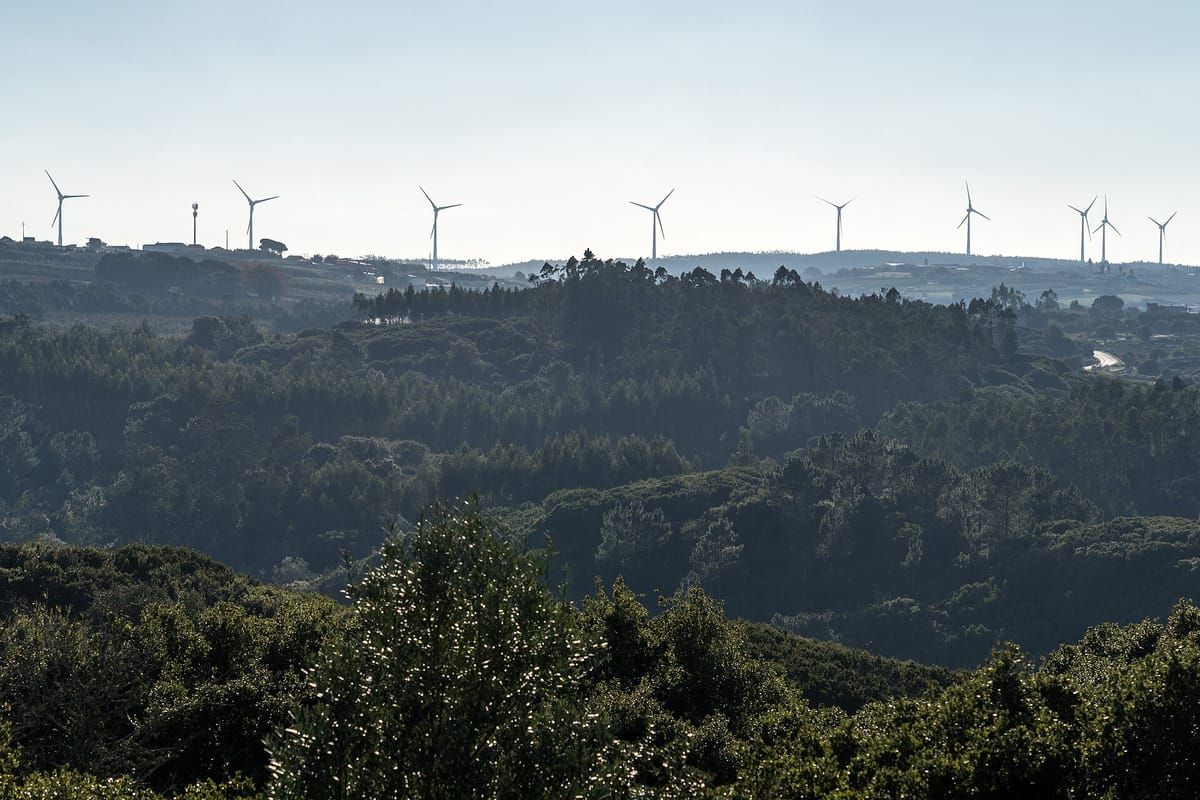
Europe's first dunkelflaute of the winter (the German word for a "dark calm", when wind and solar output both collapse) has pushed power prices up across the continent. In Portugal the data tell a slightly different story: the sun held up, the wind did not, and wholesale electricity in the first eight days of November averaged 215 euros a megawatt-hour, more than four times the 50 euros of the same days in 2025.
Those averages come from the daily price files that OMIE, the Iberian electricity market operator, publishes for the Portuguese zone, and the production figures from REN's Data Hub, the grid operator's daily balance.
A wind lull, not a cloudy one
Euronews reported on 8 November that cloudy, windless weather was holding back solar power in northern Europe, citing Bloomberg forecasts of German day-ahead prices above 300 euros a megawatt-hour for 29 October. Portugal's solar output did not collapse. Between 1 and 7 November it was 58.8 percent above the same days of 2025, according to REN.
Wind was the problem. On Thursday 5 November Portuguese wind farms produced just 3 gigawatt-hours (GWh), against 58 GWh on the same day a year earlier. Gas-fired plants and imports filled the gap: gas generation reached 38 GWh that day and 40 GWh on Friday 6 November, the highest daily figures since at least the start of October. Over the first week of November, wind output was down 46.9 percent year on year, gas generation up 18.1 percent and net imports up 72 percent.
Prices followed. The Portuguese day-ahead price averaged 253 euros from 4 to 6 November, peaking at 380 euros in individual quarter-hours on 4 and 5 November, and on those two days Portugal's price ran above Spain's. From 1 to 3 November, prices had dropped below 10 euros for hours in the middle of each day; from 4 to 7 November they never fell below 170 euros.
The link holds across the autumn. On Sunday 18 October, when wind produced 80 GWh, Portugal's average price was 76 euros; on Friday 30 October, with 3 GWh of wind, it was 249 euros.
Storm Bruna brings some relief
As depression Bruna arrived, wind output on Saturday 7 November recovered to 36 GWh, double the figure for the same day in 2025, and Sunday's average price eased to 200 euros, the lowest since 3 November. That is still the highest Sunday price since the start of October. Prices for Monday had not been published when this was written.
What it means for you
- On an indexed tariff (tarifário indexado): your energy price follows the wholesale market. ERSE, the energy regulator, warns in its second-quarter 2026 offers bulletin that these prices depend on spot markets (OMIE and its gas equivalent, MIBGAS) and can swing sharply on bills from one month to the next. A November like this one will show up on your next bill.
- On a dynamic tariff (preços dinâmicos): ERSE describes these as indexed offers whose price can change every hour, so the evening peaks hit hardest. Shifting washing and charging to windy days and midday hours matters more than usual.
- On the regulated tariff or a fixed-price contract: the energy price is set in advance, so day-to-day market moves do not change it.
ERSE's offer comparisons price indexed contracts on 12-month futures, not spot prices, so an indexed deal that ranked cheapest in spring may not be now. See our report on ERSE's findings on free-market electricity and the minister's view on reviving the Iberian gas price cap.