A 37-Hectare Island in the Ria de Aveiro Goes to Online Auction at €750,000 — Salt Pans, Oyster Beds and All
The Ilha dos Puxadoiros — some 37 hectares of reclaimed salt marsh, fish ponds and low white buildings in the Ria de Aveiro lagoon — has gone to online auction with a base price of €750,000. A rare, self-contained slice of the lagoon, it produces salt, samphire and oysters, but sits inside a Natura
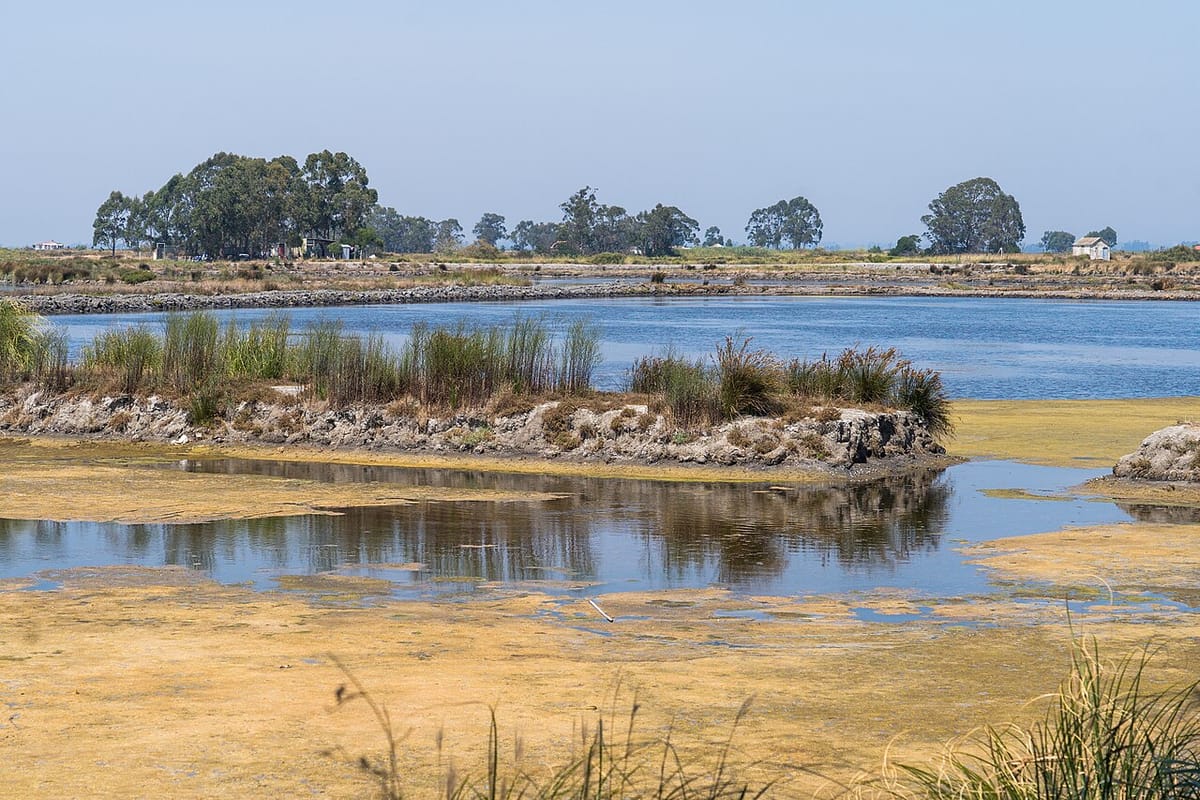
A whole island in one of Portugal's best-known coastal lagoons has been put up for sale online. The Ilha dos Puxadoiros — some 37 hectares of reclaimed salt marsh, fish ponds and low white buildings in the Ria de Aveiro (the shallow lagoon that fans out behind the city of Aveiro, in central Portugal) — has gone to electronic auction with a base price of €750,000, according to Jornal de Negócios. The sale is being run through the online auction platform Leilosoc.
For the price of a comfortable Lisbon apartment, in other words, a buyer could take on an entire working island — though, as ever with the Ria de Aveiro, what you can actually do with it is tightly bound by nature-protection rules.
What is on the island
Puxadoiros is not a bare sandbank. It sits in the old salgado — the historic salt-producing area of the lagoon — and is a going concern built on salt, samphire and shellfish. The listing describes traditional salt pans (marinhas), semi-intensive fish farms and rearing tanks (viveiros), and a cluster of rustic buildings, among them a main "Island House" (Casa da Ilha), a second house and a pair of barns. It comes with the working kit of a lagoon estate: a loading dock and cargo crane, a wooden walkway, a boat, a tractor, hundreds of iron oyster beds and thousands of mesh grow-bags, along with the licences to run its aquaculture operations.
The site is the product of a long revival. About fifteen years ago a group of Aveiro investors took on the abandoned salt pans and brought them back into production, turning out sea salt, salicornia (the samphire-like coastal plant also sold as "sea asparagus") and oysters. The salt pans themselves are far older — salt-making in this corner of the lagoon is documented as far back as the fifteenth century.
A protected lagoon, not a blank canvas
Anyone picturing a private holiday hideaway or a resort should read the fine print of the map first. The Ria de Aveiro is part of the Natura 2000 Network (Rede Natura 2000), the European Union's system of protected sites. It is classified both as a Special Protection Area for birds (Zona de Proteção Especial) and — under a designation formalised in early 2026 — as a Special Area of Conservation (Zona Especial de Conservação). The lagoon hosts tens of thousands of wintering migratory birds, and its wetlands cannot be altered without prior authorisation. In practice that means the island's future is far likelier to lie in salt, aquaculture and low-impact nature tourism than in anything a developer might dream up.
Why it is being sold
The whitelisted reporting frames the sale simply as an asset placed on an online auction; no reason, and no closing date, has been made public in that coverage, so the "why" behind the sale is not something we can state with confidence. What is clear is the shape of the offer: a rare, self-contained slice of the Ria de Aveiro, salt pans and oyster beds included, going under the digital hammer at three-quarters of a million euros.
What This Means for You
- If you are an investor eyeing Portuguese land: €750,000 buys a large, income-capable lagoon estate — but its value is tied to salt and aquaculture, and its use is constrained by Natura 2000 rules, not by ordinary building permissions.
- If you are simply curious: it is a reminder of how much of the Ria de Aveiro is privately worked heritage landscape — hand-built salt pans, some centuries old, still producing salt, samphire and oysters.
- A word of caution: the auction terms, dates and any conditions live with the platform running the sale; the protected status of the lagoon means due diligence on what is permitted would be essential before bidding.