The Navy Becomes the First Branch of Portugal's Armed Forces to Deploy the Home-Grown Amália AI
The Portuguese Navy will become the first branch of the armed forces to run a home-grown AI, spending about €910,000 on 'Marinheiro de Silício', a platform built on the state-backed Amália language model. Funded through the PRR, it will search and summarise internal documents on Navy-controlled infr
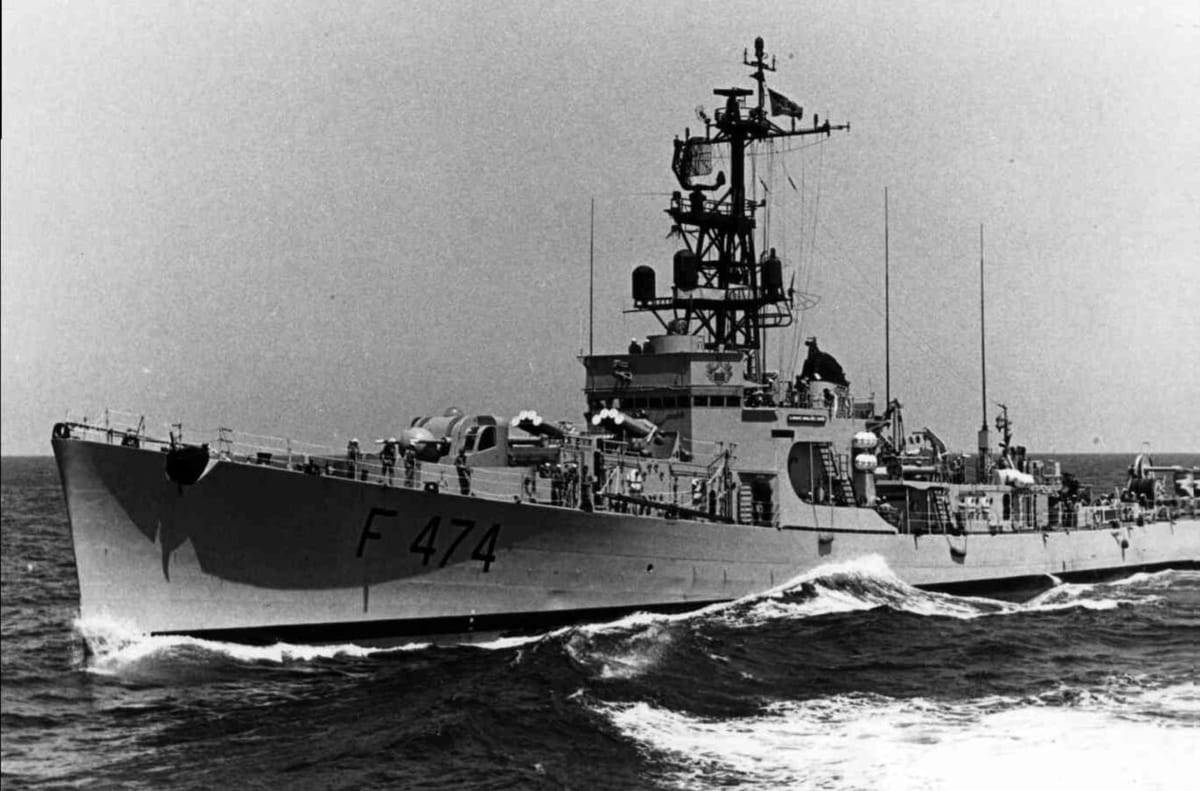
The Portuguese Navy (Marinha) is about to become the first branch of the country's armed forces to put a home-grown artificial-intelligence model to work, spending close to €1 million on a system built around Amália, the state-backed Portuguese language model.
The project has a suitably nautical name: Marinheiro de Silício, or "Silicon Sailor." It is an AI platform developed for the Navy in partnership with NOVA FCT, the science and technology faculty of Lisbon's NOVA University, which was part of the consortium that created Amália in the first place. The contract is worth €740,000 before tax, or about €910,000 once VAT is added — close enough to the million-euro mark to make it a notable bet for a single military branch.
The money comes from the Recovery and Resilience Plan (PRR), Portugal's slice of the EU pandemic-recovery fund, channelled through ARTE, the state's Technological Reform Agency (Agência para a Reforma Tecnológica do Estado). That funding route matters: it ties the Navy's experiment to Portugal's broader push to modernise how the public administration uses technology, rather than treating it as a one-off defence purchase.
What the Silicon Sailor will actually do
Despite the futuristic branding, the intended uses are firmly practical. The platform is designed to search across the Navy's own internal documents by meaning rather than keyword, to summarise long files, to help draft and prepare paperwork, and to answer questions put to it by staff. In other words, it is meant to save officers and civilian workers the hours they currently lose hunting through archives — not to steer ships or make operational decisions.
The more sensitive question with any military use of AI is where the data lives. Here the Navy has been explicit: the model is built to run entirely on infrastructure it controls, in segregated environments, so that information never leaves its own systems. Users will only ever see material they were already cleared to access, and the platform is wrapped in strong authentication, access controls and continuous monitoring. "The model was designed to function in Navy-controlled infrastructures, ensuring information remains in segregated environments," a Navy spokesperson said.
Choosing Amália rather than an off-the-shelf American system is part of the point. Amália is an open-source large language model developed by a Portuguese consortium, part of a wider effort to give the country a "sovereign" AI capability that does not depend on sending sensitive data to foreign cloud providers. For a defence institution wary of exactly that kind of exposure, a model trained in Portuguese and hosted at home is an obvious fit.
For now the Navy is out on its own. The Air Force has confirmed it has not adopted the technology, and the Army has not signalled a move either — leaving the Silicon Sailor as a test case that the rest of Portugal's armed forces, and much of its public sector, will be watching. If it works, expect the other branches to follow the Navy into the water.