The Garcia de Orta Hospital in Almada Suspends Its Abortion Service and Refers Patients to a Private Clinic
The Hospital Garcia de Orta in Almada has stopped performing voluntary terminations of pregnancy and is sending women to a private Lisbon clinic. The hospital calls the arrangement temporary and blames a staff shortage; patient groups call the service discontinued — and the ten-week legal clock is u
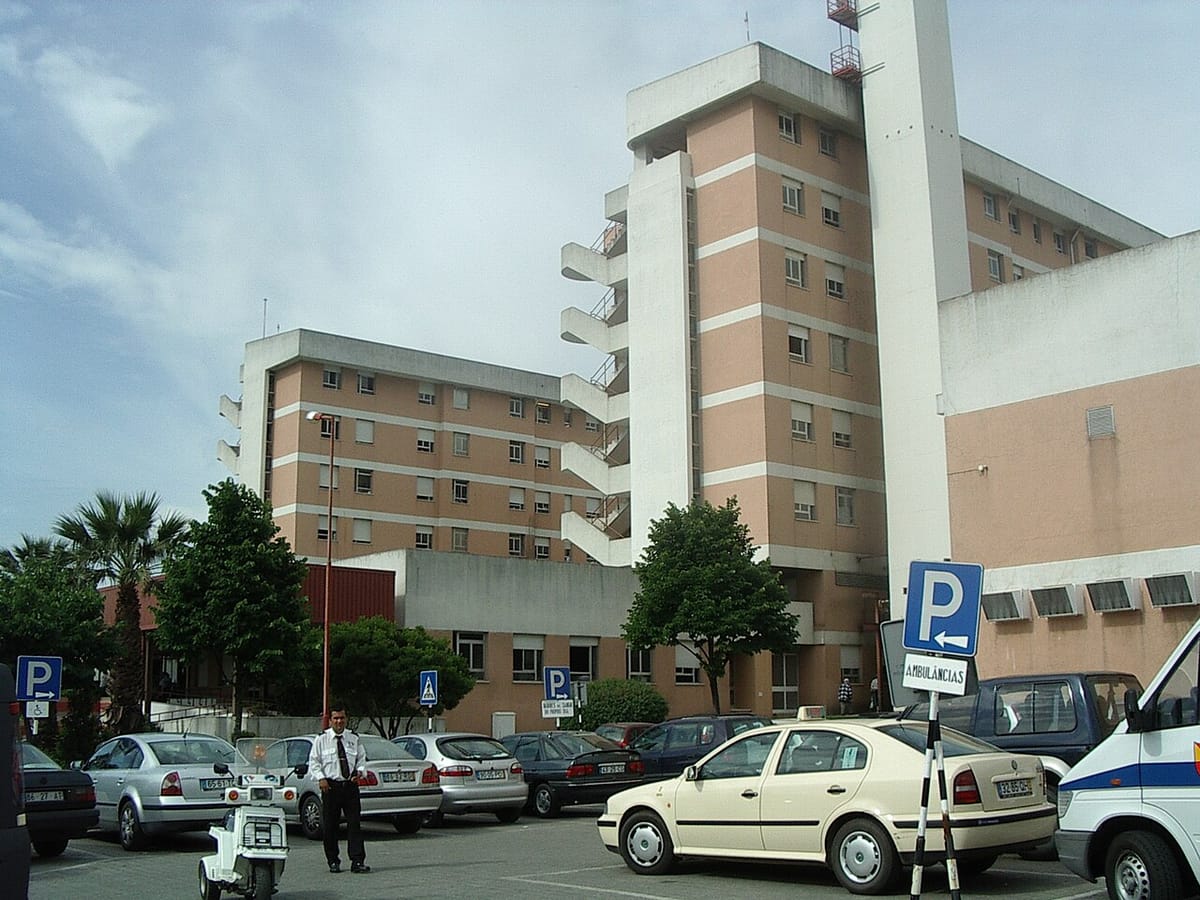
One of the largest hospitals on the south bank of the Tagus has stopped performing abortions, and the way it happened has turned a quiet staffing problem into a political row. The Hospital Garcia de Orta in Almada, part of the Unidade Local de Saúde Almada-Seixal (Almada-Seixal Local Health Unit), is no longer carrying out voluntary terminations of pregnancy (interrupção voluntária da gravidez, or IVG) in-house, and is instead sending women to a private clinic in Lisbon. The news broke over the weekend, and even the basic description of what has taken place is contested.
The patient commissions of Almada and Seixal (Comissões de Utentes), who made the change public, call the service "discontinued" and want it restored inside the public system. The health unit rejects that word. In its account, the arrangement is temporary, and "the temporary solution found allows a timely and safe response to be ensured" — an implicit admission that, for now, the hospital cannot guarantee that response with its own staff. Which of those two framings is right — a service quietly withdrawn, or a stopgap while a rota is repaired — is precisely what is in dispute.
The stated reason is a shortage of human resources, both doctors and nurses. That explanation has reached the public largely through the Communist Party (Partido Comunista Português, PCP) parliamentary group, which has folded the Garcia de Orta case into a wider attack on what it calls the running-down and privatisation of the National Health Service (Serviço Nacional de Saúde, SNS). The hospital's own statement stops short of a detailed diagnosis; it confirms only that it cannot currently manage a timely in-house response and that patients are being referred to an authorised private provider in Lisbon. That referral — a public hospital outsourcing a legal, time-limited procedure to a private clinic — is the specific target of the criticism.
The stakes are set by the calendar. Portugal legalised abortion on request up to the tenth week of pregnancy after the February 2007 referendum, a right enacted in Lei n.º 16/2007. Ten weeks is not much time, and it does not pause while a hospital sorts out its staffing. Any interruption to the service therefore carries a risk that women are pushed past the legal window — the reason access gaps in one hospital are never purely local. The same pressures that have forced maternity wards to close for days at a time over the summer, and that doubled the number of babies born in ambulances last year, are visible again here: a thin roster of specialists, stretched thinnest in August.
What makes the Almada suspension unremarkable, in one sense, is how familiar it is. Access to IVG in the public system has been patchy for years. In 2023, reporting counted fifteen public hospitals that did not perform voluntary abortion at all, with two more unable to respond within the legal deadline; a year earlier, roughly a third of public hospitals were in the same position. Between 2009 and 2023, seven hospitals stopped offering the procedure. The structural driver most often cited nationally is conscientious objection among obstetricians — the last authoritative count, from the medical association in 2011, put the number of objecting doctors at 1,341, of whom 407 were obstetrician-gynaecologists. Those figures are old, and they are national context rather than the explanation Garcia de Orta itself has given, which is staffing. But they describe the shallow pool of willing specialists that a single resignation or retirement can drain below the line.
Several things remain unknown, and are worth stating plainly. Neither the hospital nor the patient commissions have published how many terminations Garcia de Orta normally performs, or how long women now wait. The Lisbon clinic taking the referrals has not been named. And no statement from the Ministry of Health had emerged as the story broke — an absence, not a refusal. What is clear is the shape of the choice on offer: a public hospital that says it will keep the service running through a private contractor, and critics who say a right guaranteed by referendum should not depend on one. For women in Almada, Seixal and the wider south bank facing a ten-week clock, the distinction between "temporary" and "discontinued" is not academic. It is the difference between a procedure they can still obtain in time and one they cannot. Our guide to getting an abortion in Portugal explains the 10-week limit, the steps, the costs and immigrants' rights.