The European Space Agency's Oeiras Incubator Opens a Fresh Call for Three Space Startups
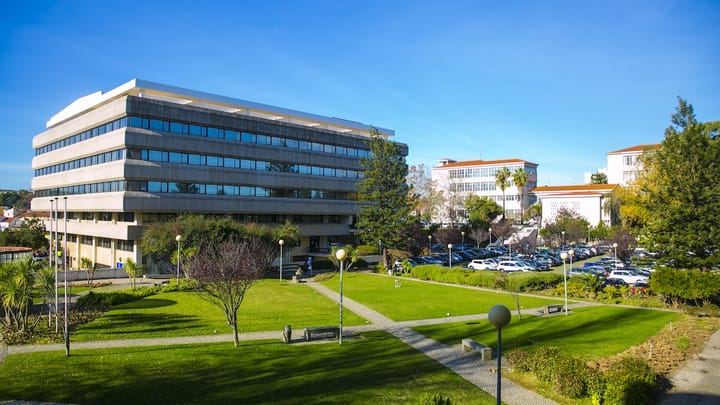
ESA BIC Tagus, the European Space Agency's newest Portuguese incubator, run by Instituto Superior Técnico's Técnico Venture Lab in Oeiras, will pick three Portuguese or international space startups by 5 October — each getting zero-equity funding, ESA technical support and access to an international
Portugal's ambitions in space are gaining a new launchpad on the ground. The European Space Agency's business-incubation programme has opened a fresh call for space startups through its newest Portuguese hub, ESA BIC Tagus, based in Oeiras just outside Lisbon — offering early-stage companies a package of cash and expertise to turn space technology into a viable business.
The centre is run by the Técnico Venture Lab, the entrepreneurship arm of the Instituto Superior Técnico (Lisbon's leading engineering school), and forms part of ESA's Europe-wide network of Business Incubation Centres. This latest call will select three companies — Portuguese or international — with applications open until 5 October 2026 through the programme's website.
What the chosen startups receive is designed to tackle the two things space ventures most often lack: money and access. Each gets direct, zero-equity funding — grants that do not require the founders to hand over a stake in their company — alongside technical support drawn from the European Space Agency itself, tailored business mentoring, and entry into an international network of investors, industry leaders and partners. For a young company trying to build hardware or software with a foot in the space sector, that combination is hard to assemble on the open market.
The call defines "space" broadly. ESA BIC centres typically back not only firms building satellites or launch technology but also those using space-derived data — Earth-observation imagery, satellite positioning, communications — to solve problems in other industries, from agriculture to logistics. The idea is that space capability is increasingly a tool for the wider economy, not a walled-off scientific pursuit.
The Oeiras hub already has a first cohort to point to. Three companies were selected in its opening phase: Altitude, working on space communications; Skylab, focused on suborbital access; and HydroAI, which applies artificial intelligence to Earth-observation data. Those early ventures give a sense of the range the centre is trying to nurture — from the infrastructure of getting to space to the applications that make orbital data useful back on the ground.
The timing fits a broader push. Portugal has been steadily building out its space sector, which a government-commissioned study earlier this year credited with adding some €2.4 billion to the economy over five years, and the country has courted space-related investment as part of its wider technology strategy. A dedicated incubator on the doorstep of Lisbon's main engineering university is a logical piece of that effort, funnelling academic talent and international founders into commercial ventures.
For entrepreneurs already in Portugal — including the growing community of foreign founders drawn to Lisbon's startup scene — the call is a concrete opportunity, and one open to international applicants rather than reserved for Portuguese nationals. Founders working on anything with a plausible space angle have until early October to apply, with three places, non-dilutive funding and a direct line into the European Space Agency's network on offer to those who make the cut. On the state programme now trying to close that gap, our report on the first Tech Foundry Portugal cohort, which filled 31 of the 40 places the state created for teams trying to get a validated laboratory result out of the laboratory sets the latest reference.