Sines Is Quietly Becoming Portugal's Most Strategic Asset — The Hormuz Crisis Is Accelerating The Shift
Port of Sines container capacity is expanding from 2.7M to 4.1M TEU, the LNG terminal handles 60 per cent of Portugal's gas, and a EUR 547 million investment has extended the concession to 2049. The Hormuz crisis is speeding up a transformation that would otherwise have taken a decade.
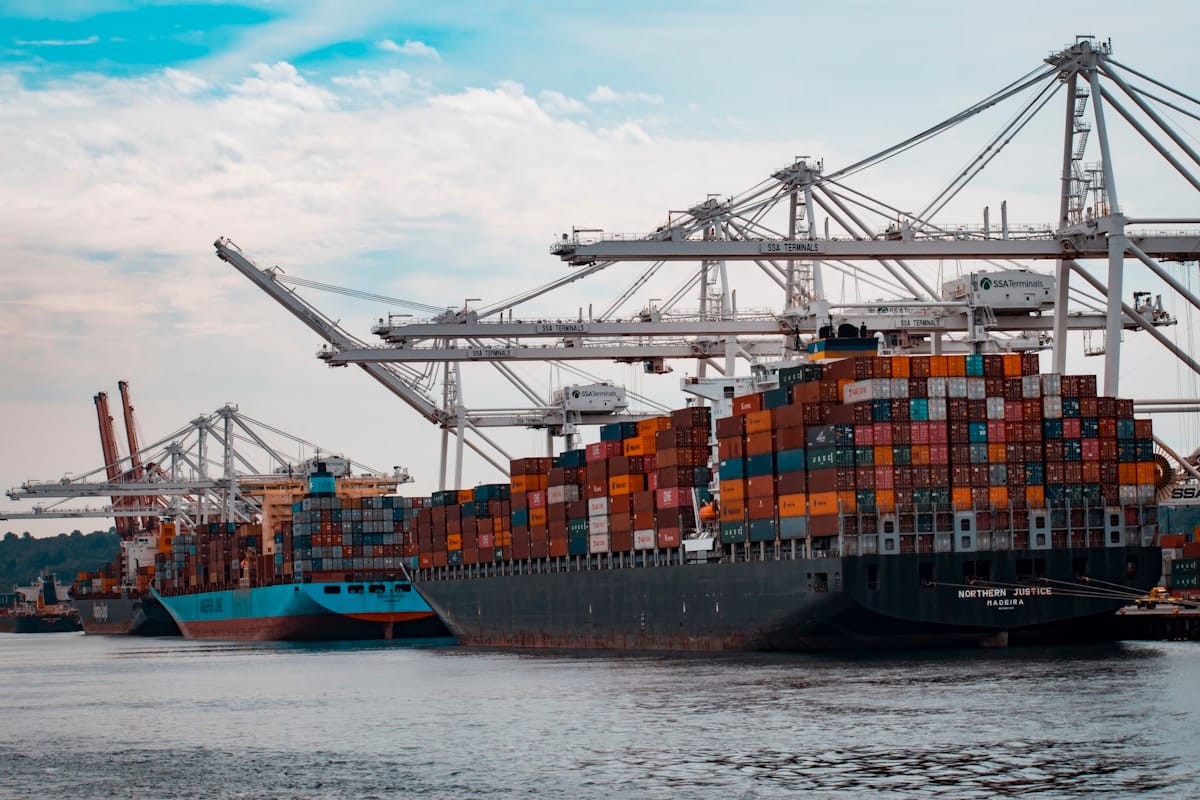
While Lisbon absorbs the political cost of the Middle East energy shock — a EUR 1 billion tab, EUR 450 million in fuel subsidies, emergency measures for freight companies — a quieter story is unfolding 160 kilometres to the south. The Port of Sines, long treated as a technical footnote in Portugal's economic coverage, is emerging as one of the most strategically valuable pieces of infrastructure on the European Atlantic seaboard. And the disruption in the Strait of Hormuz is speeding up a transformation that would otherwise have taken a decade.
The Numbers Behind the Shift
Sines' container capacity is in the middle of an expansion from 2.7 million TEU a year to 4.1 million — a 52 per cent increase that will lift the port into the top ranks of Atlantic gateways. Terminal XXI's quay is being extended from 1,040 metres to 1,950 metres, enabling berthing of the largest container vessels now in commercial service. The state has committed EUR 547 million to the upgrade and extended the terminal concession from 2029 to 2049, giving operators the visibility they need to finance the works. For broader context, see our practical guide to surfing in Portugal in 2026.
The LNG terminal, run by REN Atlântico under a private-use concession since 2004, now handles more than 60 per cent of the natural gas consumed in mainland Portugal and on Madeira. It passed its 900th ship operation and 90,000 tanks loaded for onward distribution in mid-2025. With the Hormuz crisis pushing European buyers away from Middle Eastern suppliers and back toward Atlantic LNG cargoes, traffic through Sines has tightened further. Galp reported a 164 per cent jump in refining margins at its adjacent Sines refinery in the first quarter of 2026 — a windfall that would not have been possible with a smaller or less flexible port.
The Political Logic
Prime Minister Luís Montenegro has publicly stated that Portugal wants Sines to handle more US LNG imports into Europe. That is not coincidence. Three European dynamics are converging at Sines' quay wall.
First, the Red Sea diversion of container traffic around the Cape of Good Hope has made Atlantic-facing deep-water ports more competitive against Mediterranean rivals like Piraeus and Algeciras. Sines' 17-metre depth accommodates the megaships now being rerouted.
Second, the EU's continued phase-out of Russian pipeline gas has put a premium on LNG regasification capacity on the Atlantic coast. Sines, along with Gijón in Spain, is one of a handful of points through which North American and African cargoes reach the European grid.
Third, Portugal's own energy security story — accelerating renewables, a hydrogen cluster already clustering around Sines, and a four-thousand-million-euro grid reinforcement unveiled this week — is increasingly anchored to the Alentejo coast.
What Is Still Missing
The strategic case runs ahead of the logistics. Sines' rail connection to Spain remains a single-track, non-electrified line — an anachronism for a port hoping to become a European hub. The Corredor Sul rail upgrade, promised since 2015, has slipped repeatedly and remains a pressure point in the current Portugal 2030 execution debate. Without a functioning rail spine, a significant share of Sines' container throughput still travels north by truck, eroding the cost advantage that made the port attractive in the first place.
Still, the direction of travel is clear. If the 2024-to-2026 window has been defined by Portugal discovering — painfully — how exposed it is to geopolitical shocks in distant waters, Sines is the place where that vulnerability is slowly being converted into leverage.