Scheduled Caesareans Quadruple in a Year as Portuguese Births Climb 3.6%
The Health Regulatory Authority counted 83,089 deliveries in 2025, up 3.6%, while the share of planned caesarean sections leapt from 10.2% to 41.3% in a single year — reaching 55% of births in private units.
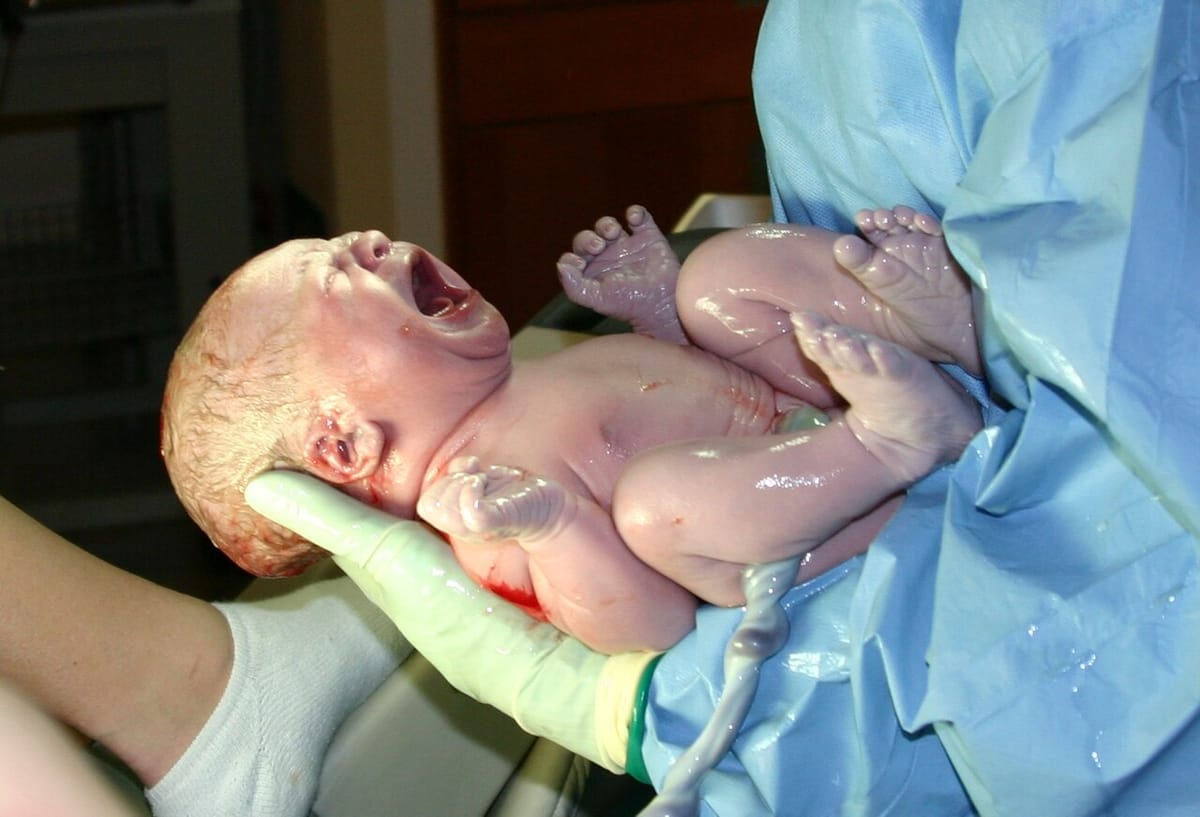
More babies were born in Portugal last year — and a far larger share of them arrived by a scheduled operation. New data from the Entidade Reguladora da Saúde (ERS — the Health Regulatory Authority) shows the number of deliveries rose 3.6 percent in 2025, while the proportion of planned caesarean sections quadrupled in the space of a single year.
The regulator counted 83,089 deliveries across 58 obstetric and neonatology units in mainland Portugal in 2025, up from the previous year. Around 80 percent took place in public hospitals, and eight in ten births were concentrated in just two regions: Lisboa e Vale do Tejo (Lisbon and the Tagus Valley) and the Norte (North).
The caesarean surge
The headline finding is the jump in scheduled caesareans — operations planned in advance rather than performed as emergencies during labour. Their share of all deliveries leapt from 10.2 percent in 2024 to 41.3 percent in 2025, roughly a fourfold increase.
- Private sector: planned caesareans rose to 55.3 percent of deliveries, from 10.2 percent a year earlier.
- Public SNS (Serviço Nacional de Saúde — National Health Service): up to 28.7 percent, from 10.2 percent.
- Overall caesarean rate: broadly stable at 39.1 percent of all births, versus 38.7 percent in 2024.
- By setting: 33.3 percent of public-hospital births were caesareans, against 62 percent in private units.
The near-stable overall rate alongside a quadrupling of the planned share points to a shift in how, rather than how often, caesareans happen: procedures that were previously logged or carried out as unscheduled are increasingly being booked ahead of time, particularly in private maternity units where nearly two-thirds of births are now surgical.
Well above international norms
Portugal's overall caesarean rate of close to 40 percent remains far above the level long flagged by the World Health Organization (WHO), which has said that at population level a rate above roughly 10 to 15 percent is not associated with better outcomes for mothers or babies. High caesarean rates are a persistent feature of southern European health systems, but the concentration of surgery in the private sector — and the sharp move towards pre-scheduled operations — is likely to renew debate over whether convenience and scheduling, rather than clinical need, are driving the trend.
Regional variation is wide: the Centro (Centre) region recorded the lowest caesarean rate at around 29 percent.
What This Means for Residents and Expats
- Where you give birth shapes the odds: A birth in a private unit is now far more likely to be a caesarean — 62 percent — than one in the public SNS, at 33 percent. It is worth discussing your preferences and a hospital's typical practice early.
- Public system still handles the majority: Eight in ten deliveries happen in public hospitals, and access is broad, though capacity strains have forced temporary maternity closures in some towns this summer.
- Ask about "scheduled" versus "medically indicated": With planned caesareans now above 40 percent, expectant parents may want to understand why an operation is being proposed and whether a vaginal birth remains an option.
- Geography matters: Services are heavily concentrated in Lisbon and the North; families in interior regions may face longer journeys to an obstetric unit.
The rise in births is welcome news in a country long worried about its shrinking and ageing population. But the parallel surge in planned surgery hands the health regulator, hospitals and the incoming crop of expectant parents a harder question — whether Portugal's maternity care is being shaped as much by the calendar as by the clinic.