Road Safety Authority Inherits Siren and Blue-Light Permits From the IMT in February, With a Three-Year Limit and Online Applications
A ministerial order published on Friday moves authorisation of sirens and flashing beacons on non-emergency vehicles from the IMT to the ANSR, caps permits at three years and makes applications digital. Drivers' duty to give way is unchanged.
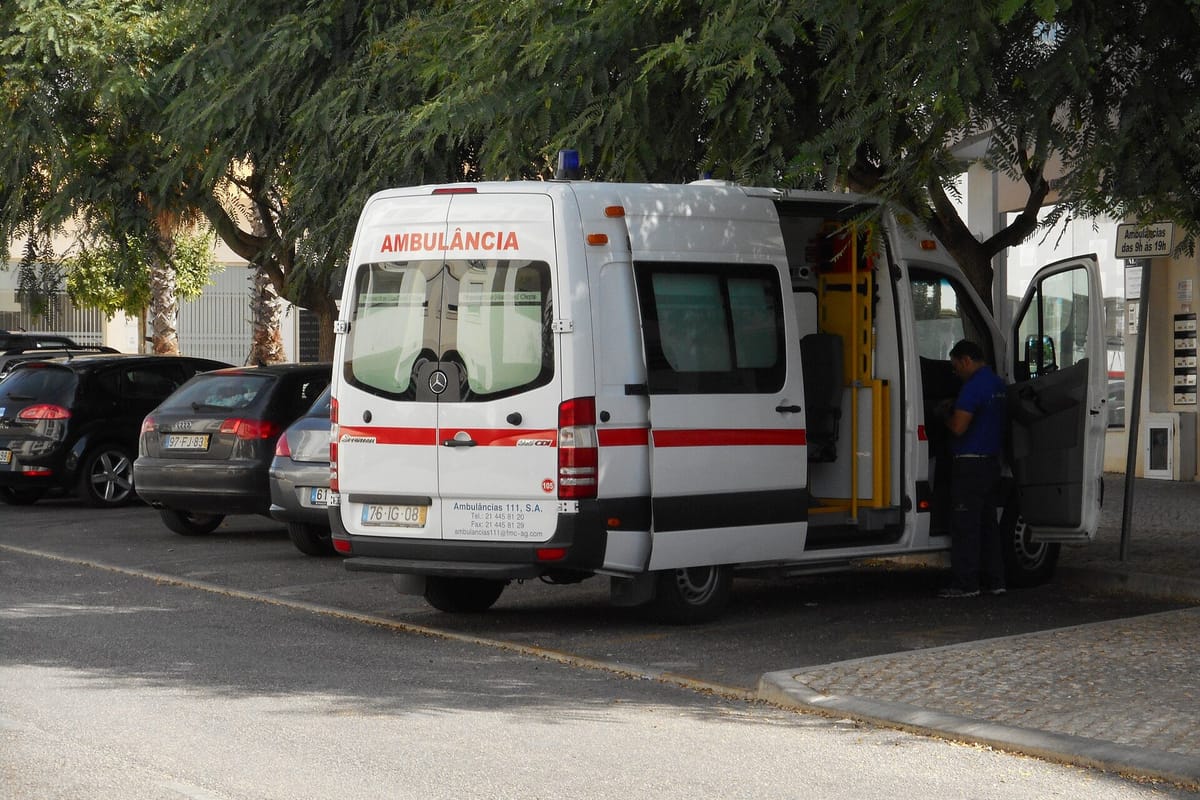
Permission to fit sirens and flashing lights to any vehicle outside Portugal's police, fire, civil protection and ambulance fleets will be granted by the national road safety authority, the Autoridade Nacional de Segurança Rodoviária (ANSR), rather than by the Instituto da Mobilidade e dos Transportes (IMT), the vehicles and licensing institute. The change comes in Portaria n.º 522/2026/1, a ministerial order signed by Interior Minister Luís Neves on 16 November and published in the Diário da República (the official gazette) on Friday 20 November. It takes effect 90 days after publication, in mid-February 2027.
The order is the second amendment to the Regulamento de Avisadores Especiais, the rulebook for emergency sirens and warning beacons first approved in 2005.
Who may use blue lights and sirens
The basic list does not change. Sirens and blue beacons may be fitted to police, fire service, military and militarised forces, civil protection vehicles and ambulances. Vehicles in official government convoys, and those assigned to the presidents of parties with seats in parliament and to their parliamentary leaders, may also carry sirens and auxiliary blue lights.
Any other vehicle whose registration document shows it is used only for rescue or urgent work will follow rules set by the ANSR president. Other vehicles used for urgent public-interest work will need ANSR authorisation, as will vehicles used only occasionally for slow-moving or stop-and-go work that want the yellow beacon. That beacon remains compulsory on roadworks, road-signing and street-cleaning vehicles, tow trucks, pilot cars, industrial machines and most farm vehicles, and on abnormal loads more than 20 metres long or 3.5 metres wide.
What is new
- A new authority. Applications go to the ANSR president, and must be submitted digitally. Under the 2024 version they were lodged at the IMT's regional office. The IMT keeps the job of approving the models of siren and beacon that may be fitted.
- A time limit. Authorisations will last no more than three years, renewable for up to three years at a time.
- A register for police checks. Fitting auxiliary blue lights to convoy and party-leader cars must be reported to the ANSR, which will share the information with the GNR and the PSP for roadside checks.
- Extra beacons become compulsory where the shape of a vehicle or its load stops a single beacon being seen all round at 50 metres (blue) or 100 metres (yellow). Until now they were optional.
Equipment already fitted under the old rules, including anything the IMT authorised, can stay in use for the rest of its authorisation as long as it works properly. Applications still pending when the order takes effect will be decided under the old rules.
What it means for drivers
Your duties do not change. Under Article 65 of the Código da Estrada, the Highway Code, every driver must give way to an emergency vehicle signalling its approach. On a congested road, keep as far to the right as you can and use the hard shoulder if needed. Two exceptions apply: roads with dedicated lanes (corredores de circulação), and motorways and car-only expressways, where you must leave the hard shoulder clear for the emergency vehicle. Failing to give way carries a fine of 120 to 600 euros. Fitting a siren or blue light to a vehicle that is not entitled to one carries a fine of 500 to 2,500 euros, and police will remove and confiscate the equipment.
The IMT, which loses the authorisation role, saw its online licence and vehicle services knocked out by cyberattacks last week. See also our report on INEM's winter ambulance numbers.