Portuguese Councils Would Get to Switch Off Zero Licensing Across Part of Their Historic Centres, Under a Code Still Being Drafted
Manuel Castro Almeida told a parliamentary committee on Wednesday that municipal assemblies will be able to carve a percentage of their urban territory out of the licenciamento zero regime, to stop front shops and protect shops with a history.
Portugal's Minister for the Economy and Territorial Cohesion told a parliamentary committee on Wednesday that municipal assemblies will be given the power to switch off "licenciamento zero", the zero-licensing regime, across part of their own territory. Manuel Castro Almeida said the carve-out will sit inside a Código do Licenciamento Empresarial (Business Licensing Code) the government is currently drafting.
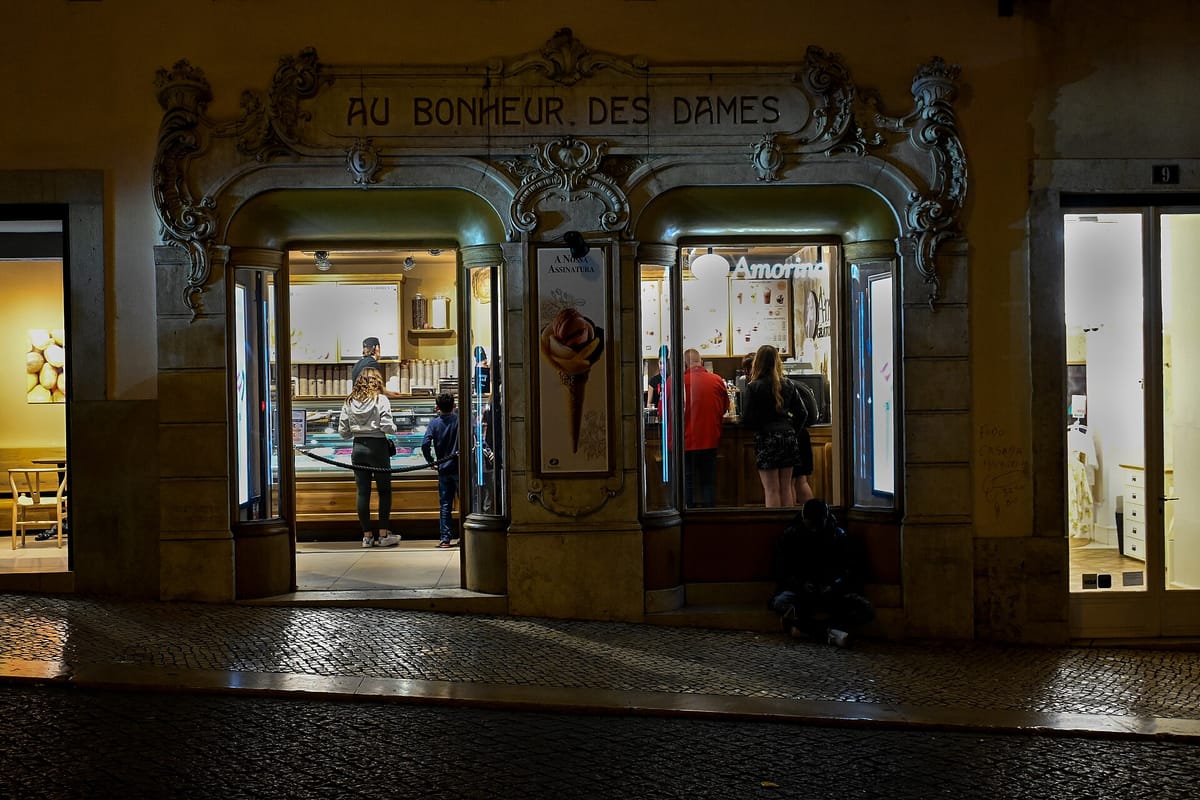
"We are going to allow municipal assemblies, on a proposal from the câmaras municipais, to define areas, a certain percentage of their urban territory, to fall outside the zero-licensing regime," he told the Comissão de Economia e Coesão Territorial (Economy and Territorial Cohesion Committee). Inside those areas, licensing a commercial activity would come back under municipal control. The exception would concentrate on zones of heavy tourist density and on the surroundings of national monuments, with two stated purposes: to deal with the so-called lojas de fachada, front shops, and to preserve what he called lojas com história, shops with a history.
A demand that has been building for a year
None of this appears from nowhere. The government confirmed in August that it was preparing measures against premises that trade as ordinary businesses by day and serve as unlicensed accommodation by night, an arrangement investigators have repeatedly linked to irregular migration and, at the worst end, human trafficking. The complaint is older than that: it has come from mayors and local traders for years, produced a public petition, and ended up in a recommendation to the government carried by the PSD, CDS, Chega and Iniciativa Liberal.
Lisbon's mayor, Carlos Moedas, who has pressed hardest for this, welcomed the announcement. "It is good news. It is essential to end zero licensing at least in the historic zones. It is already a first step and I applaud it," he told Observador.
The code is mostly a loosening, not a tightening
It is worth reading the exception against the thing it is an exception to. The Business Licensing Code is a consolidation project first: the government wants to gather into a single instrument rules currently spread across 38 separate pieces of legislation. "It is a task for great specialists, knowing how to license business activities in practice," Castro Almeida said of the present state of things.
The governing principle he described for the code is not restriction. It is "to facilitate the opening of business establishments", built on "a logic of facilitating and of inspecting after the fact": an engineer or responsible technician certifies that the premises meet the applicable standards, the establishment opens on a set date, and only then can it be inspected. That is the same direction the minister took with the industrial licensing rules, where he cut the code from roughly 600 articles to 200 in May.
So the shape of it is a national regime that gets easier, with a small, locally drawn share of the map where it gets harder. A model that licenses first and inspects afterwards leans entirely on inspection capacity, which is the resource that was missing when the front shops proliferated in the first place. And a council veto over new licences in a historic quarter does nothing about premises already trading there.
What is still unknown
Quite a lot. The minister named no figure for the percentage of urban territory a council could carve out, and set no ceiling or floor on it. No draft has been published, no consultation announced, and no date given for when the code reaches the Council of Ministers. For a shopkeeper in the Baixa or in Porto's historic centre, Wednesday's announcement is a direction of travel rather than a rule, and for anyone planning to open a business in a tourist district, the zero-licensing regime is still the one that applies.