Portugal's Renewable Energy Revolution: 75% Clean Electricity in 2026
Portugal's Clean Energy Transformation In March 2024, Portugal ran on 100% renewable electricity for 343 consecutive hours — over 14 days straight. It wasn't a one-off. In 2025, renewables generated 72% of the country's electricity, up from 31% in...
Portugal's Clean Energy Transformation
In March 2024, Portugal ran on 100% renewable electricity for 343 consecutive hours — over 14 days straight. It wasn't a one-off. In 2025, renewables generated 72% of the country's electricity, up from 31% in 2010. Portugal is now one of Europe's clean energy leaders, and the trajectory for 2026 suggests the country will surpass 75% renewable electricity this year.
The Energy Mix in 2026
Portugal's electricity generation breaks down approximately as follows:
- Wind: 28% — Portugal's Atlantic coastline and interior mountain ridges make it ideal for wind. Total installed capacity: ~6.2 GW. The country is now expanding into offshore wind, with the first floating wind farm off Viana do Castelo
- Hydroelectric: 25% — Highly variable depending on rainfall. The Douro, Tejo, and Guadiana river systems host major dams. Pumped-storage (like Foz Tua and Alqueva) provides grid balancing
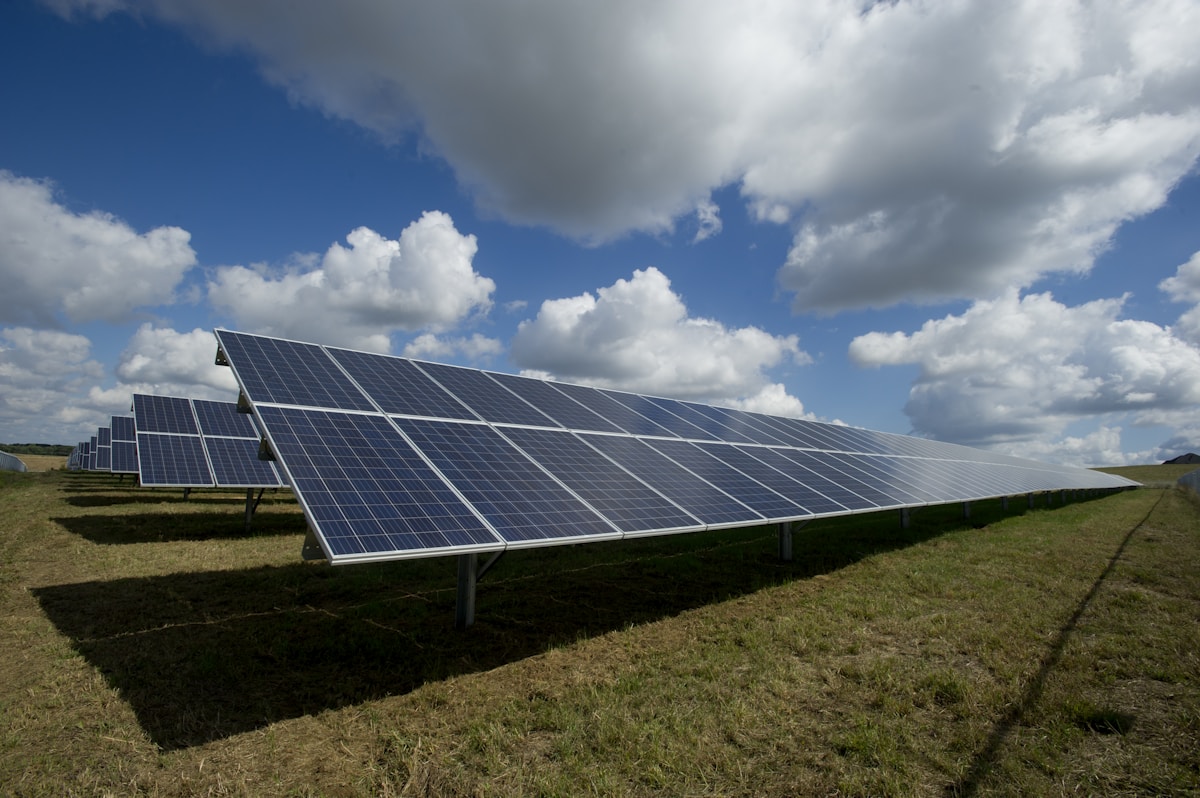
- Solar: 16% — The fastest-growing segment. Portugal averages 2,500-3,000 sunshine hours/year (vs 1,500 in Germany). Utility-scale solar farms are expanding rapidly in the Alentejo. Residential solar with net metering is increasingly common
- Biomass and biogas: 5% — Mostly from forestry waste (pine and eucalyptus). Serves a dual purpose: energy generation and forest fire prevention
- Natural gas: 20% — Still the primary fossil fuel for electricity, used for baseload and peaking. Portugal imports all its gas via LNG terminal at Sines and pipeline from Algeria/Spain
- Coal: 0% — Portugal closed its last coal plant (Pego) in November 2021, becoming one of the first European countries to fully exit coal
What's Driving the Transition
Several factors explain Portugal's rapid progress:
Geography: Abundant wind, sun, and hydro resources make Portugal naturally suited for renewables. The combination of Atlantic wind and Mediterranean sun means generation is relatively complementary across seasons.
EU targets: Portugal has committed to 80% renewable electricity by 2030 under the National Energy and Climate Plan (PNEC 2030). Current trajectory suggests this is achievable.
Grid interconnection: Portugal's grid connects to Spain, which connects to France. This allows export of surplus renewable generation and import during low-wind/low-rain periods. The planned submarine cable to Morocco would add another interconnection.
Hydrogen strategy: Portugal has positioned itself as a green hydrogen hub, leveraging cheap solar electricity. The Sines Industrial Zone is developing electrolyser capacity, targeting green hydrogen production for domestic use and export.
Impact on Electricity Costs
Despite the renewable transition, Portuguese electricity prices remain among Europe's highest for households — around €0.22-0.25/kWh in 2026 (including taxes and network charges). This reflects high network costs (distributed population, long distances) and significant taxes rather than generation costs.
The regulated tariff (set by ERSE, the energy regulator) decreased slightly in 2026 after the energy crisis peak of 2022-2023. Switching to the liberalised market (Endesa, Galp, Goldenergy, Coopernico) can save 10-15%.
For homeowners, residential solar panels with net metering now offer payback periods of 5-7 years, down from 10-12 years a decade ago. A typical 3kWp system costs €3,500-5,000 installed and generates €500-700/year in avoided electricity costs.
Electric Vehicles and Charging
Portugal's EV charging network has expanded dramatically. The MOBI.E network (nationwide public charging) has over 6,000 charging points across the country, with fast chargers along all major motorways. EV sales accounted for approximately 30% of new car registrations in 2025, driven by tax incentives (no ISV registration tax, reduced IUC circulation tax, company car tax benefits).
What This Means for Expats
Portugal's energy transition affects daily life in several ways. Electricity contracts increasingly offer 'green' tariffs at no premium. Solar panel installation is straightforward (licensed installers, municipal permits, DGEG registration) and financially attractive. EV ownership is practical even outside Lisbon and Porto thanks to expanding charging infrastructure. And the country's commitment to renewables aligns with the values of many international residents who chose Portugal partly for quality of life and environmental reasons.
The main frustration remains electricity pricing — renewable generation is cheap, but delivery and taxes are not. Shopping around between providers and investing in home solar are the most effective cost-reduction strategies.
Background: See Brussels' CJEU referral on the RED III renewables-directive non-transposition. For households on the consumption side, our 2026 guide to solar self-consumption (autoconsumo) — the UPAC tiers, the DGEG communication and the surplus-injection rules sets the latest reference. On the EV-charging side, our 2026 guide to EV charging in Portugal — the Mobi.E network, the CEME/OPC split, the 30.8% EGME tariff drop and the Via Verde Eletric super-charger map sets the latest reference. On the Portuguese new-vehicle market tape, our read on the ACAP April 2026 tape — Tesla 203 units (-32.8%) inside a 5,010-unit BEV print up 34.6% as Chinese and European challengers take the slack sets the latest reference. On the EDP / EDPR capital-allocation rail, our 19 May EDP read — the intra-group transfer of EDPR's 1.1 GW of Brazilian onshore wind and 0.7 GW of solar to EDP Brasil at roughly €700 million of equity and €1.5 billion of enterprise value, recycling capex into A-rated United States and European pipelines and lifting the share of EDPR EBITDA from A-rated jurisdictions above 95 percent sets the latest reference. For the household-side mechanics of the electricity market, our 2026 Setting-Up-Electricity practical guide — how the liberalised Mibel retail market actually runs in Portugal, the comercializadores shortlist (EDP Comercial, Endesa, Iberdrola, Galp Power, Goldenergy, Plenitude, Repsol, SU Eletricidade), the 20-digit CPE that identifies the connection, the potência contratada ladder from 1.15 to 20.7 kVA, the simples / bi-horária / tri-horária tariff schedules, the IVA 6%/23% split, the Tarifa Social discount and the ERSE switching window sets the latest reference. On the residential-utilities setup side, our 2026 practical guide to setting up water (contrato de água doméstica) — how to identify your municipal operator across EPAL, the SMAS network and the Águas do Norte / Centro Litoral / Vale do Tejo / Tejo Atlântico / Algarve regional companies, the documents and caução at signing, the four-line ERSAR bill structure with disponibilidade and escalão tiers, the Tarifa Social and Tarifa Familiar discount tracks and the self-reading rhythm that prevents back-billing disputes sets the latest reference. On the grid-resilience and consumer-compensation side, our 26 May read on ERSE's evento-excecional ruling on the 28 April 2025 Iberian blackout — REN and E-Redes exempted from automatic quality-of-service compensation to consumers, MIBEL trigger located on the Spanish side, three-year judicial-damages window remains open in Portuguese and Spanish courts sets the latest reference. On the household-electricity-contract side, our 2026 practical guide to setting up an electricity contract in Portugal — the MIBEL liberalised market, the ~30-comercializador retail landscape, the ERSE-regulated tariff framework, the potência contratada bracket choice, the Tarifa Simples vs Bi-Horária vs Tri-Horária decision, the Tarifa Social means-tested discount, the smart-meter rollout and the friction-free switching procedure that lets you change supplier without touching the wires sets the latest reference. On the auto-market side of the file, our 1 June read on ACAP's May 2026 light-passenger matrículas at 25,080 units (+6.5% YoY) with the 100%-electric share hitting 27.9% — the first single month above 27% — and YTD volume at 110,731 (+9.8%), VW (1,813), Peugeot (1,804) and Mercedes-Benz (1,764) leading the brand stack within 50 units of each other, combined BEV-PHEV-HEV mix at 73.7% of YTD volume sets the latest reference. On the electricity-market reform and renewable-acceleration side of the file, our 5 June read on President António José Seguro promulgating the Government's electricity decree-law that amends Decreto-Lei 15/2022, transposes EU Directive 2024/1711 plus partial transposition of Directives 2023/2413 (RED III) and 2023/1791 (Energy Efficiency), carves out ZAER renewable-acceleration zones, exempts 800 W self-consumption from prior verification and mandates fixed-price tariffs from retailers above 200,000 customers sets the latest reference. On the Fundo Ambiental, Incentivo Veículos Elétricos, BEV-acquisition incentive, PNEC 2030 and electric-mobility decarbonisation side of the file, our 11 June read on the Fundo Ambiental reopening the Incentivo Aquisição Veículos Elétricos with a €10 million Aviso 06/2025 Phase 2 envelope — €4,000 per household BEV (≤€38,500 / ≤€55,000 5+ seater), €5,000 per IPSS BEV, 278 charging-station awards and 1,375 target subsidies through 27 July under Ministra Maria da Graça Carvalho's PNEC 2030 anchor sets the latest reference. On the Portuguese renewables-equity tape, Acciona Energía portfolio rotation, Iberian wind-and-solar M&A and parent-level strategic-review side of the file, our 19 June read on Acciona Energía plotting a 166 MW Portuguese wind-and-solar divestment — 120 MW wind stack and 46 MW solar cluster go to advisors as the Spanish parent weighs a delisting or buyout of its 91% renewables stake sets the latest reference. On the electricity consumer-protection, mercado livre, tarifa social, ERSE, payment-plan and disconnection-limit side of the file, our 22 June read on the Government shielding vulnerable households from electricity cut-offs and forcing fixed-price contracts from large suppliers — payment plans, billing-dispute protection and a social tariff that follows the customer across switches sets the latest reference. On the gas-network, energy-infrastructure, ERSE-regulation and decarbonisation side of the file, our report on the gas distributors' €406.8 million network plan for 2027–2031 and GEOTA's stranded-asset warning sets the latest reference. On the energy, industry and green-investment side of the file, our coverage of Portugal's bet that cheap electricity can draw green industry sets the latest reference. On the state-ownership and energy-grid side of the file, the State's return to REN's capital looks at Portugal buying back into the national power network. On the household-bill side of the file, our guide to the audiovisual contribution on your electricity bill breaks down the RTP levy hidden in every Portuguese power bill and who can avoid it.