Portugal's Lajes Airbase at the Heart of Iran Controversy as Parliament Prepares for Showdown
Portugal's decision to allow the United States to use the Lajes Air Base on Terceira Island in the Azores during its bombing campaign against Iran has triggered a parliamentary storm, with Prime Minister Luís Montenegro facing mounting cross-party...
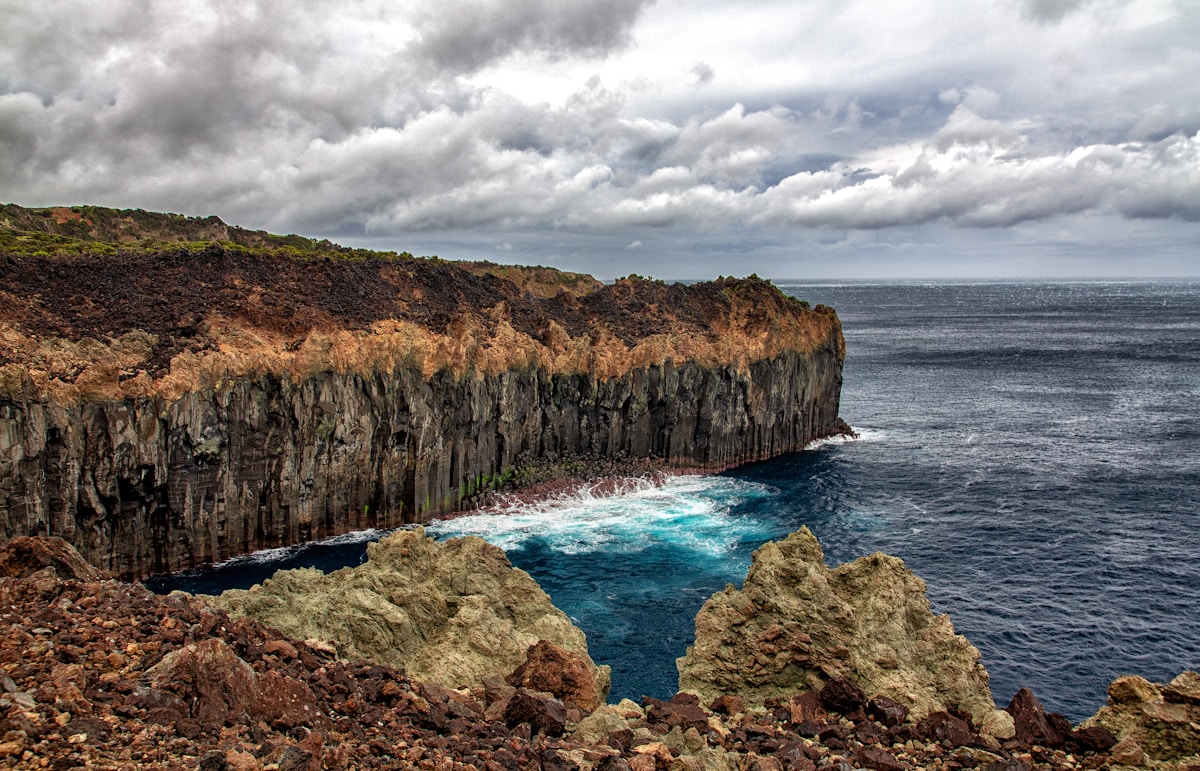
Portugal's decision to allow the United States to use the Lajes Air Base on Terceira Island in the Azores during its bombing campaign against Iran has triggered a parliamentary storm, with Prime Minister Luís Montenegro facing mounting cross-party pressure over the country's role in one of the most significant military operations since the Gulf War.
Montenegro defended the move this week, arguing that Portugal's obligations under the Luso-American Defence Co-operation Agreement — a bilateral treaty that has governed the use of Lajes since 1951 — left the government with limited room to refuse. The base, strategically positioned in the mid-Atlantic, served as a key logistics node during Washington's 'Operation Epic Fury', allowing American aircraft to refuel and resupply during the campaign.
"We acted in conformity with our treaty commitments and within the framework of international law," Montenegro told reporters at the Palácio de São Bento on Wednesday, drawing an implicit contrast with Spain, which declined a similar request from Washington. Madrid's refusal has deepened a transatlantic rift, with Spain's government describing the US strikes as a violation of international norms — a position Lisbon has notably not endorsed.
A Parliamentary Reckoning
The prime minister's remarks have done little to quieten his critics. Foreign Affairs Minister Paulo Rangel has been summoned to parliament to provide a fuller account of the government's position, and Montenegro's bi-monthly debate with opposition leaders — scheduled for later today — is expected to centre almost entirely on the Azores question.
Bloco de Esquerda, the Communist Party, and even some voices within the Partido Socialista have accused the government of subordinating Portuguese sovereignty to American strategic interests. "This is a decision with consequences for the whole of Europe and for the safety of Portuguese citizens," said one PS deputy. "We deserved a debate in the Assembly of the Republic before, not after."
The government has pushed back, insisting that the United States provided advance notice and that the operation was conducted within the legal parameters of the bilateral agreement. Ministers have also pointed to Portugal's longstanding Atlanticist orientation, noting that the Lajes base has been central to NATO operations since the Cold War.
186 Portuguese Citizens Evacuated from the Middle East
As the domestic political drama unfolded, Portuguese authorities were simultaneously managing a major repatriation operation. By early Friday morning, a military C-130 aircraft carrying 39 passengers — 24 Portuguese citizens and 15 nationals from France, Greece, Brazil, and Israel — had landed at Figo Maduro Airport in Lisbon, having departed from Oman. The Secretary of State for Communities, Emídio Sousa, was present to receive those returning.
A second flight, an Airbus A330 chartered from TAP Air Portugal, was due to arrive with a further 147 passengers by mid-morning, carrying 139 Portuguese nationals and eight foreign citizens from Germany, Italy, the United Kingdom, the United States, and Peru. In all, the operation was expected to account for the repatriation of 186 people.
Portugal has activated the European Union's Civil Protection Mechanism to help co-ordinate the effort, with available seats on Portuguese-organised flights offered to citizens of other EU member states. Repatriation costs, estimated at up to €600 per person, are being deferred rather than waived — those returning are required to sign a state payment pledge before boarding.
For the estimated several thousand Portuguese residents still in the wider Middle East region — including significant communities in the UAE, Qatar, and the Gulf states — the situation remains difficult. With airspace over much of the region still disrupted, the government has urged citizens in affected areas to register with the nearest consulate and to follow official guidance rather than seek independent travel arrangements.
Where Portugal Stands
The episode has crystallised a tension that runs deep in Portuguese foreign policy: the country is constitutionally committed to non-belligerence and peaceful conflict resolution, yet its strategic geography and its dependence on the Luso-American treaty make neutrality effectively impossible once Washington calls. Whether Montenegro's handling of the Lajes decision ultimately strengthens or weakens his government may depend on how long the conflict lasts — and on whether Portuguese public opinion, broadly suspicious of military adventurism, comes to see the government's position as principled pragmatism or willing complicity.
For the hundreds of Portuguese caught in the crossfire — literally and figuratively — the most pressing concern remains getting home safely. More repatriation operations are expected in the days ahead. On the civil-registration side, our 2026 guide to funerals and death registration in Portugal (registo de óbito, cremação vs sepultamento, cemitérios municipais and the SIRRC repatriation chain) sets the latest reference.