Portugal's DNA Database Holds 29,659 Profiles, Nearly Two Thirds From Convicted People, and Matched 836 Times in 2025
The oversight council's 2025 report shows fewer new profiles, 856 convicts' profiles deleted and 836 matches, which are leads rather than solved crimes. Who goes on the database, what it can reveal, and how to add your own profile for free.
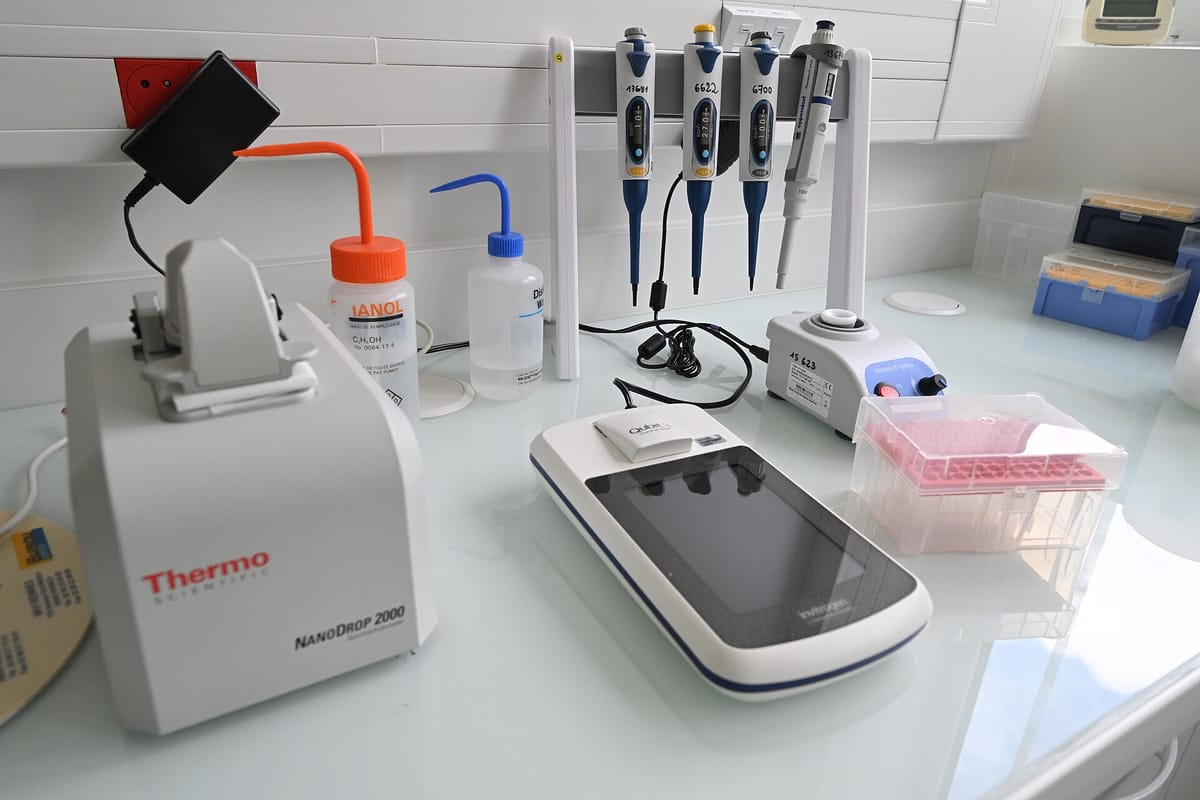
Portugal's national DNA database held 29,659 genetic profiles at the end of 2025, and nearly two thirds of them belong to people convicted of crimes. The figures come from the 2025 annual report of the Conselho de Fiscalização da Base de Dados de Perfis de ADN (the DNA Profile Database Oversight Council), drawn up with data from the Instituto Nacional de Medicina Legal e Ciências Forenses (INMLCF, the National Institute of Legal Medicine and Forensic Sciences) and the Polícia Judiciária's (PJ, the criminal investigation police) forensic laboratory, as reported by ECO on Saturday 21 November.
ECO reports that the Ministry of Justice and the INMLCF have also launched an anonymous online quiz to explain how the database works, because, more than 15 years after it opened, few people know what it does.
Whose profiles are on it
- 18,530 convicted people, 62.48 percent of the total.
- 10,318 profiles from biological traces found during criminal investigations, 34.79 percent.
- 648 profiles of professionals who collect and analyse samples.
- 89 unidentified profiles and 32 reference samples for civil identification, which is matching missing people and unidentified remains.
- 27 suspects (arguidos) in pending cases, and 15 volunteers.
Fewer profiles went in last year: 3,986, down from 4,633 in 2024. Crime-scene profiles fell from 1,721 to 1,465, and convicted people's from 2,870 to 2,412. Under the rules on how long data may be kept, 856 convicted people's profiles were deleted in 2025, against 2,507 the year before.
836 matches, which are leads, not solved crimes
The database produced 836 national matches (hits) in 2025, almost the same as the 839 of 2024 and up from 583 in 2023 and 56 in 2022. Of last year's matches, 416 linked traces from different crime scenes to each other, 392 linked a crime-scene trace to a convicted person, 27 were between convicted people's profiles and one linked a trace to a suspect.
A match is not a solved case. It tells investigators that the same person's DNA appears in two places, and it is then for the police and prosecutors to work out what it means. A match between two crime scenes can show that cases being investigated separately involve the same person, even before anyone is suspected.
Who goes on it, and what it can reveal
The database was created by Lei n.º 5/2008, of 12 February, has worked since 2010 and is run by the INMLCF. Inclusion is not automatic. A convicted person's profile is collected by court decision when the legal conditions are met, and a suspect's sample also needs a judge's order. The analysis looks only at non-coding DNA markers used for identification, not at genetic information that would reveal a person's health or other inherited traits.
How to add your own profile
Anyone aged 18 or over can ask to have their profile added as a volunteer, for example so that they could be identified after a disaster or if they went missing, according to the Ministry of Justice's service page (in Portuguese). A legal representative can apply for a minor or for an adult who lacks capacity, with the prior authorisation of the Ministério Público (Public Prosecutor's Office). Relatives of a missing person apply through the magistrate handling the case.
- The form is on that page. You choose one of three files: volunteer; volunteer without cross-checking against criminal investigations; or reference sample for civil identification. Attach a copy of your Cartão de Cidadão (citizen card), identity card or passport.
- Send it to the President of the INMLCF, by registered post to the DNA Profile Database Unit, Polo das Ciências da Saúde (Polo III), Azinhaga de Santa Comba, 3000-548 Coimbra; by email to [email protected] if it is digitally signed; or in person at one of the institute's offices.
- The sample is a mouth swab (saliva) or another non-invasive method, taken at a place and time the unit sets once it has checked there is no legal obstacle.
- The cost: free for volunteers, minors and relatives of missing people. A volunteer who refuses cross-checking against criminal investigations pays 408 euros (four procedural units of account) plus 23 percent VAT, before the test.