Portugal's 261.5 Million Euros of EU Storm Aid Clears a European Parliament Committee, With Two Votes Still to Come
The Solidarity Fund money for the storms of January and February still needs the Council and the full Parliament. Portugal has already received an advance of 65.37 million euros.
Portugal's share of EU disaster aid for last winter's storms has cleared its first vote in the European Parliament. The Parliament's Committee on Budgets on Monday approved 261.5 million euros from the European Union Solidarity Fund to help the country recover from the storms that hit the mainland in January and February.
The money is not yet released. The aid still needs the approval of the Council of the EU, where member states sit, and of the Parliament's full plenary session.
What was approved
In all, the committee approved 489 million euros for four member states hit by severe weather, according to the Parliament's statement: 261.5 million for Portugal, 149.1 million for Spain, 74.9 million for Italy and 3.7 million for Malta. Portugal's share is the largest of the four. The European Commission proposed the Portuguese amount on 17 September.
Portugal has already received an advance of 65.37 million euros, about 25 percent of the total, according to Hélder Sousa Silva, a PSD MEP and the shadow rapporteur on the file, in a note to the Lusa news agency. He said he would now work for the "rapid release" of the money, while protecting the EU's financial interests and budget transparency.
What the money can pay for
The Solidarity Fund does not compensate private losses directly. It helps governments pay for emergency and recovery work, which the Parliament lists as restoring energy, water, wastewater, telecommunications and transport infrastructure, and health and education services. It also covers clean-up operations, temporary housing and rescue services, measures to make prevention infrastructure safe, and protection of cultural heritage.
In practice, that means the money reimburses the State and local authorities for spending already made or under way, from repairing roads and bridges to rehousing families. Help for individual households and businesses comes through separate national schemes and other EU funds, such as the 30 million euros of EU aid for farmers in 90 councils announced in September.
The scale of the damage
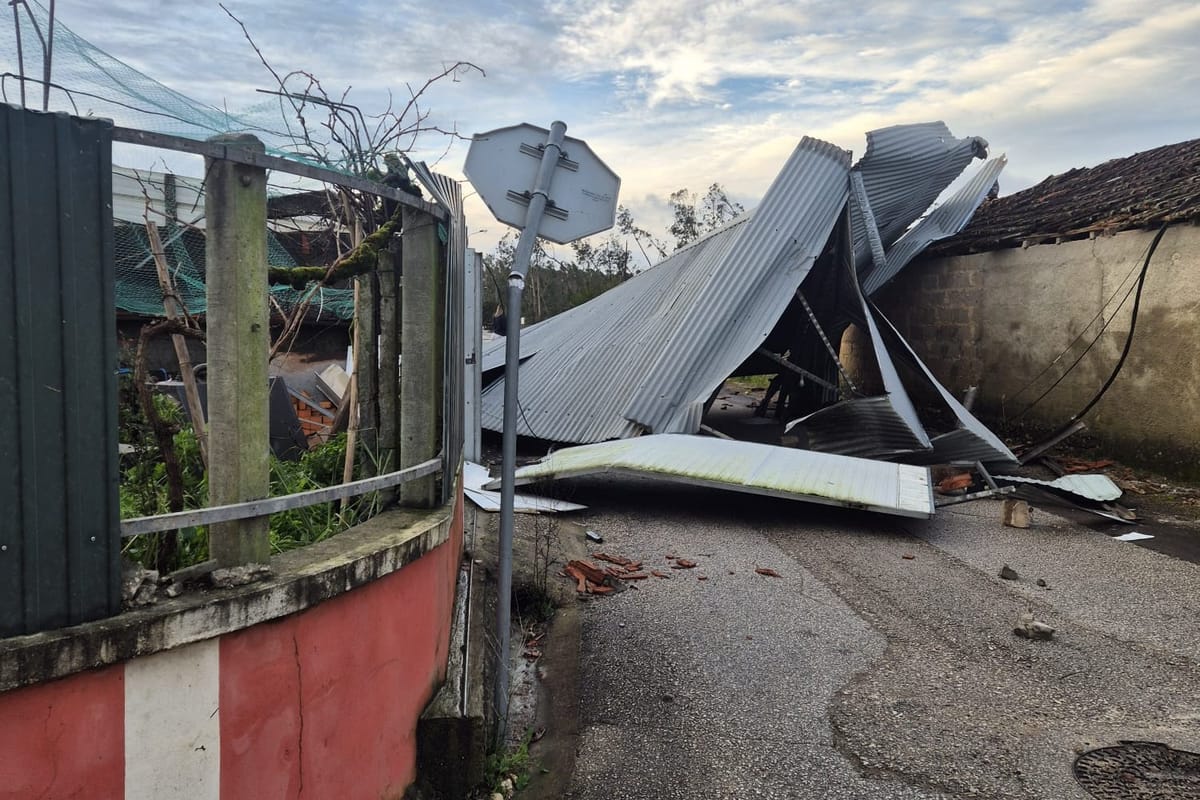
The storms Kristin, Leonardo and Marta crossed the mainland over about three weeks between late January and early March. At least 19 people died, more than half of them during recovery work, and several hundred were injured, made homeless or displaced. The worst-hit areas were the Centre, Lisbon and the Tagus Valley, and the Alentejo.
Thousands of homes, businesses and public facilities were wholly or partly destroyed. Trees and structures fell, power, water and communications were cut, and rivers flooded. The damage has been put at more than five billion euros, so the Solidarity Fund payment would cover only around 5 percent of the losses.
The winter also exposed weaknesses in emergency planning. After Kristin, the State bought emergency radio handsets for every parish, but its tender for generators drew no bidders. Researchers in Évora are now preparing to fly more weather balloons into this winter's storms after studying last year's run of atmospheric rivers.
Neither the Parliament nor the MEP gave a date for the plenary vote.