Portugal's 2027 Budget Forecasts 2.1 Percent Growth and a Small Surplus, While the Interest Bill Jumps 23 Percent to 8.2 Billion Euros
The Government expects 2.3 percent growth this year and 2.1 percent in 2027, a 0.1 percent surplus and debt at 84.5 percent of GDP. The fiscal council endorses the forecasts but says 2027 growth is the most optimistic around and this year's inflation figure is unlikely.
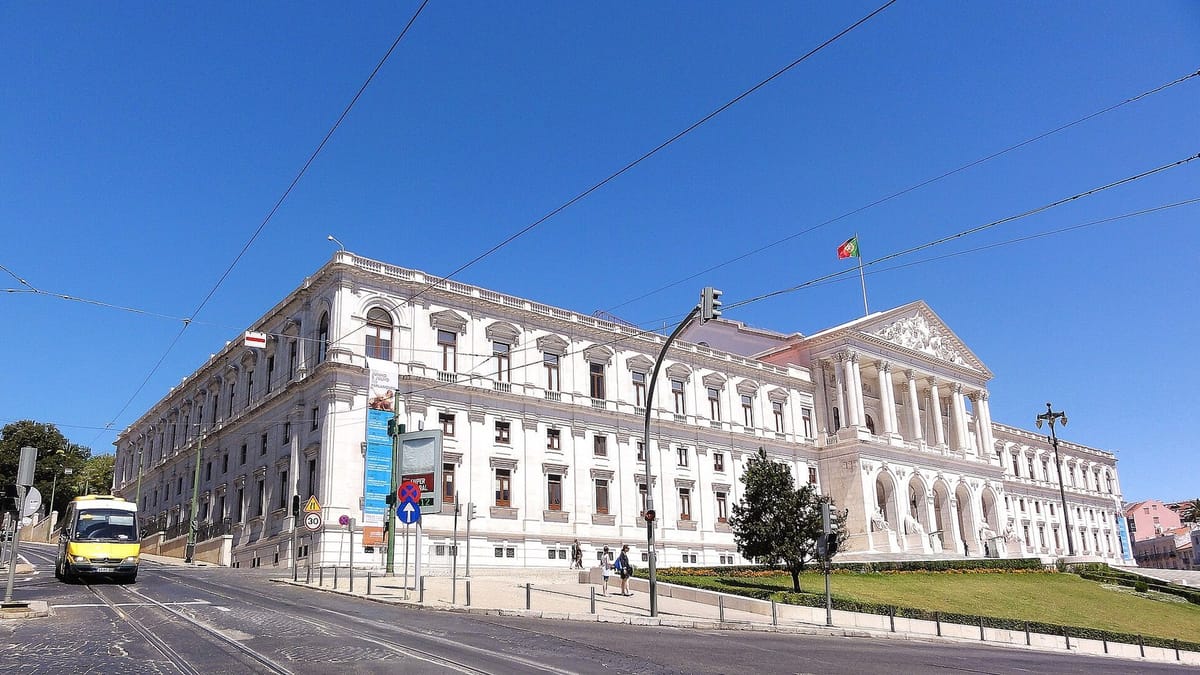
The Government's 2027 State Budget, the Orçamento do Estado para 2027 (OE2027), reached parliament on Thursday 8 October as Proposta de Lei 110/XVII/2. Finance Minister Joaquim Miranda Sarmento's report forecasts faster growth, a small surplus and falling debt, but a sharply higher interest bill.
What the numbers say
The Finance Ministry now expects the economy to grow 2.3 percent in 2026, up from the 2.0 percent it forecast in April and from 1.9 percent in 2025. For 2027 it forecasts 2.1 percent. Investment does much of the work: it grows 5.7 percent this year, about one point of it from a one-off data centre project in Sines, according to the fiscal council. In 2027, public investment falls 31 percent as the EU-funded Recovery and Resilience Plan (PRR) ends, and the Government expects private investment to rise 13 percent.
Inflation is put at 2.9 percent this year and 2.3 percent in 2027, and unemployment at 5.8 and then 5.7 percent. The ministry assumes oil at about 93 dollars a barrel this year and 86 dollars in 2027, and three-month Euribor, the rate behind most Portuguese mortgages, rising from an average 2.5 percent to 3.4 percent.
- Budget balance: a surplus of 0.7 percent of GDP in 2025, zero in 2026 and 0.1 percent (275 million euros) in 2027. Without the support paid after storm Kristin and the PRR projects financed by loans, the report puts this year's surplus at 1.1 percent.
- Public debt: 89.2 percent of GDP in 2025, 87.5 percent in 2026 and 84.5 percent in 2027.
- Interest: up 23.2 percent, from 6.67 billion to 8.22 billion euros, or from 2.0 to 2.4 percent of GDP.
The report counts this as the sixth general income tax (IRS) cut since 2024, with tax revenue slipping from 24.1 to 23.8 percent of GDP. Net spending grows 2.5 percent in 2027, against the 1.2 percent recommended by the EU Council; the ministry says the gap stays within EU limits once extra defence spending is counted.
How realistic is it?
The Conselho das Finanças Públicas (Public Finance Council, CFP), whose opinion of 7 October is annexed to the report, endorses the forecasts but warns that the risks to growth lie on the downside. The 2026 figure is highly likely, it says. The 2027 figure is higher than every reference forecaster's (the Bank of Portugal, the CFP and the European Commission all expect 1.8 percent, the OECD 1.7 and the IMF 1.6) and needs the economy to grow about 0.6 percent a quarter, double the pace implied for late 2026.
The council calls this year's 2.9 percent inflation forecast "unlikely": it is the January to August average, and would need energy prices to end the year about 7 percent below September's level. It sees inflation possibly underestimated in 2027 too, and calls the job and wage forecasts the highest of any institution, a risk for revenue. The Bank of Portugal said on Wednesday that inflation could peak near 3.6 percent at the end of the year.
The political path
The budget looks set to pass its first vote. Socialist (PS) leader José Luís Carneiro told ECO he will propose that the party abstains, after the Prime Minister answered the four conditions he set in September. Chega, ECO reports, threatens to vote against unless the retirement age is lowered and VAT is cut on fuel and a basket of basic foods; the Left Bloc (BE) announced on Thursday that it will vote against.
Under the calendar parliament approved in September, as reported by Notícias ao Minuto, the general debate and vote take place on 27 and 28 October, amendments are due by 6 November, and the final vote is on 24 November.