A New Chapter: What André Seguro's Presidency Means for Portugal — and Its Expat Community
After a decade of Marcelo Rebelo de Sousa, Portugal enters a new era under President André Seguro. Here's what expats and residents should expect from the change at the top.

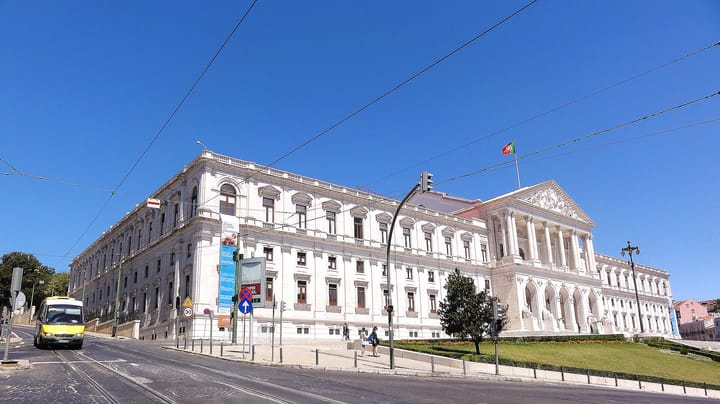
Portugal inaugurates its new President this week, as André Seguro — former Secretary-General of the Socialist Party — takes the oath of office in a ceremony at the Assembleia da República in Lisbon. The transition marks the end of a decade under Marcelo Rebelo de Sousa, whose two-term presidency was defined by political centrism, populist communication, and Portugal's remarkable economic comeback.
Who Is André Seguro?
André Seguro, 59, served as Secretary-General of the Socialist Party from 2008 to 2014, a tenure remembered for leading the party through the Troika austerity years in opposition. A trained lawyer with roots in Setúbal, Seguro is seen as representing the traditional centre-left of Portuguese politics — more ideologically defined than Marcelo, less immediately charismatic, but widely respected for intellectual rigour.
His election in January 2026 — defeating the centre-right candidate José Silvano by a margin of 51.4% to 38.7% — reflected both fatigue with Marcelo's tenure and concerns about the rising influence of the far-right Chega party in local government.
What Changes With a New President
Portugal's presidency is semi-presidential: the President has limited executive powers but significant symbolic and constitutional authority. Key presidential powers include:
- Promulgating or vetoing legislation (vetoes can be overridden by the Assembleia)
- Dissolving parliament in times of political crisis
- Appointing the Prime Minister (from the majority coalition)
- Representing Portugal internationally and signing treaties
- Pardoning and commuting criminal sentences
Day-to-day governance remains with Prime Minister Luís Montenegro and his centre-right coalition. Seguro's election does not change the parliamentary arithmetic or executive policy direction — at least not directly.
Areas Where Seguro's Influence Could Be Felt
Housing and Social Policy
Seguro has been a vocal critic of the government's handling of the housing crisis, calling for more aggressive supply-side intervention and tighter regulation of speculative investment. While he cannot legislate, a President who publicly prioritises housing will apply political pressure on the government to do the same.
Immigration and Integration
Portugal's immigration backlog — with over 124,000 cases pending at AIMA — is a flashpoint. Seguro has publicly called for faster processing and better integration services. He is expected to use his platform to push back against the anti-immigration rhetoric gaining traction in local politics.
Europe and Foreign Policy
Seguro is a committed Europeanist. At a time when transatlantic relations are under strain, he is expected to be a strong advocate for EU solidarity and Portugal's traditional alliance with the US, UK, and Lusophone world. His relationship with Brazil — where millions of Portuguese nationals live — will be closely watched.
What This Means for Expats
For the roughly 400,000 registered foreign residents in Portugal, the practical day-to-day impact of a new President is limited. Immigration rules, tax policy, and residency processes are set by the government, not the presidency.
That said, Seguro's rhetoric has been more explicitly welcoming of Portugal's international community than his predecessor's in his final years. His stated priority of reducing the AIMA backlog — if translated into executive pressure on the government — would be directly beneficial to the tens of thousands of expats stuck in residency limbo.
His inauguration ceremony this week is expected to draw diplomatic delegations from across the EU, the Lusophone world, and key bilateral partners. A public holiday is not declared, but Lisbon will see significant traffic disruption around Belém and the Assembleia da República on inauguration day.
The Marcelo Legacy
Marcelo Rebelo de Sousa leaves office with historically high approval ratings — routinely above 70% throughout his decade in power. His presidency coincided with Portugal's economic recovery from the Troika years, the Golden Age of tourism, and the country's return to investment-grade credit status.
He will be remembered for a uniquely personal presidency: spontaneous beach visits, embracing everyone from fishermen to world leaders, and a communication style that made him feel more like a trusted uncle than a head of state.
Seguro's challenge is to define his own presidential personality — and in doing so, to chart a course for Portugal's next chapter at a moment of genuine geopolitical and economic uncertainty.
The Portugal Brief tracks Portuguese politics, economics, and daily life for expats and internationals. Subscribe for our free daily briefing.