Portugal Rises to the EU's Ninth-Most-Populous Country as Its Resident Count Passes 11.4 Million
Portugal has become the EU's ninth most populous state, with 11,424,031 residents on 1 January 2026, up 36,809 on the year. With deaths outnumbering births, the entire increase comes from net migration — a reliance now at the centre of the country's politics.
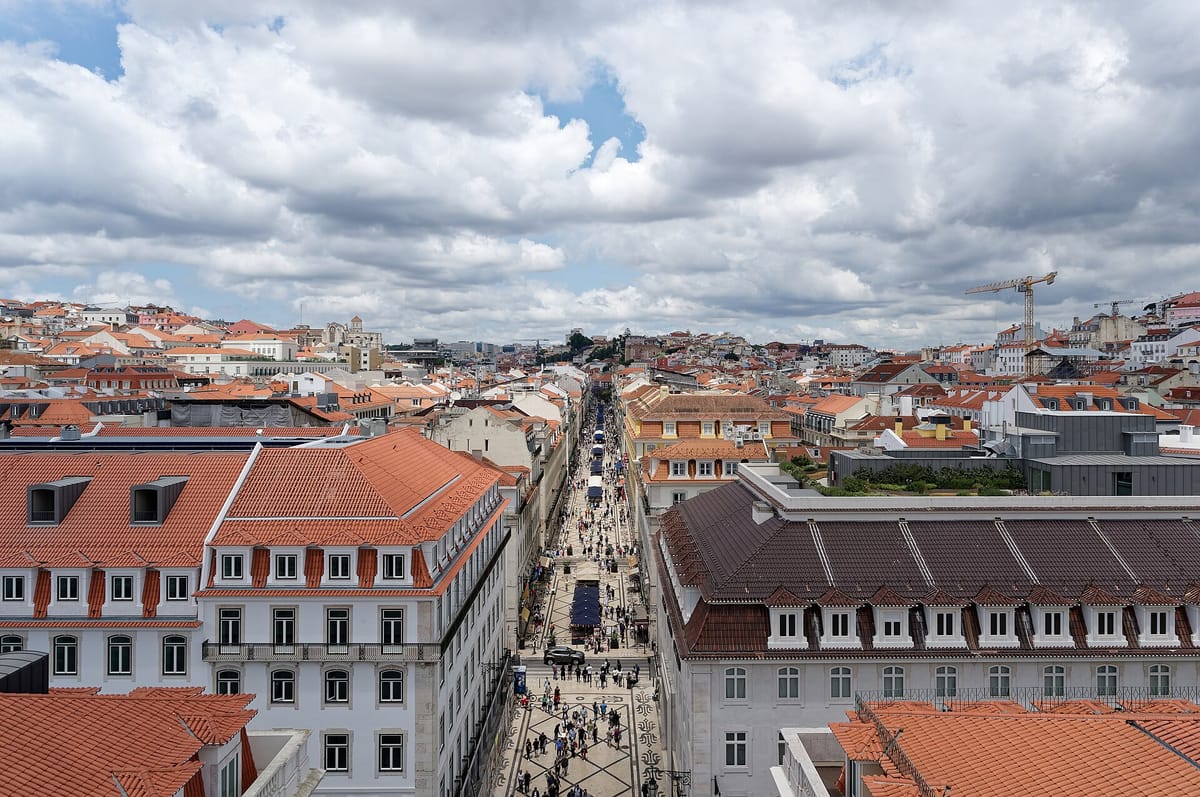
Portugal has climbed a rung in the European Union's demographic league table, becoming the bloc's ninth most populous member state as its resident population passed 11.4 million. New figures put the country at 11,424,031 people on 1 January 2026, up 36,809 on a year earlier — a modest 0.32% increase, but enough to nudge Portugal ahead of a neighbour and into ninth place.
The numbers behind the ranking
The revised standing follows a recalculation of the population by the INE (Instituto Nacional de Estatística, the National Statistics Institute) in June, which lifted Portugal from tenth to ninth among the EU's 27 members. The country now sits within a bloc of about 452 million people, itself up 706,000 over the year — the fifth consecutive year of growth for the EU after the pandemic-driven fall recorded in 2021.
The upper reaches of the table remain dominated by the same handful of large economies. Germany leads with 83.5 million residents, followed by France, Italy, Spain and Poland; together those five account for roughly two-thirds of the EU's population, with Germany alone representing 18.5% of it. Portugal's 11.4 million place it just outside that top tier but comfortably in the upper half of the union.
Growth that comes from abroad
The headline increase masks the mechanism driving it. Portugal's natural balance — births minus deaths — has been negative for years, as an ageing population and low fertility mean more people die each year than are born. The population is nonetheless rising, which means the entire gain, and more, comes from net migration: the arrival of foreign residents has more than offset the natural decline.
That pattern is not unique to Portugal, but it is especially pronounced here, and it sits at the centre of the country's politics. Rapid immigration has fuelled both economic growth and a sharpening debate over housing, public services and integration, and the demographic data give the trend hard numbers: without newcomers, Portugal's population would be shrinking rather than setting records.
A slowing continent
Across the EU, the longer view is one of deceleration. The bloc's population grew by 97.5 million between 1960 and 2026, from 354.5 million to 452 million, but the pace has fallen sharply. Where the 1960s added an average of about three million residents a year, the 2010s managed only around 600,000. The spread between member states is now wide: Malta posted the fastest growth at 24.1 extra residents per thousand, while Latvia shrank by 8.3 per thousand.
For Portugal, ninth place is a symbolic marker rather than a turning point. The country remains mid-sized by European standards, its recent growth entirely dependent on continued inward migration at a time when that very reliance has become politically charged. The ranking is a reminder that Portugal, long thought of as a country of emigrants, has become — at least in demographic terms — a country that grows only because others choose to move to it.