Portugal Proposes Specialised Immigration Courts and an End to Lisbon's Monopoly on AIMA Lawsuits
A reform taken to Thursday's Council of Ministers would create court sections specialised in immigration and asylum and let residents sue AIMA in their home district instead of a single Lisbon court — after Brussels found administrative cases now take an average of 861 days to decide.
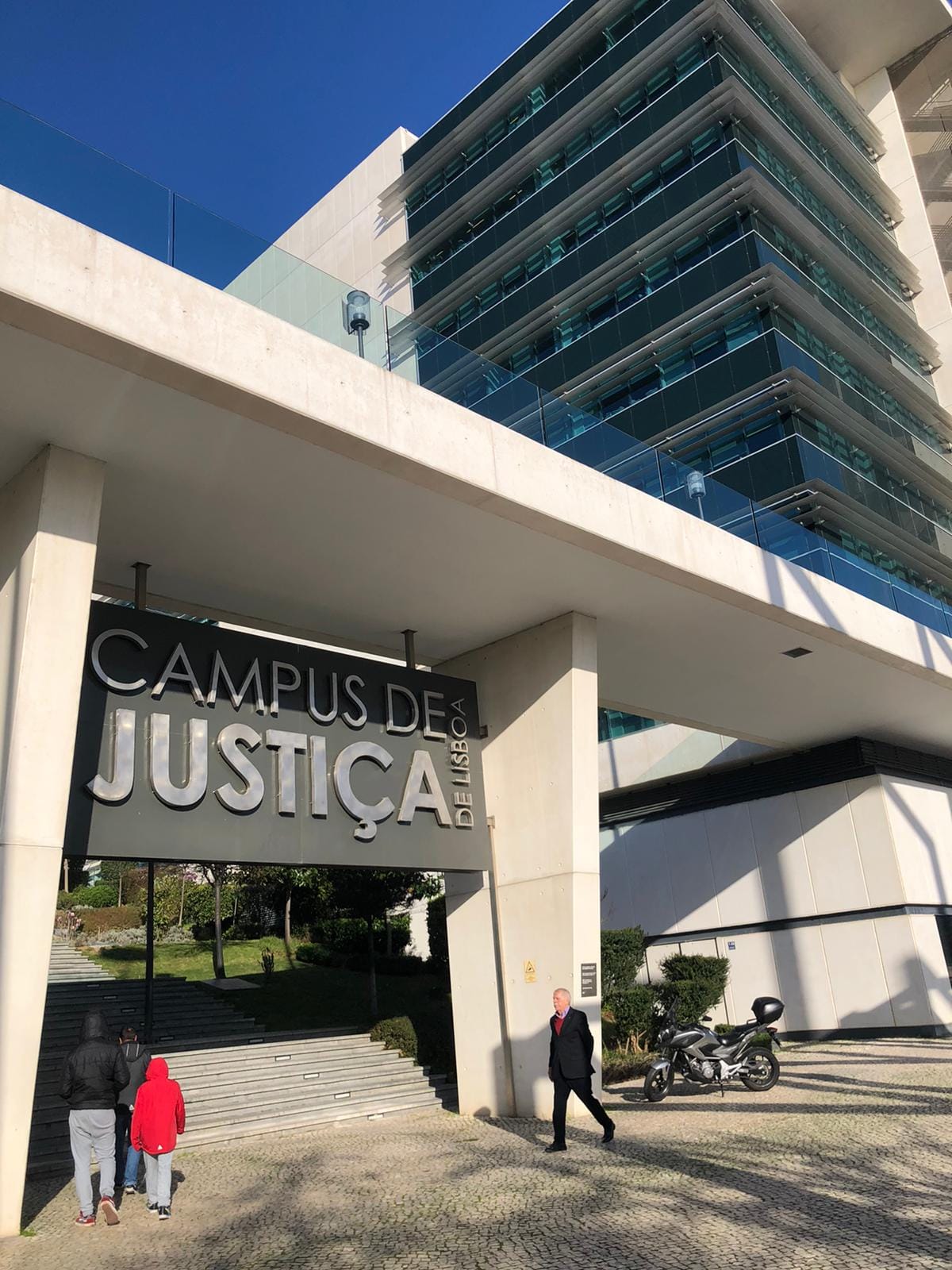
Immigrants fighting delays and refusals at Portugal’s migration agency may soon be able to take their cases to a judge without everything funnelling through a single overloaded court in the capital. The government took a proposed reform of the administrative and fiscal justice system to Thursday’s Conselho de Ministros (Council of Ministers) that would create court sections specialised in immigration, asylum and international protection — and end the concentration in Lisbon of lawsuits against AIMA, the Agência para a Integração, Migrações e Asilo (Agency for Integration, Migration and Asylum).
Under the current model, judicial actions against AIMA — the vast majority of them brought by foreign residents trying to force a decision on a stalled residence permit or family-reunification request — are concentrated at the Tribunal Administrativo de Círculo de Lisboa (Lisbon Administrative Circuit Court). The reform, first reported by Jornal de Notícias, would let citizens file suit in the administrative court covering their own area of residence, a change designed to cut delays and decongest the Lisbon court, which has been buried under tens of thousands of AIMA-related cases.
Alongside the territorial change, the proposal creates specialised judicial sections for immigration, asylum and international protection, and amends the Estatuto dos Tribunais Administrativos e Fiscais (Statute of the Administrative and Fiscal Courts) to strengthen transparency and the management of judges.
The measure grows out of the Plano Nacional de Integração dos Imigrantes (National Plan for the Integration of Immigrants), which the government has been preparing since the start of the year and expects to present by the end of the summer. It is the second concrete strand of that plan to surface in as many weeks, after the announcement that immigrants will soon receive their Social Security number automatically, with no office visit needed.
The timing is not accidental. Only last week the European Commission concluded that Portugal has made no progress on the efficiency of its administrative justice, with the case-resolution rate falling to 48% in 2024 and the average time to a decision reaching 861 days. For a foreign resident whose legal status, job or family life hangs on a pending case, that average means waiting well over two years for an answer — a delay that has itself become one of the main drivers of new litigation, as applicants sue simply to force the agency to act.
For Portugal’s immigrant communities, the practical promise is twofold. A resident of Faro, Braga or Coimbra would no longer see their case join the queue at a single Lisbon court, and the judges hearing immigration and asylum cases would, for the first time, be specialists in the field — an approach long urged by lawyers who argue that generalist administrative judges struggle with the fast-moving intersection of Portuguese, EU and international protection law.
The reform still has a road to travel: after the Council of Ministers, the proposal must pass through the Assembleia da República (Assembly of the Republic) and be implemented across the administrative court network, and the government has not yet put a date on when the new sections would open their doors. But for the hundreds of thousands of people whose files sit somewhere between AIMA’s backlog and the Lisbon court’s docket, it is the clearest signal yet that the state has accepted a simple diagnosis: immigration justice in Portugal is too slow, too centralised, and too generalist — and all three have to change together. On the constitutional side of the file, the Constitutional Court ruling that cleared the return and asylum law sets out the eleven norms the seven-judge bench declined to strike down, why the reasoning turns on nothing being automatic, and the twenty-day clock Article 136 now puts on the President. On the mechanics of taking a Portuguese public body to court, our guide to the providência cautelar, the urgent administrative injunction that carries a 48-hour first order, an automatic freeze on executing a suspended act, and a 306 euro court fee sets the latest reference.