Portugal Pivots to Defence Manufacturing as Government Courts Industrial Heartland
In a small city in northern Portugal known as the "capital of stainless steel," the Defence Minister stood before representatives of 54 companies and made an unusual pitch: your factories, which have spent decades making precision metalwork for...

In a small city in northern Portugal known as the "capital of stainless steel," the Defence Minister stood before representatives of 54 companies and made an unusual pitch: your factories, which have spent decades making precision metalwork for civilian industry, could be building components for NATO.
The scene in Vale de Cambra, a municipality in the Aveiro district straddling the border between the Porto metropolitan area and central Portugal, captures a broader shift underway in Portuguese defence policy. After three decades of minimal military investment, the government is racing to expand domestic defence production capacity, and it is looking beyond traditional arms manufacturers to do it. For broader context, see the new Defender Portugal civic-military programme proposed by PSD and CDS-PP.
Thirty Years Without Investment
Defence Minister Nuno Melo was blunt in his assessment. "For 30 years there was no investment in national defence," he told the assembled business leaders on Thursday. "Now Portuguese companies can be in the production circuit or, at least, in the maintenance of the defence industry."
The timing is driven by converging pressures. NATO expects members to spend at least 2 per cent of GDP on defence, a target Portugal has consistently missed, currently sitting at roughly 1.55 per cent. The Iran war has underscored Europe's vulnerability to energy and security disruptions. And former US President Donald Trump's repeated questioning of NATO commitments has accelerated European efforts to build autonomous military capacity.
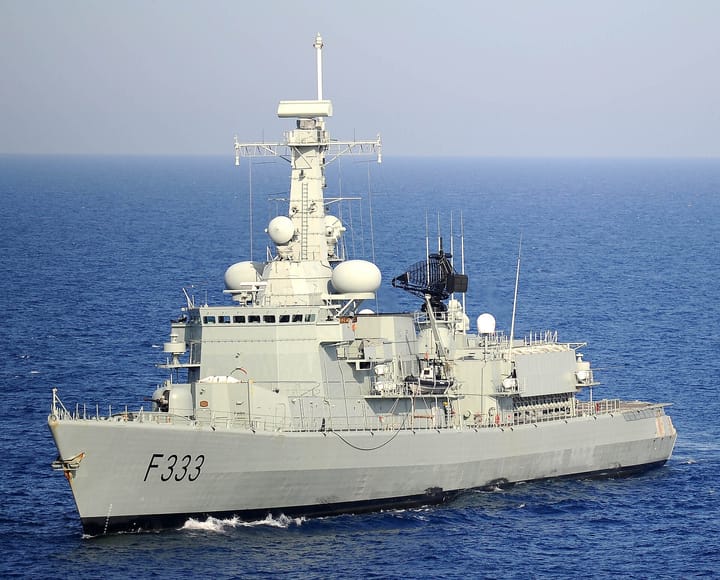
Portugal is now undertaking what Melo described as a "renewal of the arsenal," replacing what he called "obsolete armoured vehicles and frigates at end of life." The scale of procurement required means the government cannot rely solely on foreign suppliers. It needs domestic firms to enter the supply chain.
From Stainless Steel to Ballistic Protection
The areas where the government sees potential are remarkably diverse: moulds, wiring harnesses, painting, precision metalwork, IT services, information technology, ballistic protection, metal-proof textiles, radar systems, and combat rations. For a municipality like Vale de Cambra, whose industrial base is built on metallurgy and precision manufacturing, the overlap with military specifications is significant.
The government's approach is pragmatic rather than grandiose. Antonio Jose Baptista, head of the Directorate-General of Armament and Defence Heritage, explained that the certification process for defence suppliers is necessarily "lengthy" due to security checks designed to prevent espionage and conflicts of interest. Companies must first be accredited by the National Security Office, then certified by the Directorate-General as fit to produce for defence.
But once certified, firms gain access not just to Portuguese military contracts but to the entire NATO procurement ecosystem. Products meeting Portuguese military standards automatically comply with NATO parameters, opening a market of 32 member countries.
A European Imperative
The push to build up domestic defence capacity is not unique to Portugal. Across Europe, governments are scrambling to reduce dependence on American military equipment and establish sovereign production lines. The European Commission has proposed new funding mechanisms for joint defence procurement, and countries like Poland, Germany, and France have dramatically increased defence budgets.
Portugal's contribution will inevitably be modest by comparison, but the government argues it can carve out niches. The Aveiro district, Melo noted, "is a bit like Portugal should be from the point of view of entrepreneurship" -- a region where companies "see opportunities, get on with it, invest, take risks, and then have results with cutting-edge companies of global class."
What It Means for the Economy
For a country that has historically imported nearly all its military equipment, even a partial shift toward domestic production could have meaningful economic effects. Defence contracts tend to be long-term, high-margin, and resistant to economic downturns, providing stability that other sectors cannot match.
For foreign residents working in engineering, technology, or manufacturing, the defence pivot could create new opportunities, particularly in the Porto metropolitan area and the industrial corridor running south through Aveiro. Companies entering the defence supply chain will need specialised skills in quality assurance, cybersecurity, and regulatory compliance.
The challenge, as always, will be execution. Certification processes are slow, and small and medium enterprises may lack the capital to invest in the security and production upgrades required. But with geopolitical pressure mounting and procurement budgets expanding, the incentive structure is shifting. Portugal's industrial heartland, it seems, is being asked to forge more than kitchen sinks.
Background: See the Sesimbra-Seixal NATO ammunition depot servitude case at the PGR. (Background: see our piece on the Tancos paiol Relação ruling.). (Background: see our piece on the Portugal's NATO Air Policing detachment at Ämari Air Base.)
Background: See BA Glass's 41% acquisition of Tunisia's Sotuver. On the coastal-policing and maritime-traffic-enforcement rail, our 17 May read on the new EAV / narcolancha law entering force after a 90-day vacatio legis — 1-to-4-year prison for flagless speedboats, €25k individual / €100k corporate fines, the DGRM licensing chain and the AT customs gate on cross-border movement sets the latest reference. On the defence-industrial side of the file, the Cabinet's national-interest declaration for a Super Tucano assembly line at Beja sets out what the Council of Ministers actually approved and what it leaves unanswered.