Portugal Holds 559 Bathing Beaches at Excelente in the European Environment Agency 2025 Verdict — 82% Share Below the Cyprus-Greece-Bulgaria-Austria Lead Tier, 12 Sites at Mau
The European Environment Agency's 2025 Bathing-Water Report, released 16 June 2026, classifies 559 of 682 Portuguese bathing waters as excelente — an 82% excellence share that sits below the Cyprus-Greece-Bulgaria-Austria 95%+ lead pack and leaves 12 sites at mau.
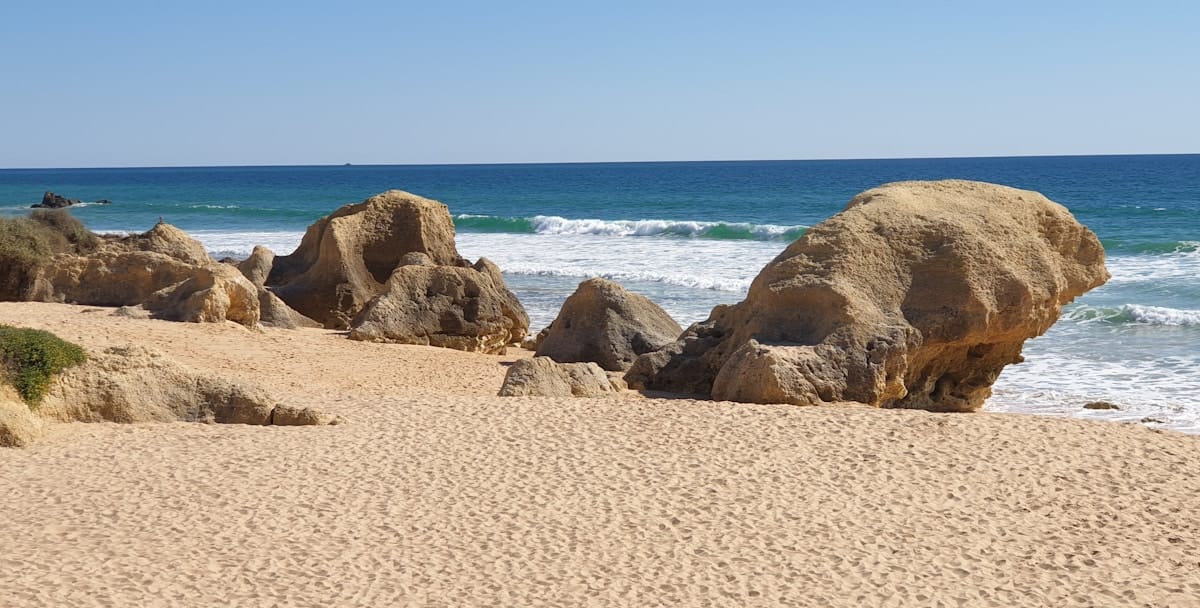
The European Environment Agency (EEA — Agência Europeia do Ambiente), publishing its annual Bathing Water Report on Tuesday, 16 June, classifies 559 of 682 Portuguese bathing waters as excelente (excellent) for the 2025 season — three more than the 556 logged a year earlier, on a near-identical sample size. The 82% excellence share keeps Portugal in the EU's upper half but trails the four-country lead pack of Cyprus, Greece, Bulgaria and Austria, each of which clears 95% on the same metric.
The dataset is the Comissão Europeia's (European Commission) official summer-season read on coastal and inland water quality and is the metric that anchors Bandeira Azul (Blue Flag) eligibility, municipal beach signage and the Agência Portuguesa do Ambiente's (APA — Portuguese Environment Agency) own bathing-water monitoring network. The same agency now coordinates the national programme against the invasive alga that strands on Algarve and Cascais beaches.
The full breakdown
- Excelente: 559 sites (82%) — up from 556 in 2024
- Boa (good): 75 sites (11%) — up from 73
- Suficiente (sufficient): 19 sites (2.8%) — up from 15
- Mau (poor): 12 sites (1.8%) — up from 9
- Não classificadas (unclassified): 17 sites (2.5%) — down from 20
The headline 559 figure improved by three on the year, but the increase in poor-rated sites — from 9 to 12 — partially offsets the gain and signals that microbiological pressure on a small tail of beaches is still rising. The unclassified bucket shrank because more waters now have the four consecutive seasons of monitoring data the EEA needs to assign a permanent classification.
How Portugal sits against the EU lead pack
Across the EU, coastal waters averaged 88% excelente and inland waters averaged 78% for the 2025 season, the EEA's report records. Portugal's 82% sits below the coastal-average benchmark — a reflection of the country's high share of inland and estuarine bathing waters in the EEA sample, which structurally drags on the excellence share.
Cyprus (99.2%), Bulgaria (97.9%), Greece (97%) and Austria (95%) lead the European table. France, Italy and Spain — the closer peer group on coastline length — all sit in the 85% to 90% band. Portugal's three-site net improvement is in line with the EEA's overall finding that the EU bathing-water tally was "stable" year-on-year.
What it changes on the ground
The classification uses the EU Bathing Waters Directive's microbiological parameters — Escherichia coli and enterococos intestinais (intestinal enterococci) — and rolls four seasons of monitoring into the final grade. A drop from excelente to boa or suficiente does not bar swimming; a mau classification, by contrast, triggers a closure recommendation by the APA and obliges the operating municipality to publish a corrective action plan, which is the lever now binding the dozen flagged sites for the 2026 season.
The 2026 Portuguese bathing season formally opens on a beach-by-beach basis through June, with most Algarve and Costa Vicentina sites already supervised and the northern and Açores beaches activating through July. Residents and visitors can check the daily real-time status of each praia on the APA's InfoÁgua-Praias portal, which publishes the underlying microbiological readings against the EEA classification adopted on Tuesday.