Choosing a Neighbourhood in Porto
Researched and written with AI tools from official sources. How we make our guides
Porto's parishes and nearby towns compared, with official INE rents and sale prices, the Andante pass, the metro, and free travel for Porto residents.
Last verified: October 2026.
Who this is for
- You are moving to Porto and want to know which parts of the city fit your budget and routine.
- You are comparing the city with Matosinhos, Vila Nova de Gaia, or Maia.
- You want official rent figures, not asking prices from listings.
Not for you if: you are still choosing between cities. Read Choosing a Neighbourhood in Lisbon and Cost of Living in Portugal first.
Updated October 2026. Since July 2026, people whose tax address is in the municipality of Porto can travel free on public transport across the whole Porto metropolitan area.
Porto is one of the most expensive places in Portugal to rent in. In the 12 months to June 2026, the median rent on new leases was €14.48 per square metre, according to INE, the national statistics institute. That is about €725 a month for a 50 m² one-bedroom flat, and about 17% less than Lisbon's median. Differences between Porto's parishes are small. The bigger savings are in neighbouring towns: Vila Nova de Gaia's median was €10.85 and Maia's €9.85.
How to read the figures
INE's median is the middle rent on real leases declared to the tax office: half were higher, half lower. Listing sites show asking rents, which in popular areas are often above the median. Use INE to compare areas.
The city of Porto has seven parishes (freguesias), three of them groupings of older parishes. The "50 m²" column below is our own arithmetic, roughly a one-bedroom flat (T1). It is a guide, not a quote.
Porto's parishes compared
| Parish | Neighbourhoods it includes | Median rent per m² | 50 m² at the median |
|---|---|---|---|
| Cedofeita, Santo Ildefonso, Sé, Miragaia, São Nicolau, and Vitória | The historic centre, Ribeira, Baixa, and Cedofeita | €15.20 | about €760 |
| Bonfim | East of the centre, around Campo 24 de Agosto | €14.89 | about €745 |
| Aldoar, Foz do Douro, and Nevogilde | The seafront west of the city, where the Douro meets the sea | €14.84 | about €740 |
| Paranhos | North, around the university hospital campus | €14.33 | about €715 |
| Lordelo do Ouro and Massarelos | Between the centre and Foz, along the river | €14.15 | about €710 |
| Campanhã | The east, around Campanhã station | €13.30 | about €665 |
| Ramalde | North west, towards Boavista and Matosinhos | €13.28 | about €665 |
| Porto (whole city) | €14.48 | about €725 |
Source: INE, new leases in the 12 months to June 2026.
Two things stand out. Bonfim, often described as a cheap area, now has a median above the city figure. Campanhã is only about 8% below the city median, and its rents fell slightly in the year.
What each area is like
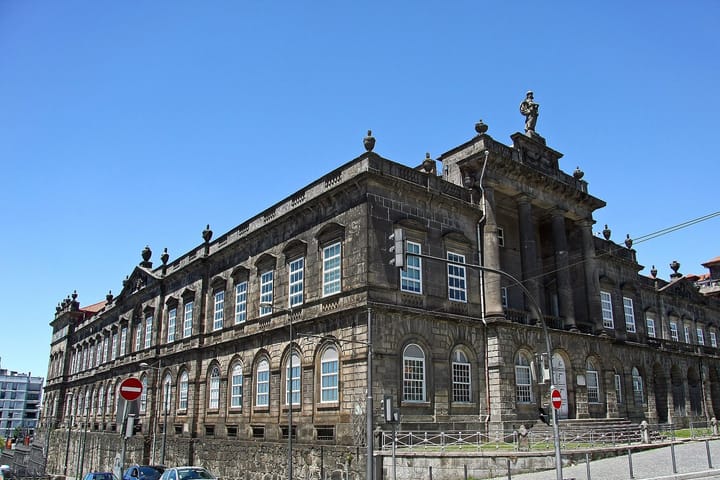
The historic centre and Cedofeita. Ribeira and the Sé are a UNESCO World Heritage area, busy with visitors, steep, and cobbled. Cedofeita, around Rua Miguel Bombarda, has galleries, shops, and cafés. Daily shopping is easier in the Baixa than down by the river.
Bonfim. A traditional residential area east of the centre, with local shops and cafés. Many older buildings have been renovated.
Foz and Nevogilde. Seafront parishes with the coastal promenade and the Parque da Cidade nearby. Mostly residential and quiet.
Boavista, Lordelo do Ouro, and Massarelos. Boavista is the avenue that runs from the Casa da Música towards the sea, lined with offices and flats. Lordelo do Ouro and Massarelos sit between it and the river. The Serralves museum and park is on this side of the city.
Paranhos and Ramalde. Northern residential parishes with many students and hospital staff, on the metro.
Campanhã. The main railway station for long-distance trains. Mainly residential, with some older industrial areas.
Towns around Porto
| Municipality | What it is like | Median rent per m² | 50 m² at the median |
|---|---|---|---|
| Matosinhos | North of Porto on the coast, with a beach, port, and fish restaurants; metro line A | €12.48 | about €625 |
| Vila Nova de Gaia | Across the Douro, with the port wine cellars and beaches to the south; metro line D | €10.85 | about €545 |
| Maia | North of Porto, near the airport; suburban, with shopping centres | €9.85 | about €495 |
Source: INE, new leases in the 12 months to June 2026.
Free travel for Porto residents applies only if your tax address is in the municipality of Porto. If you live in Matosinhos, Gaia, or Maia, you pay for an Andante pass (see below).
What homes sell for
INE also publishes the median price per square metre of homes sold, based on real sales. In the 12 months to March 2026:
- Porto (whole city): €3,510 per m², up 16.7% on a year earlier.
- Highest: Aldoar, Foz do Douro, and Nevogilde (€4,252) and the historic centre parish (€3,982).
- Lowest: Campanhã (€2,695), down 7.4% on a year earlier.
- Nearby towns: Matosinhos €3,058, Vila Nova de Gaia €2,583, and Maia €2,462.
For the buying process and taxes, read Buying Property in Portugal as a Foreigner and Understanding the Property Market in Portugal.
Getting around
Metro. Metro do Porto has six lines (A to F). Line A runs to Matosinhos, line D crosses into Gaia, and line E runs from Trindade to the airport.
Buses. STCP runs the city bus network.
Trains. CP's urban trains leave from São Bento in the centre and from Campanhã, which is also the station for long-distance trains.
The Andante pass. One pass covers the metro, STCP buses, CP urban trains, and other operators in the Andante system. 2026 prices:
- Andante 3Z (three zones you choose) or Andante Municipal (one municipality): €30 a month.
- Andante Metropolitano (all zones in the Porto area): €40 a month.
- Family passes: each member gets a pass, and the household pays for two (€60 or €80).
- Young people aged 4 to 23: free.
See Public Transport Passes in Portugal for discounts and occasional tickets.
Free travel if you live in Porto. If your tax address (domicílio fiscal) is in the municipality of Porto, you can travel free across the Porto metropolitan area. Students who study and live in Porto also qualify. People who only work in Porto and live elsewhere do not.
- Get a Cartão Porto, the city's free resident card, from the council.
- If you are a student without a Porto tax address, show proof of enrolment and proof that you live in Porto.
- Activate the free pass on your card, then validate it on every trip.
Driving. Parking in the centre is limited, and many streets are steep and narrow.
How to choose
- Shortlist two or three areas that fit your commute, schools, and the kind of street you want.
- Check the metro line or bus route from each one to work or school.
- Weigh the free pass. A Porto tax address saves up to €40 a month per person on transport, which narrows the rent gap with Gaia or Maia.
- Visit on a weekday and at the weekend. Noise and parking change a lot, especially near the centre.
- Compare the asking rent with the median. Multiply the INE median by the flat's area. If the asking rent is far above it, ask why.
- Read the lease rules. See Renting a Home in Portugal for deposits, guarantors, and your rights.
This guide is general information, not legal or financial advice. Rents and prices change every quarter; check the latest INE figures before you act.
Sources
This guide is written from official sources and, where relevant, organisations' own websites.
- INE, House rental statistics at local level, second quarter of 2026 (29 September 2026): https://www.ine.pt/xportal/xmain?xpid=INE&xpgid=ine_destaques&DESTAQUESdest_boui=770631117&DESTAQUESmodo=2 (median rent per m² on new leases in the 12 months to June 2026 for Porto, its seven parishes, Lisbon, Matosinhos, Vila Nova de Gaia, and Maia, from the release's Excel tables), checked 2 October 2026
- INE, House prices statistics at local level, first quarter of 2026 (17 July 2026): https://www.ine.pt/xportal/xmain?xpid=INE&xpgid=ine_destaques&DESTAQUESdest_boui=770632646&DESTAQUESmodo=2 (median sale price per m² in the 12 months to March 2026 for Porto, its parishes, and nearby municipalities, from the release's Excel tables), checked 2 October 2026
- Metro do Porto, home page and line status: https://www.metrodoporto.pt/ (six lines: Estádio do Dragão to Senhor de Matosinhos, Estádio do Dragão to Póvoa de Varzim, Campanhã to ISMAI, Hospital São João to Vila d'Este, Trindade to Aeroporto, Fânzeres to Senhora da Hora), checked 2 October 2026
- STCP, Andante passes: https://stcp.pt/en/andante-passes (Andante 3Z and Municipal €30, Metropolitano €40, family €60 and €80, free youth pass ages 4 to 23), checked 2 October 2026
- Câmara Municipal do Porto, free public transport: https://portaldomunicipe.cm-porto.pt/pt/-/transportes-p%C3%BAblicos-gratuitos (whole Porto metropolitan area, Cartão Porto required, published 13 July 2026), checked 2 October 2026
- Câmara Municipal do Porto, free metropolitan pass FAQ: https://portaldomunicipe.cm-porto.pt/documents/20122/1113344/FAQ+Transportes+p%C3%BAblicos+gratuitos.pdf/5fd53ad1-2869-754f-4920-55c3f58dc25d?t=1783673891595 (Porto tax residents and resident students qualify; workers living elsewhere do not), checked 2 October 2026
Last verified October 2026. Rules and fees change; check the official source before acting.