Parliament Votes to Scrap the Fee for Paying Off a Variable-Rate Mortgage Early, While Seven Other Relief Proposals Fall
Chega's bill would remove the 0.5 percent charge banks can levy on early repayments, which returned in January after a three-year suspension. It passed at first reading and still faces committee and a final vote.
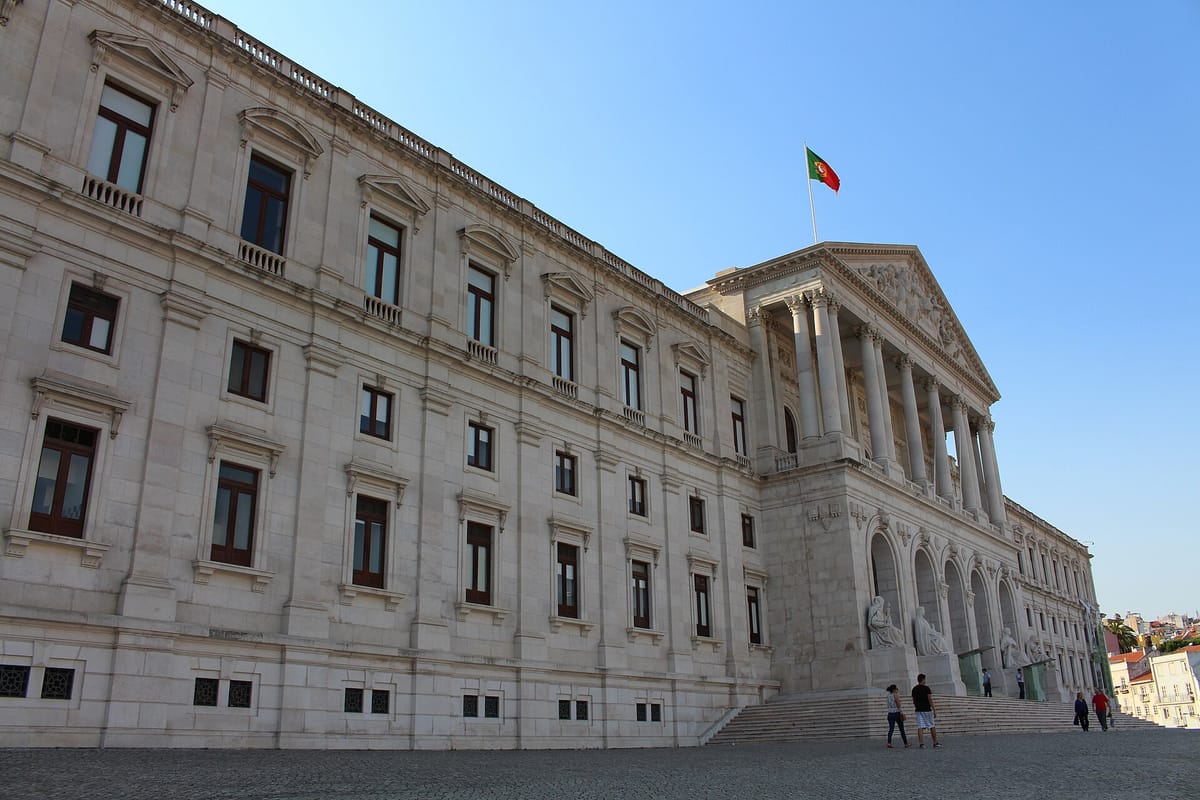
Parliament on Wednesday voted through, at first reading, a Chega bill that would stop banks charging a fee when borrowers pay off all or part of a variable-rate home loan early. It was the only bill to survive a debate on a package of opposition proposals to help families cope with rising interest rates, according to the Lusa news agency, as reported by Jornal de Negócios.
The bill, Projeto de Lei n.º 518/XVII, passed with the abstention of the PSD, CDS, Liberal Initiative (IL), PCP and Livre. It now goes to parliament's budget and finance committee for detailed scrutiny, and must pass a final vote before it can become law.
What borrowers pay now
Under Decree-Law 74-A/2017, which governs housing credit, a bank may charge an early repayment fee of up to 0.5 percent of the capital repaid when the repayment falls in a period when the loan carries a variable rate, and up to 2 percent during a fixed-rate period. On a 50,000 euro partial repayment of a variable-rate loan, that can mean 250 euros. The bill's own preamble says most banks charge the full 0.5 percent.
The law already waives the fee in some cases: when the repayment follows the borrower's death, unemployment registered with the IEFP for more than three months, or a job move of more than 50 kilometres that forces a change of home. Banks may also agree to charge less or nothing.
For three years the fee on variable-rate loans was suspended altogether, a measure introduced in November 2022 as Euribor rose and extended twice. That suspension ended on 31 December 2025, and the 2026 State Budget did not renew it, so the 0.5 percent charge applies again this year.
What the bill changes
Chega's proposal would remove the 0.5 percent fee on any capital repaid during a variable-rate period, permanently. The 2 percent cap for fixed-rate periods would stay. The text says the change would take effect the day after publication.
A resolution from JPP, recommending that borrowers be free to choose the life and property insurance tied to their mortgage, was also approved, despite votes against from the PSD and CDS. Resolutions are recommendations to the government and do not change the law on their own.
The proposals that failed
Every other measure in the package was rejected:
- a PCP regime allowing borrowers to renegotiate their loan so that payments take no more than 35 percent of income, for up to 24 months;
- a separate Chega scheme for borrowers whose payments exceed 50 percent of income;
- an IL bill to restore the stamp duty exemption on renegotiated or transferred loans, which ran from 2022 until the end of 2025;
- a Livre bill to end the variable-rate fee and cap fixed-rate compensation at 2 percent;
- a Left Bloc bill raising the IRS deduction for housing costs from 296 to 360 euros a year, and a Left Bloc resolution asking the state bank, CGD, to freeze instalment rises for 12 months;
- a PAN resolution extending the IRS deduction for loan payments to all contracts.
Why it matters now
The vote came as mortgage payments on variable-rate loans reviewed in October rise sharply, after Euribor climbed through September. For borrowers with savings, paying down capital is one of the few ways to cut those payments, and the fee is a direct cost of doing so. Until the bill completes its passage, the current rules apply: anyone planning an early repayment must give the bank 7 working days' notice for a partial repayment, or 10 for the whole loan, and can expect the 0.5 percent charge unless an exemption applies.