Parliament Sinks the Government's Sweeping Labour-Code Overhaul as Chega Switches Sides
The government's flagship rewrite of the Labour Code was voted down in Parliament after Chega reversed course and joined the left, leaving more than 100 proposed changes in limbo.
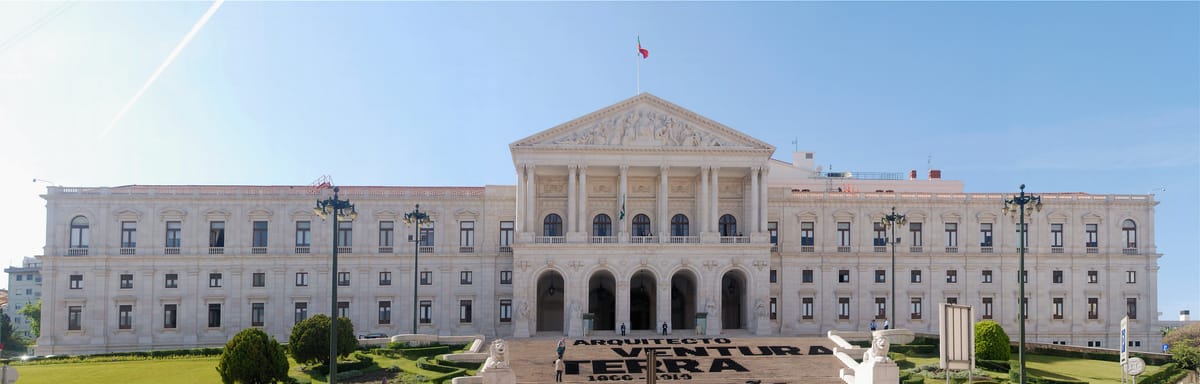
The minority government's most ambitious economic project of the year has been knocked down at the first parliamentary hurdle. Lawmakers rejected the proposed revision of the Código do Trabalho (Labour Code) in its general vote, denying the centre-right executive the votes it needed to send the package to detailed committee scrutiny.
The reform, branded "Trabalho XXI" (Labour XXI), bundled more than 100 changes into a single proposal. The government of Prime Minister Luís Montenegro cast it as a drive to lift competitiveness, raise wages, improve productivity and ease the balance between work and family life. It reached the floor only after roughly nine months of negotiations in concertação social (social concertation, the forum of unions, employers and government) — 58 meetings and more than 200 hours of talks — that ended without an agreement.
A late reversal sinks the bill
The decisive twist came from Chega, the far-right party that had spent weeks presenting itself as the government's main interlocutor on the text and had even claimed "victory" on contested points such as dismissals, holidays and shift work. When the vote came, party leader André Ventura's bench instead lined up with the opposition. The package was defeated by the combined votes of Chega, the Socialist Party (PS), Livre, the Communists (PCP), the Left Bloc (BE), the animal-rights party PAN and the regional JPP. Only the governing PSD and CDS, along with the liberal IL, voted in favour.
The arithmetic was always tight. The PSD–CDS administration holds just 91 of the 230 seats in the Assembleia da República (Assembly of the Republic), so it cannot pass contested legislation without borrowing support. Rejection in the "votação na generalidade" (the vote on the bill in principle) means the proposal does not advance to the "especialidade" (committee stage, where individual articles are debated and amended), halting it outright rather than reshaping it.
What was on the table
For workers and employers alike, the proposal would have touched a wide range of everyday rules. It set out a framework for the use of algorithms and artificial intelligence in workplace decisions, requiring human oversight in areas such as recruitment and performance evaluation. It would have lengthened fixed-term contracts from two years to three, eased restrictions on outsourcing, and adjusted the rules around dismissals. On the family side, it promised expanded parental provisions, including a breastfeeding regime the government described as the most generous in Europe.
For the many foreign residents who work in Portugal or run businesses here, the defeat means the current Labour Code stays in force unchanged for now. It also leaves the government with a visible political wound: a centrepiece reform rejected by a parliament it cannot command, and a far-right partner that proved willing to walk away at the moment of decision. Ministers will now have to weigh whether to redraft and resubmit a narrower version, reopen talks with the social partners, or shelve the rewrite altogether.