Parliament Seats Four New Tribunal Constitucional Judges on Joint PSD-Chega-PS List — Chega Lands Its First-Ever Seat on the Court
The Assembleia da República (Assembly of the Republic) elected four new judges to the Tribunal Constitucional (Constitutional Court) on 12 June 2026 with 176 votes — and for the first time since the court was set up in 1983, Chega has placed a judge on the bench.
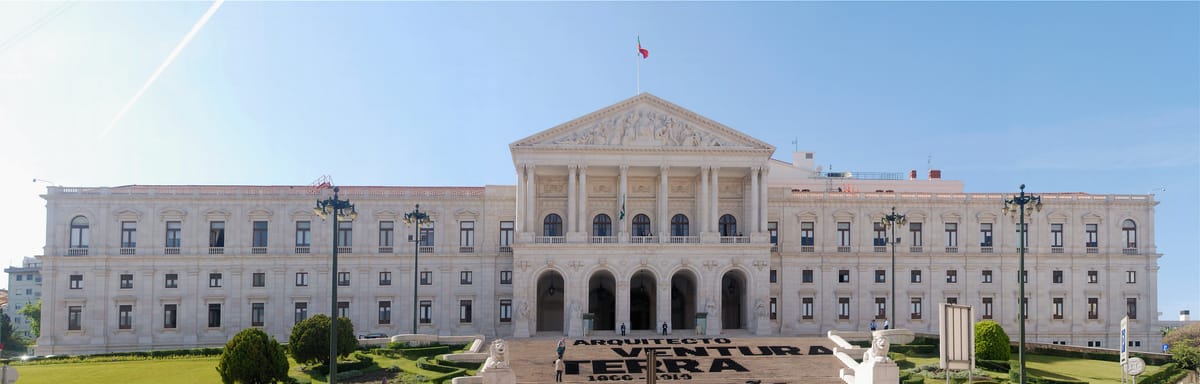
The Assembleia da República (Assembly of the Republic) elected four new judges to the Tribunal Constitucional (Constitutional Court, TC) on Friday 12 June 2026, completing the bench for the first time in nine months after a wave of resignations had left the court working with only nine of its 13 statutory members. The joint slate was carried with 176 favourable votes, comfortably clearing the two-thirds threshold of 154 needed under Article 222 of the Constitution. Of the 203 deputies who cast a ballot, 19 voted blank and 12 null — turnout that PSD parliamentary leadership had spent two weeks whipping into shape after eight previous postponements through the spring.
The slate was negotiated jointly by the Partido Social Democrata (PSD, centre-right), Chega (radical right) and the Partido Socialista (PS, centre-left), with PSD landing two of the four names, PS one, and Chega one. PSD nominated Joaquim Cardoso da Costa, a former Secretary of State now running the Centro de Competências Jurídicas do Estado (State Legal Competence Centre), and Maria Paula Ribeiro Faria, a professor of criminal law at the Universidade Católica Portuguesa. PS placed Gabriela Cunha Rodrigues, a Tribunal da Relação (Court of Appeal) judge currently serving as chief of staff to the President of the Supremo Tribunal de Justiça (Supreme Court of Justice). Chega's nominee is Luís Filipe Brites Lameiras, a long-serving Tribunal da Relação judge from the Lisbon and Porto circuits.
The arithmetic is the headline. Since the Constitutional Court was set up in 1983, its 10 parliament-elected seats (the remaining three are co-opted by the judges themselves) have been distributed only between the parties of the so-called arco da governação — historically PSD, PS and, more rarely, CDS or the Bloco. Lameiras's election places a Chega-nominated judge on the bench for the first time, a milestone that party leader André Ventura had set as a litmus test of Chega's institutional normalisation when negotiations opened in May.
The four new judges replace four seats that had emptied in quick succession. José António Teles Pereira and Gonçalo Almeida Ribeiro, both originally PSD-elected, resigned on 1 October 2025 to take up posts at the Tribunal de Contas (Court of Auditors) and the European Court of Human Rights respectively. PS-elected Joana Fernandes Costa left earlier this year to take a seat on the Supremo Tribunal de Justiça, and the court's president, José João Abrantes, resigned in May citing personal and institutional reasons after a public clash with the government over the constitutionality of the Lei dos Estrangeiros (Foreigners Law) reforms. The mandate of all four incoming judges runs for nine years, non-renewable, under Article 222(3) of the Constitution.
The Bloco de Esquerda (Left Bloc, BE), the Partido Comunista Português (PCP) and Livre voted against the slate or abstained, with BE leader Mariana Mortágua arguing that "a deal that hands Chega a judge in exchange for completing the court is a deal Portugal will pay for in jurisprudence". The new judges are expected to take office within the next 30 days, after which the court will move to elect a new president from among its 13 members — a vote in which the parliament-elected majority of 10 will be decisive. On the justice-reform side of the file, the plan to speed up the administrative courts explains what would change for prosecutors and the state's slowest courts.