No EU Country Added Jobs Faster Than Portugal Last Quarter, and at 5.49 Million People in Work the Count Has Never Been Higher
Eurostat's third estimate of the second quarter puts Portuguese employment up 1.0 percent on the quarter, the best in the EU, and 2.2 percent on the year, third behind Malta and Spain. The catch is that the workforce grew faster than output did.
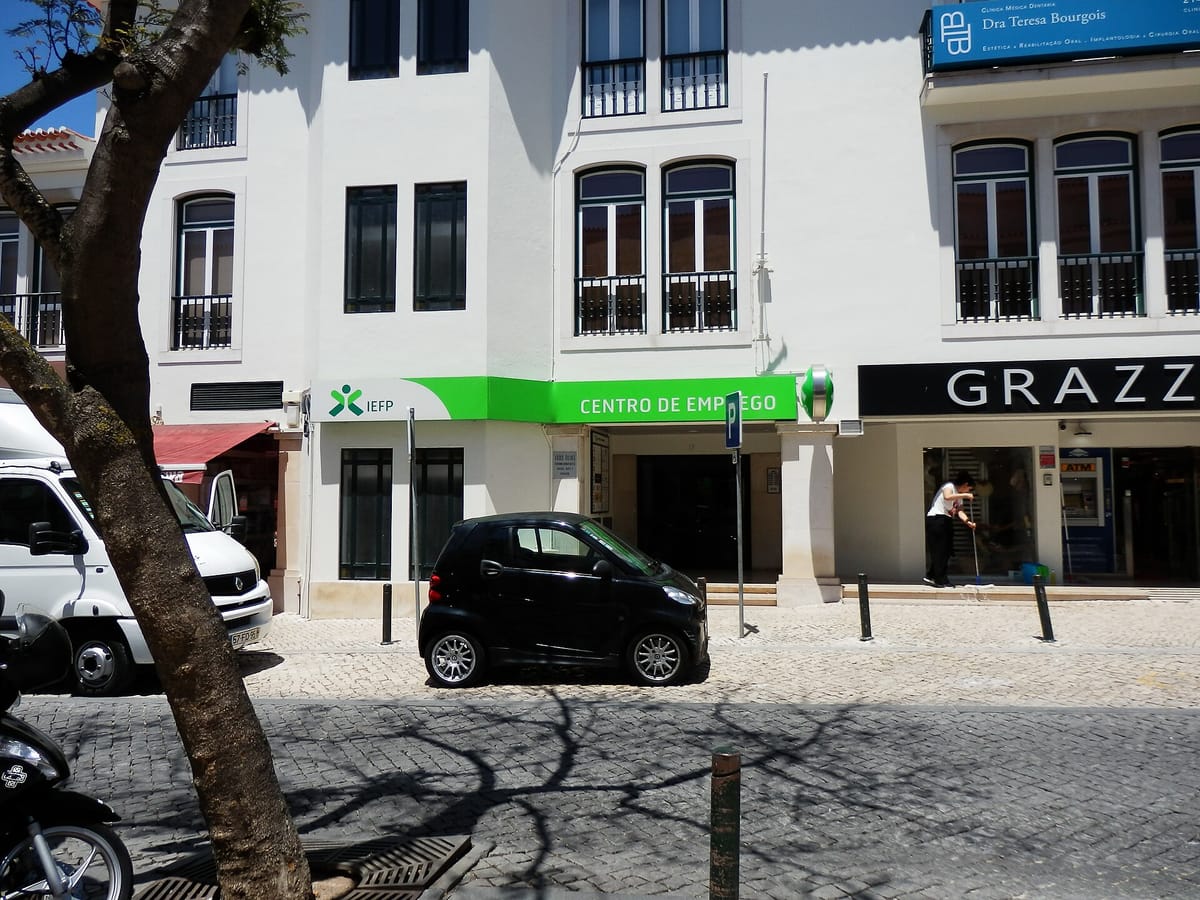
No country in the European Union created jobs faster than Portugal between April and June. Eurostat published its third estimate of second-quarter output and employment on Monday, and on the national accounts measure of people in work, Portugal came top of the bloc for quarterly growth at 1.0 percent, ahead of Malta and Czechia on 0.9 and Luxembourg on 0.6. The euro area managed 0.1 percent. The EU as a whole managed the same.
On the year, Portugal was third. Malta grew employment by 4.4 percent, Spain by 2.3 percent and Portugal by 2.2 percent, against 0.5 percent for the euro area and 0.5 percent for the EU. At the other end of the table Romania was down 1.2 percent over the year, Finland down 0.8 percent and Germany, the bloc's largest labour market, down 0.5 percent.
A record number of people in work
The levels are the striking part. Portugal now has about 5,493,000 people employed on the seasonally adjusted domestic measure, roughly 117,000 more than a year earlier and 55,000 more than in the first quarter. That is the highest figure in a Eurostat series that runs back to 1980. It sits alongside an unemployment rate that fell to 5.3 percent in June, the lowest since 2011.
Population is doing much of this arithmetic. The domestic concept counts everyone employed by resident producers, whatever their nationality, and Portugal's growth in residents over recent years has come overwhelmingly from arrivals of working age rather than from births.
The catch is in the ratio
Output grew too, but not as fast as the workforce. Portugal's gross domestic product rose 0.8 percent in the quarter against employment growth of 1.0 percent, which means output per worker fell slightly between the first quarter and the second. Over the full year the gap runs the other way but only just: GDP up 2.5 percent, employment up 2.2 percent, so productivity added something in the region of 0.3 percent across twelve months.
That is the shape of the Portuguese expansion in one line. The economy is growing because more people are working in it, not because each worker is producing appreciably more. It is also why strong headline growth has translated so modestly into pay: wages rose 5.1 percent in the second quarter but bought only 1.8 percent more once inflation was taken out.
What this means for residents
- Hiring is still open. A quarter in which the country added roughly 55,000 jobs is a good moment to be looking, and the additions are broad rather than concentrated in one sector.
- The counter-signal is real but small. Portugal logged 375 collective redundancy procedures by July, the most since the pandemic, yet fewer people actually lost their jobs through them. Restructuring is happening inside a growing market.
- Do not read pay off the headline. Employment growth of this kind, drawn heavily from new arrivals into lower-productivity roles, holds average wages down even while total employment climbs.
- The quarter is volatile, the year is not. Portugal actually shed jobs in the first quarter, down 0.2 percent while the euro area edged up, so the second-quarter jump is partly a rebound. On the annual measure the lead is steadier: Portugal has beaten the euro area in each of the last four quarters, by between 1.4 and 2.1 percentage points.
Eurostat's release is the third and firmest reading of the second quarter, and it does not move Portugal's growth number. What it adds is the labour input behind it, and on that measure Portugal is currently the fastest-moving labour market in the European Union.