Municipalities Plead for a Financing Lifeline Before the August Deadline Forces Repayment on Half-Finished Recovery-Plan Schools and Clinics
The National Association of Portuguese Municipalities has asked the government for alternative financing as the August Recovery-Plan deadline threatens to claw back money for unfinished schools, clinics and housing.

Portugal's town halls are warning that they could be forced to hand back European money for half-finished projects unless the government steps in before a fast-approaching deadline. The Associação Nacional de Municípios Portugueses (National Association of Portuguese Municipalities, ANMP) has written to Prime Minister Luís Montenegro asking for a mechanism to guarantee "alternative financing" for works that will not be completed in time.
At issue is the Plano de Recuperação e Resiliência (Recovery and Resilience Plan, PRR), Portugal's slice of the European Union's post-pandemic stimulus. Like every member state, Portugal faces a hard cut-off for spending the cash: projects that miss the end-of-August window risk losing their funding, leaving councils to either abandon them or finish the job out of their own budgets.
The association's fear is blunt. Municipalities that have already drawn down grants could be required to "return funds already received" and "bear costs" themselves if their projects slip past the deadline — a double penalty for works that are often delayed by circumstances beyond a council's control, from contractor shortages to inflation in building materials.
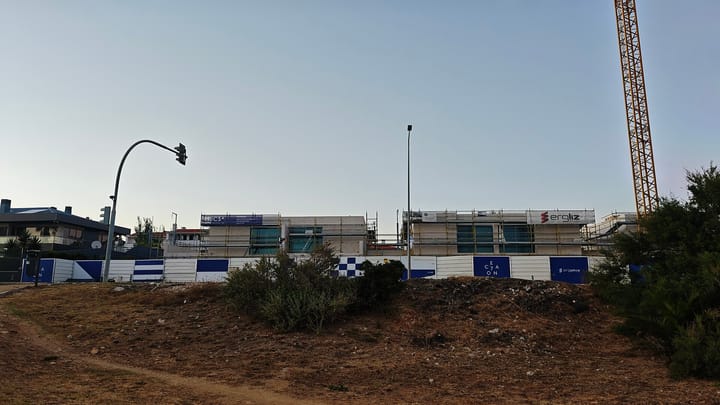
The projects at stake are the kind residents notice. The ANMP's list runs across schools, health centres, public and social housing, citizen service centres, continuous-care facilities and even a museum. Smaller interior municipalities, with thinner balance sheets and less room to absorb a shortfall, are the most exposed. The association cited Lamego and São João da Pesqueira, both in the Douro region, as examples of councils staring at the problem.
So far, the government has not offered the safety net the mayors want. The office of the Minister of Economy, Manuel Castro Almeida, responded by urging beneficiaries to "execute the maximum amount of work" before the deadline rather than committing to any alternative source of money. In other words, finish what you can — and the question of what happens to the rest remains open.
That stance reflects a genuine bind for Lisbon. Brussels sets the timetable, and Portugal has spent the past two years racing to absorb its allocation before the funds expire; loosening the rules for late projects is not entirely within the national government's gift. But for councils that broke ground on the strength of approved grants, the prospect of clawback turns a development opportunity into a fiscal threat.
The standoff is a preview of a wider reckoning as the recovery plan winds down. Billions have flowed into bricks-and-mortar projects on the assumption that they would be finished on schedule. With the deadline now weeks away, the gap between what was promised and what will actually be built is becoming a political problem — and the bill for any shortfall is one that neither the government nor the municipalities want to pick up.