More Than a Third of Shoes Bought on Shein and Temu Broke EU Chemical Limits in a Seven-Country Test That Included Portugal
Laboratories found 27 of 76 pairs over the legal limit for substances such as phthalates and hexavalent chromium, and eight of ten models sold as safety footwear failed at least one protection test.
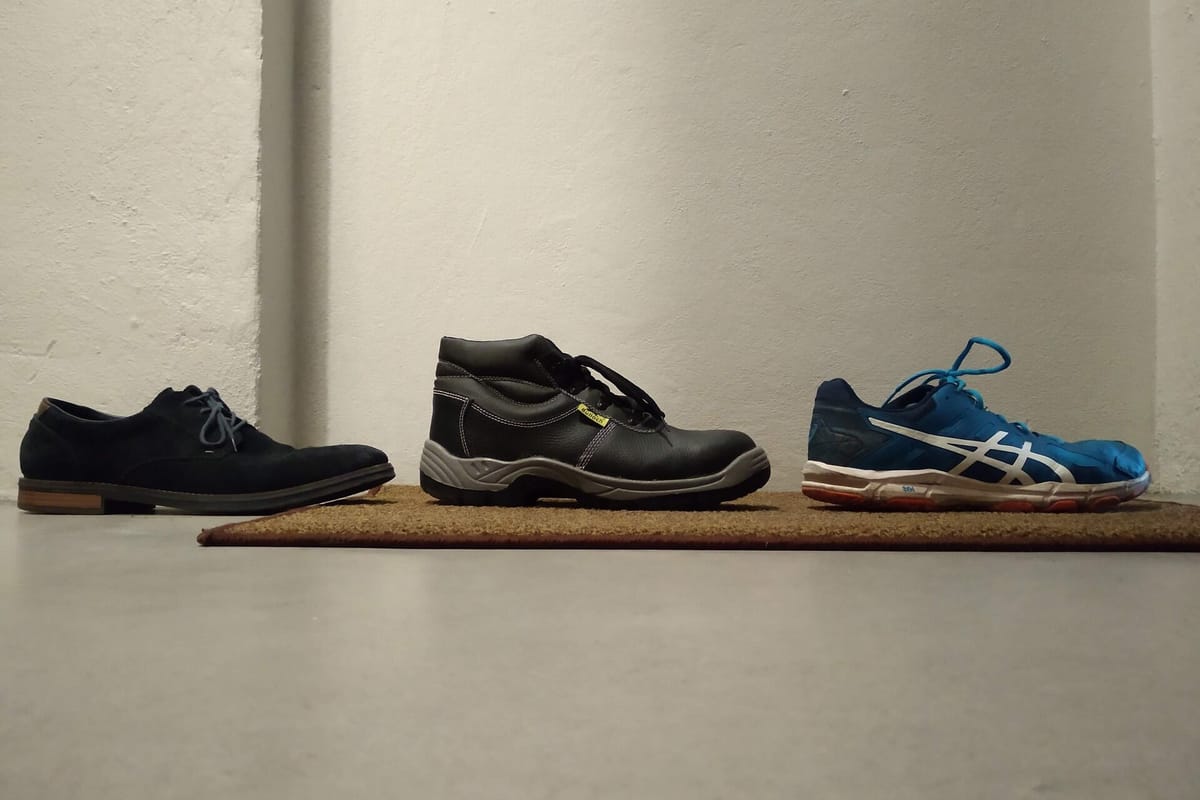
More than a third of the shoes bought on Shein, Temu and AliExpress for a European industry test broke EU limits on hazardous chemicals, and eight of the ten models sold as safety footwear failed at least one protection test. The results come from a study coordinated by the Confederação Europeia do Calçado (European Confederation of the Footwear Industry, CEC), presented in Brussels and released in Portugal on Tuesday by APICCAPS, the Portuguese association of footwear, components and leather goods manufacturers.
The shoes were bought between February and May 2026 in seven countries: the Czech Republic, France, Germany, Italy, Portugal, Spain and the United Kingdom. Specialist laboratories in several countries ran the analyses, among them the Centro Tecnológico do Calçado de Portugal (Portuguese Footwear Technology Centre, CTCP).
What the laboratories found
Of 76 pairs tested, 27 (35.5 percent) had at least one result above the legal limit for a regulated substance. The substances checked were phthalates, formaldehyde, hexavalent chromium, heavy metals, polycyclic aromatic hydrocarbons and short-chain chlorinated paraffins.
Phthalates, used to make some plastics flexible and restricted in the EU because of the risks of exposure, gave the worst result: 15 of the 50 pairs analysed for them were over the limit. One product contained a concentration of 37 percent, about 370 times the 0.1 percent ceiling set under REACH, the EU chemicals regulation. Failure rates for the other substances were 30 percent of the samples tested for hexavalent chromium, 21.4 percent for short-chain chlorinated paraffins, 10 percent for polycyclic aromatic hydrocarbons, 9.3 percent for formaldehyde and 4 percent for heavy metals.
By platform, 13 of the 27 pairs bought on Shein (48.1 percent) and 14 of the 46 bought on Temu (30.4 percent) failed. None of the three pairs from AliExpress did. The CEC stresses that the results cover only the products analysed and cannot be extrapolated to everything the platforms sell. The release carries no response from the platforms.
Safety boots that did not protect
Ten models sold as personal protective equipment went through physical and mechanical tests, and eight failed at least one requirement. The failures included poor resistance to slipping and to puncture, weak protection against impact and compression, toecaps that did not hold, and uppers badly bonded to the sole.
The study also found products sold as safety footwear with potentially misleading claims, without the CE marking or without the required documentation showing their conformity had been assessed. The CEC calls this especially serious because the boots are meant to protect workers against hazards on the job.
What the industry wants
"We cannot demand that European industry meet the strictest rules in the world and at the same time allow products that do not respect those same rules into our market," said Luís Onofre, president of APICCAPS. "We do not want protectionism, we want reciprocity."
The CEC is asking the European Commission and member states to step up market surveillance, to improve cooperation between national authorities and customs, and to hold the digital platforms that sell non-compliant products to account. The study lands as the EU discusses changes to its e-commerce rules, including new customs provisions, a proposed handling fee of two euros on small parcels from outside the EU and a review of the rules on market surveillance.
Portugal's own shoemakers, who compete with these imports at home and abroad, took 71 companies to a Milan trade week in September.