Montenegro Heads Back to São Bento Ahead of Thursday's Labour Code Debate as Ventura Calls the Two-Meeting Week Insufficient — Friday's Vote Comes Without a Locked Majority
PM Luís Montenegro returned to Parliament on Wednesday afternoon for the quarterly debate ahead of Thursday's Labour Code revision discussion and Friday's vote — with Chega leader André Ventura still telling reporters no agreement has been reached after two meetings in a single week.
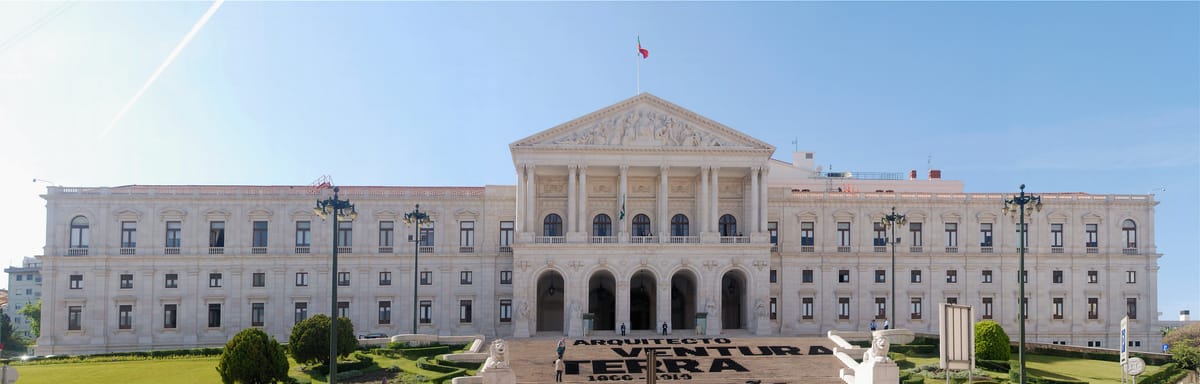
Prime Minister Luís Montenegro returned to the Assembleia da República (Assembly of the Republic) on Wednesday afternoon for the constitutionally required quarterly debate with deputies — but the political pressure on the chamber floor is being driven by what comes next: a Thursday plenary debate on the government's wholesale revision of the Código do Trabalho (Labour Code) and a scheduled vote on Friday, 19 June, for which the executive has not yet locked a working majority.
The revision package, badged inside the government as Trabalho XXI (Work 21), bundles more than 100 changes to the Labour Code and is the largest single rewrite of Portuguese employment law since the 2009 reform cycle. It touches the most politically loaded provisions in the statute book: rules around dismissals, parental-leave entitlements, the banco de horas (hours-bank) overtime regime, working-time flexibility, and the contractual structures used for short-term and platform work. A separate strand reshapes the legal architecture around collective bargaining and trade-union representation.
The arithmetic — and the missing yes
Montenegro's minority Aliança Democrática (Democratic Alliance — AD) government does not command a majority in the 230-seat Assembly, and the revision cannot pass without external support. The political reality of the last week has been a high-intensity negotiation between the prime minister and Chega leader André Ventura — the second such bilateral within seven days — aimed at securing Chega's votes or, failing that, its abstention. After Tuesday's meeting Ventura told reporters that "an understanding with the Government has not yet been reached", but that technical-team negotiations would continue "day and night" until Friday's vote.
The parliamentary left — Partido Socialista (Socialist Party — PS), Bloco de Esquerda (Left Bloc — BE), Livre and Partido Comunista Português (Portuguese Communist Party — PCP) — is uniformly opposed to the package as drafted, with the PS specifically objecting to the proposed easing of the dismissal regime and the rollback of certain parental-leave protections. Iniciativa Liberal (Liberal Initiative — IL) is broadly supportive of the deregulatory thrust but has flagged points where it would seek further amendments.
What's on the negotiating table
Three provisions have emerged as the principal sticking points in the bilateral track. The first is the simplification of dismissal procedures for justa causa (just cause) terminations, where the government's draft is regarded by the PS and the trade-union confederations as lowering the threshold for individual dismissals. The second is the recalibration of parental-leave splits between mothers and fathers, where the government has proposed greater flexibility at the cost of certain entitlements that unions argue erode hard-won protections. The third is the broader expansion of the banco de horas regime, which would allow employers more latitude to redistribute working hours across reference periods without overtime triggers.
The Confederação Geral dos Trabalhadores Portugueses (General Confederation of Portuguese Workers — CGTP) has already mobilised against the package and called workplace assemblies in advance of Thursday's debate. The União Geral de Trabalhadores (General Workers' Union — UGT), the less confrontational of the two main confederations, has taken a more pragmatic stance but still flagged red lines on dismissals and parental leave.
What to watch
The fulcrum is whether Chega delivers either a yes or a tactical abstention on Friday. If neither materialises, the government faces the prospect of pulling the package or pushing through a stripped-down version — either of which would mark the most significant legislative setback of Montenegro's second term and would re-open coalition-arithmetic questions through the second half of the legislative year.