Medway Steps Up the Palmela Rail-Freight Line to Three Trains a Week for Volkswagen Autoeuropa — Leixões and Santander Anchor the Modal-Shift Pipeline as Carlos Vasconcelos Reads the Railway Option 'Gaining Strength'
Medway runs up to three trains a week from Palmela to Leixões and Santander carrying finished Volkswagen Autoeuropa vehicles, president Carlos Vasconcelos tells Jornal de Negócios. The Rodo Cargo service marks a slow modal shift toward rail-based finished-car logistics on the Atlantic Corridor.
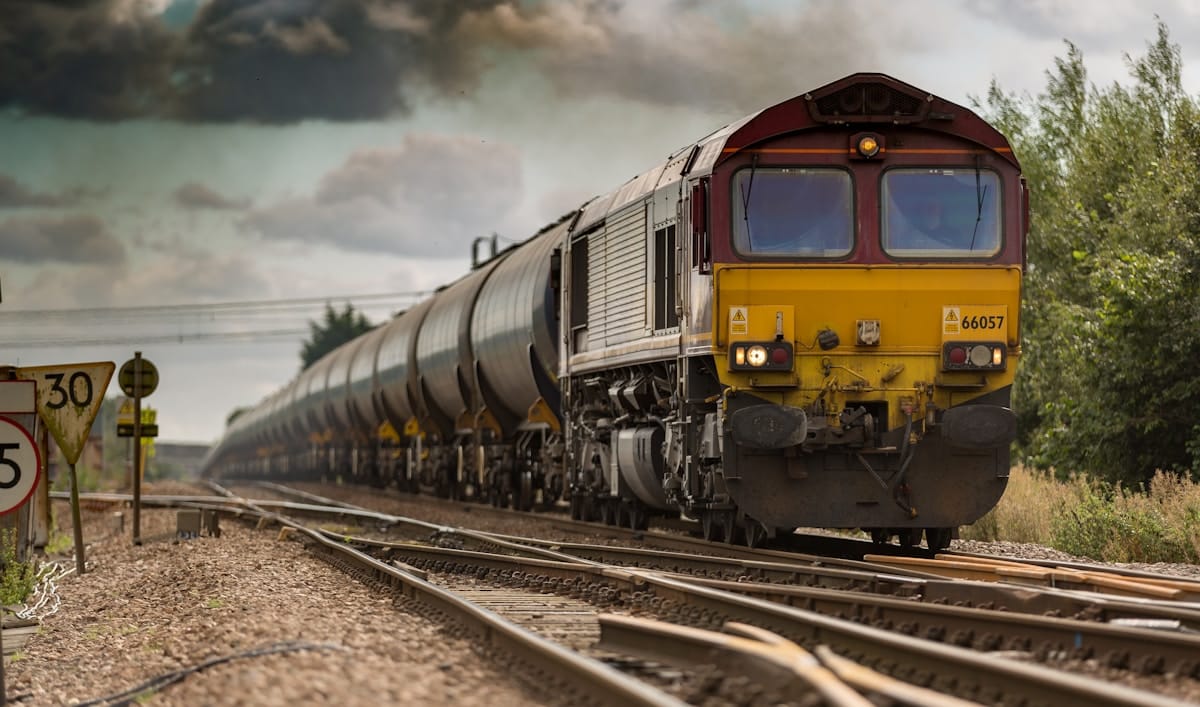
Medway — the rail-freight operator carved out of CP Carga in the 2015 privatisation and now controlled by the MSC shipping group — runs up to three trains a week out of Palmela carrying completed Volkswagen Autoeuropa vehicles north to the Port of Leixões and east to the Spanish Cantabrian port of Santander, the company's president Carlos Vasconcelos told Jornal de Negócios on Tuesday 19 May. The traction service is provided to Rodo Cargo, the rail-freight subsidiary of the Lisbon-listed Barraqueiro transport group. Vasconcelos described the railway option as 'gaining strength' with rising weekly departures, a formulation that points to the Medway commercial team building the line out from a one-or-two-train base toward a regular three-rotation week.
Autoeuropa, the Anchor Customer
The Volkswagen Autoeuropa plant, located in the Setúbal industrial belt south of Lisbon, is Portugal's single largest manufacturing facility and the country's biggest exporter by value. Autoeuropa assembles the Volkswagen T-Roc compact SUV and the SEAT-CUPRA Formentor crossover for European markets, with annual output running at around 200,000 vehicles in recent years. Finished-vehicle logistics from the Palmela gate has historically been dominated by road haulage and roll-on-roll-off ships out of the nearby Port of Setúbal. The Medway-Rodo Cargo block-train service is part of a slow shift to rail-based finished-car flows in Iberia, a pattern visible since the Renfe Mercancías-Volkswagen corridor between Pamplona and the port of Tarragona opened in the early 2020s.
Two Destinations: Leixões and Santander
The Palmela rail flow splits into two corridors. Leixões — the deep-water terminal at the mouth of the Leça river serving Porto and the northern industrial belt — handles the outbound maritime export leg to northern European markets via the Trans-European Transport Network (TEN-T) Atlantic Corridor. Santander — the bay-of-Biscay port on the Spanish north coast — handles the short-sea ro-ro link to the UK (Portsmouth) and Ireland (Cork), a routing that has been growing on Brexit-era custom-clearance optimisation. Both ports sit on the TEN-T Atlantic Corridor work list and have been subject to the European Commission co-financing envelope under the Connecting Europe Facility through 2024-2025.
Modal-Shift Context
The Portuguese government's 2030 decarbonisation roadmap targets a 23% rail share of inland freight tonne-kilometres by 2030, up from a low-teens base. Rail share has been one of the laggard indicators in the National Energy and Climate Plan submitted to Brussels, and the Autoeuropa flow — a stable, high-tonnage, long-distance origin-destination pair — is exactly the kind of traffic the Infraestruturas de Portugal industrial-corridors team has been pursuing. The CP €504 million high-speed train tender opened earlier this week, alongside the modal-shift push, sits inside the same long-cycle decarbonisation envelope.
Medway's Wider Network
Medway has been expanding into intermodal and finished-vehicle work since MSC took control in 2015. The operator runs the bulk of Portugal's container-train services connecting the deep-water container terminals at Sines, Leixões and Lisbon's Alcântara dock to the Spanish Madrid-area dry ports and the Coslada intermodal hub. Iberian flows have been bolstered by the gauge-interoperability arrangements rolled out for cross-border container traffic on the Atlantic Corridor, and the lengthening of standard-gauge sidings at Iberian intermodal terminals has progressively reduced the wagon-exchange friction at the Spanish border. Medway's traction services are also used by Takargo for niche shipper flows.
What This Means for Expats
Setúbal economic footprint: Autoeuropa is the single largest employer in the Setúbal district and one of the largest in Greater Lisbon; the Medway block-train build-out is a positive read on the plant's outbound logistics resilience as a UK-Ireland short-sea export channel matures.
Rail-freight noise: residents along the Linha do Sado (Pinhal Novo-Setúbal) and the Linha do Norte (Entroncamento-Porto Campanhã) corridors should expect additional overnight freight rotations on the Palmela-Leixões routing; the operator notification cycle to Infraestruturas de Portugal sets the timing of the night-window paths.
Carbon-disclosure angle: rail haulage cuts well-to-wheel CO₂ emissions by around 70% versus equivalent road truck transport on the Iberian network, with electrified mainlines fed predominantly from REN's renewable-heavy grid mix; the modal switch shifts the carbon footprint of the Portuguese-produced T-Roc and Formentor units sold across northern Europe.
Source: Jornal de Negócios (Tier 2 Portuguese-language media), 19 May 2026. On the rail-network side of the file, Iberia's decision to keep the broad rail gauge explains why Portugal and Spain are refusing the switch to Europe's standard gauge. On the wider question of where the national network is heading, what Portugal has told Brussels about changing the gauge of its railways sets out the Infraestruturas de Portugal study delivered to the European Commission, which prices conversion to European gauge at 6 to 6.9 billion euros and 17 to 30 years of works and concludes that it will hardly be justifiable.