Long-Stay Care Units Lose 17.61 Euros on Every Patient Every Day, a University of Porto Study Finds, About 180,000 Euros a Year Each
The State's daily price falls short of the cost of care in all three kinds of continuing-care unit, and the gap is set to widen in 2026. Providers say a promised automatic price update never arrived.
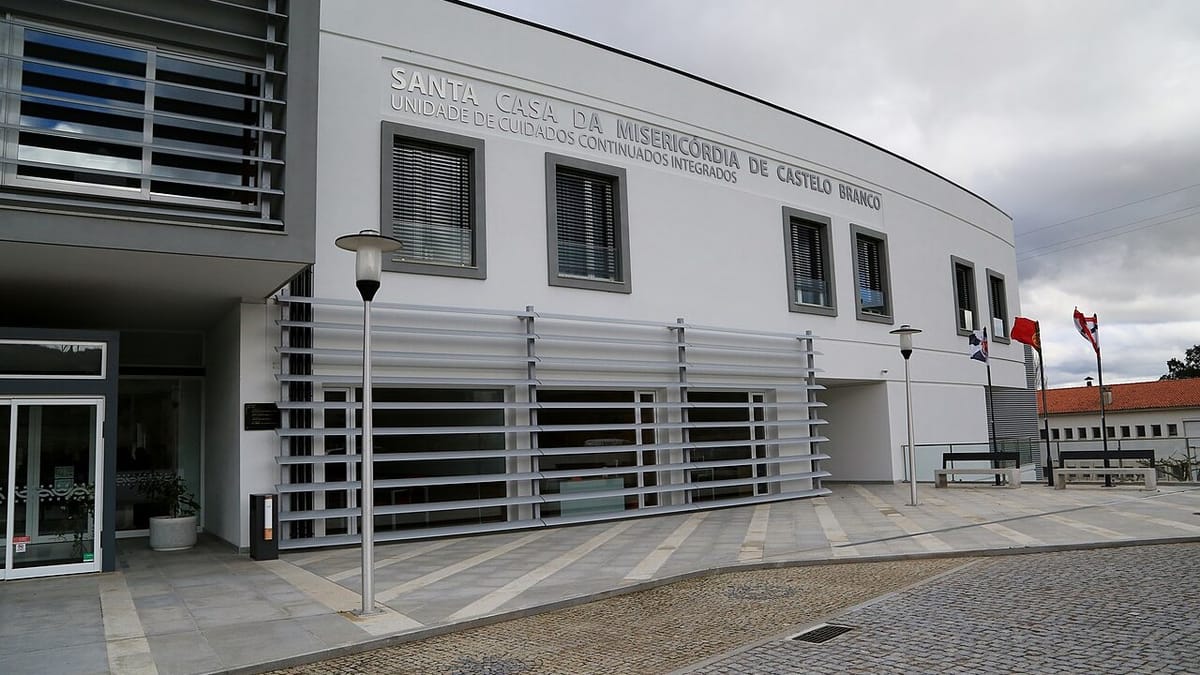
Every patient in Portugal's long-stay continuing-care units cost the institutions caring for them 17.61 euros a day more than the State paid in 2025, according to a study by the University of Porto's Faculdade de Economia (School of Economics and Management). For the average long-stay unit, that gap added up to an underfunding of about 180,000 euros over the year.
The study, reported by the Lusa news agency on Saturday, was commissioned by the Associação Nacional dos Cuidados Continuados (National Association of Continuing Care, ANCC), which represents the providers, and updates work the faculty has done since 2022. Its authors warn that the persistent shortfall puts the sustainability of the whole Rede Nacional de Cuidados Continuados Integrados (National Network of Integrated Continuing Care, RNCCI) at risk.
Three kinds of unit, three deficits
The network takes patients who no longer need a hospital bed but cannot yet go home, or cannot go home at all. It has three main types of unit, and the study found a gap between cost and public funding in all of them in 2025:
- Convalescence units (stays of up to 30 days): a deficit of 5.64 euros per patient per day.
- Medium-stay and rehabilitation units (30 to 90 days): 11.72 euros.
- Long-stay and maintenance units (more than 90 days): 17.61 euros.
The calculation covers running costs only and includes no profit margin for the providers. Projections for 2026 show the gap persisting in every scenario tested. In the toughest one, which assumes both pay rises and inflation, it reaches 5.76, 11.98 and 18.23 euros a day respectively, and the shortfall per long-stay patient could exceed 6,600 euros this year.
Costs have risen fastest in the long-stay units, which are the cheapest to run but the worst funded relative to cost. Between 2021 and 2025, the daily cost per patient there rose 31 percent, from 80.30 to 105.20 euros. In convalescence units, the most expensive type, it rose 8.1 percent, from 117 to 126.50 euros. Staff costs are the largest share of spending and the main driver of the increases.
Providers want a new funding model
The economists say the current model "persistently pays below the effective cost" of care and risks eroding the network's capacity just as an ageing population and more chronic illness push demand up.
The ANCC's president, José Bourdain, told Lusa that an automatic price update promised during the election campaign "never arrives". This year's increase matched the one given to the wider social sector, he said, but it came late, and some institutions have still not received the backdated amounts. Because the minimum wage, and other wages with it, rise every January, providers carry those costs for months before prices catch up.
The government has set up a working group to propose changes to how the network is run and funded, including the staffing tables for each type of unit. Bourdain welcomed some of its ideas but said it looks only at health staff: "No unit works without a kitchen, a laundry, cleaning staff, administrators and receptionists."
In June the network had 10,041 beds run by 382 providers: 5,212 in long-stay units, 3,283 in medium-stay units and 1,456 in convalescence units. The ANCC said last month that 264 beds had closed since January, and blamed the prices the State pays. A shortage of places has knock-on effects in hospitals, where patients who are ready to leave stay on the wards because there is nowhere to send them, as with the psychiatric patients still waiting for community places.