Lisbon's Urban Tree Canopy Reads 16.8% on the European Environment Agency Tally and 21.28% on the Câmara File — Acta Médica Portuguesa Frames the 30% Target as a 40%-of-Urban-Heat-Deaths Lever
Lisbon's urban tree-canopy coverage sits at 16.8% on the European Environment Agency tally cited in a peer-reviewed analysis published in Acta Médica Portuguesa , and at 21.28% on the Câmara Municipal de Lisboa's own internal file — both materially...
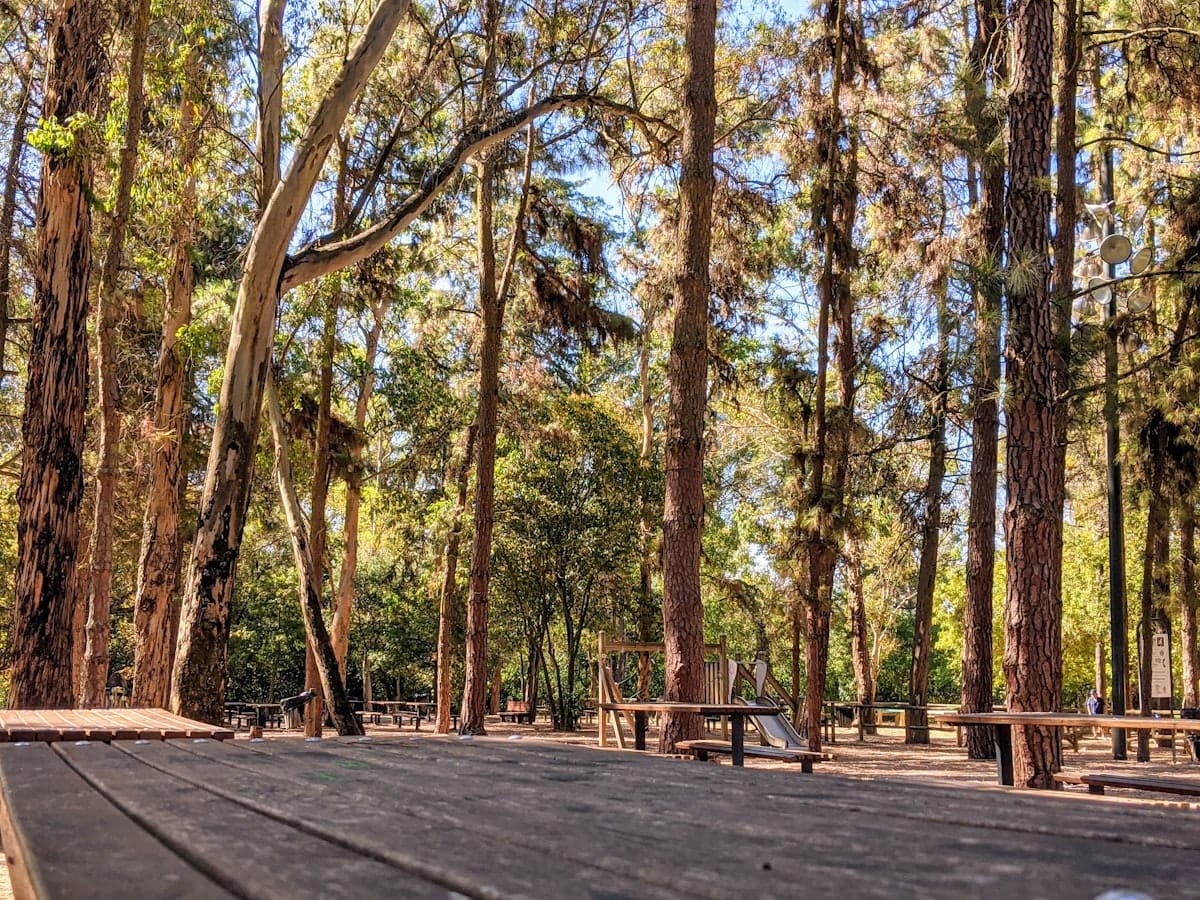
Lisbon's urban tree-canopy coverage sits at 16.8% on the European Environment Agency tally cited in a peer-reviewed analysis published in Acta Médica Portuguesa, and at 21.28% on the Câmara Municipal de Lisboa's own internal file — both materially below the 30% ideal the medical literature flags as the inflection point at which urban-heat mortality risk meaningfully bends. The 30% threshold is significant because Acta Médica Portuguesa's analysis, authored by three Portuguese physicians in medical internship, places its avoided-mortality estimate at "40% of deaths linked to urban heat," reframing tree cover from a soft amenity into a hard public-health intervention. Lisbon lags most other EU capitals on the canopy line, and the Câmara has flagged ambitions to "surpass" the 30% benchmark without yet publishing the budget, the planting cadence or the neighbourhood-level deficit map.
Two Numbers, Both Below the Threshold
The 16.8% versus 21.28% gap between the EEA tally and the Câmara file is not a contradiction but a methodological seam. The EEA reads tree canopy from harmonised satellite imagery using a common pan-EU classification standard — so the figure can be benchmarked against Madrid, Berlin, Paris and the rest of the EU capital cohort. The Câmara file uses a complementary tree-by-tree inventory tied to municipal planting and maintenance records. The two numbers are both true at their respective layers of resolution; the operational read is that Lisbon sits in a 16%–21% band that is structurally below the 30% target on either methodology, and that the closure path requires roughly 9 to 14 percentage points of additional canopy regardless of which measurement is privileged.
The Acta Médica Portuguesa Frame — Heat-Mortality as the Policy Lever
The clinical-research framing in the journal article is the lever the canopy debate has been missing. Three physicians in medical internship modelled the avoided-mortality envelope from a hypothetical 30%-canopy scenario at 40% of urban-heat-attributable deaths — a magnitude that puts tree planting on the same intervention shelf as targeted public-health programmes such as a cooling-shelter network or a heatwave emergency protocol. The authors recommend increasing citizen involvement in tree planting, framing the closure path as a hybrid of municipal procurement and resident-driven planting at the bairro level. The journal venue (the official outlet of the Ordem dos Médicos) gives the heat-mortality frame the institutional anchor it has historically lacked in the Portuguese urban-planning conversation.
The Câmara's Stated Ambition Without a Costed Plan
The Câmara Municipal de Lisboa is on the record with the ambition to "surpass" the 30% target — language that is rhetorically welcome but operationally non-binding. The published file does not yet contain: a per-bairro canopy-deficit map (so the planting effort can be prioritised on the heat-mortality gradient rather than uniformly across the city), a multi-year planting cadence (so the budget envelope can be calibrated against the seedling-survival-rate the species mix actually delivers), a budget line tied to the planting and maintenance horizon (15-to-20-year horizon on a typical urban-shade-tree maintenance contract), or a measurement protocol that aligns the Câmara file with the EEA methodology so progress can be tracked on a common axis. Without those four artefacts, the gap between the rhetorical 30% ceiling and the operational 16%–21% floor remains structurally unbridged.
The Iberian Comparator and the EU Position
Lisbon's canopy reading places the capital well below most EU peers — Berlin, Paris, Madrid, Barcelona and the Stockholm cohort already sit at or above the 30% benchmark on the EEA methodology, and the Mediterranean cities with comparable climate exposure (the Spanish capitals, the Italian capitals) generally clock between 25% and 32%. The Iberian climate frame is the relevant comparator because the heat-mortality model is climate-sensitive: a tree-cover percentage that delivers a meaningful avoided-mortality envelope in Stockholm will not necessarily deliver the same in Lisbon, where the extreme-heat-days file expanded faster across the 2015-2025 decade than in any other Iberian capital. The medical-internship authors' 30%-target read is calibrated against the Lisbon climate envelope rather than against a generic European-average heat profile.
What This Means for Expats
If you live in central Lisbon and have noticed the city getting hotter faster than the suburbs: the canopy gap is the structural mechanism. Bairros with lower tree cover absorb more pavement-radiated heat overnight, and the urban-heat-island envelope expands the difference between the IPMA city-centre temperature reading and the suburban reading. The 30%-canopy target is the technical lever; the implementation question is whether the Câmara plans the planting against the heat-mortality gradient (i.e. prioritising low-canopy bairros with elderly populations) or uniformly across the city.
If you bought a property in a low-canopy bairro for the price-per-square-metre: the implicit climate-discount is part of the reason the price was below the city average. Heat exposure has measurable hedonic-pricing effects in the Iberian property market — and as the 2027–2030 climate-adaptation literature beds into the typical mortgage underwriting model, the canopy-deficit gradient will start to flow through to the bank's loan-to-value calculations.
If you are a parent or elder-carer: the 40%-of-urban-heat-deaths model in the Acta Médica Portuguesa article maps onto the elderly cohort and the under-5 cohort most heavily. Heat-mortality is concentrated in the population segments least able to thermoregulate, and the shaded-route differential between low-canopy and high-canopy bairros runs to roughly 5–8°C on extreme-heat days — large enough to matter for school-run and afternoon-walk decisions during the summer peak.
If you want to participate in the tree-planting effort: the journal authors' recommendation around citizen involvement is the channel the Câmara is signalling. Junta de Freguesia-level planting initiatives, neighbourhood-association partnerships and registered-volunteer programmes are the standard route into the municipal planting cadence; the Câmara's Departamento de Espaços Verdes is the operational unit that coordinates the seedling-supply and the survival-tracking files.
The 30% target is now on the public record with a quantified mortality lever behind it. Whether the Câmara converts that target into a costed multi-year plan — and whether the planting cadence is calibrated against the heat-mortality gradient rather than against the political-photo opportunity — will be measured at the next municipal-budget cycle and in the canopy reading the EEA publishes on the 2027 satellite pass.