Just 3% of Portugal's Companies Are Foreign-Owned, Yet They Generate 46% of Its Exports
An Informa D&B study counts about 17,000 foreign-parented companies in Portugal: 3% of the business base, but 46% of exports, 31% of turnover and 808,000 jobs. Spain leads on company count with 3,684; American owners pay the most, at €50,000 per employee.
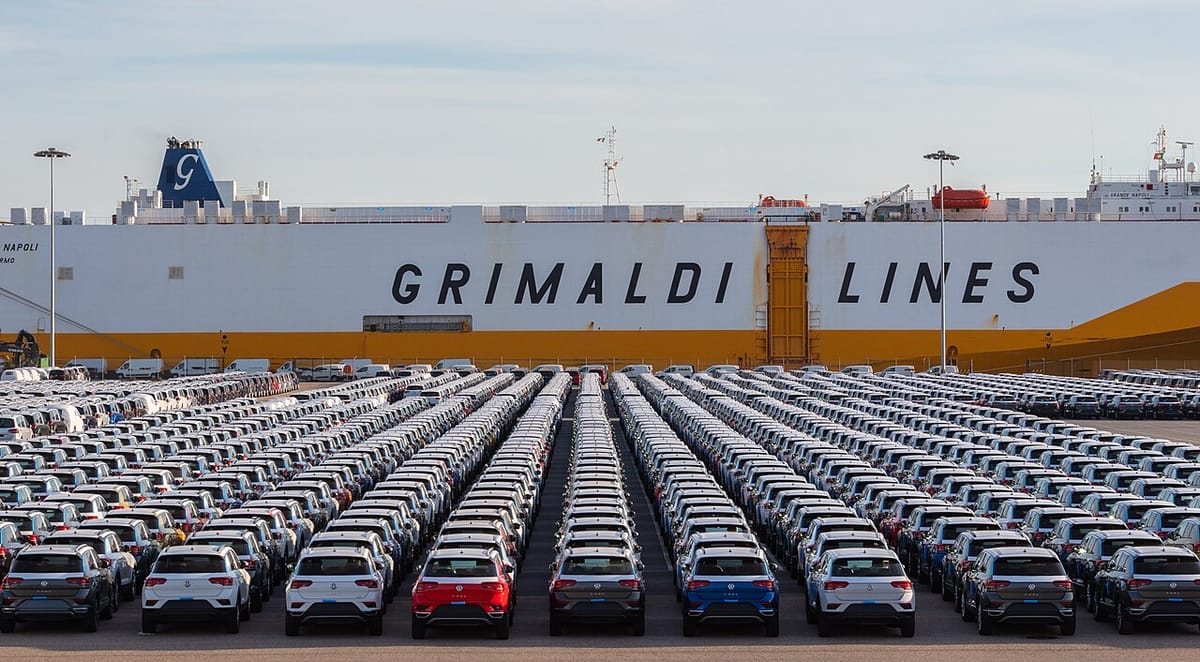
Portugal has roughly 17,000 companies whose ultimate parent sits outside the country. That is about 3% of the national business base. Those same 17,000 firms are responsible for 46% of everything Portugal sells abroad, 31% of total business turnover and 22% of private-sector employment, according to a study published on Thursday by Informa D&B, the corporate-data firm that maintains one of the largest registers of Portuguese company accounts.
Put in euros, the group turns over about €173 billion a year, exports €52 billion of goods and services, generates €44 billion of gross value added and employs 808,000 people. Some 9,721 of the 17,000 were incorporated in the past ten years, which makes foreign incorporation one of the more consistent growth stories in the Portuguese economy over the decade.
Spain first, and by a distance
Spain is the single largest source of ownership, with 3,684 companies, or 21% of the total, and roughly 2,000 of those created since 2016. Informa D&B notes that Spain and France together concentrate the largest blocks of employment and revenue, accounting for 8.1% of the jobs and 11.2% of the turnover generated by foreign-owned firms in Portugal.
The United States does not lead on company count but leads on pay. American-owned businesses report average personnel costs of about €50,000 per employee. Across all foreign-owned firms the figure is €33,000, against €23,000 at Portuguese-owned companies: a gap of €10,000 a head, or a little over 40%. That is a payroll cost rather than a take-home salary, so it bundles employer social-security contributions and benefits, but the ranking it produces is unambiguous.
More than half of the 17,000 have their registered seat in the Lisbon district, though Informa D&B flags a meaningful presence in interior regions, where a single foreign-owned plant can account for a large share of local employment.
The number that does not match
One pairing in the study deserves a second look: foreign-owned firms produce 31% of business turnover but only 15% of gross value added. Turnover measures what a company invoices; value added measures what it actually creates, after deducting bought-in goods and services. A group that bills nearly a third of the economy while adding a sixth of the value is, by definition, running a high import content. That is the signature of assembly, logistics and distribution operations, where components arrive, are transformed or repackaged and leave again. It is also a reminder that a headline export share is not the same thing as domestic wealth creation.
The rest of the profile is more flattering. Some 28% of foreign-owned companies export at all, against 8% of domestic ones; 13% are classed as technology-intensive, against 4%; and 40% sit in the high or medium-high productivity bands, against 31% of Portuguese-owned firms. That combination, more exporting and more technology, is roughly what inward investment is supposed to deliver, and it lines up with the pattern in Portugal's high-tech export accounts for the first half of the year.
What this means for foreign residents
- The best-paying employers are disproportionately foreign. If you are job-hunting in Portugal, the €33,000 versus €23,000 gap is the clearest structural signal in the data. American-parented employers sit at the top of that range, which matters more than sector choice in many cases. It also puts the recent 5.1% national wage increase in perspective: the average is being pulled by two very different populations of employer.
- Setting up here is a well-worn path. Nearly 10,000 foreign-parented companies have been incorporated in the last decade, so the professional infrastructure around it (accountants, lawyers, registries) handles this routinely, even if registry appointments themselves have grown scarce.
- Concentration is a risk as well as a strength. When 3% of firms carry 46% of exports, a single plant closure or relocation moves national statistics. Regions built around one foreign-owned employer feel that first.
- Ownership is not the same as market presence. Informa D&B counts companies with a foreign parent, which is a narrower thing than foreign investment overall. Portfolio purchases and property deals sit outside it, including the €508 million of foreign hotel investment booked in the first half.
The longer trend is one of steady diversification. American capital has been the fastest-growing bloc in recent years, up 149% since 2019, while Brazilian founders have increasingly used Portugal as their entry point to the European single market. What the Informa D&B numbers add is a sense of scale: the country's export performance now rests, to a striking degree, on companies that answer to a board somewhere else. On the Portuguese industrial-investment tape, our report on SRAM breaking ground on a third Coimbra factory, a 57.5 million euro project carrying 527 contracted jobs and 16.9 million euros of state support, due to open in the middle of 2028 sets the latest reference.