INE's April ICCHN Index Posts 5.9% YoY Lift in New-Housing Construction Costs — Labour Up 7.3%, Materials 4.7%
Statistics Portugal puts the Índice de Custos de Construção de Habitação Nova at +5.9% year-on-year in April — a 0.2 pp acceleration on March — with labour contributing 3.4 points and materials 2.5 points to the headline cost squeeze that keeps Portuguese developer margins tight.

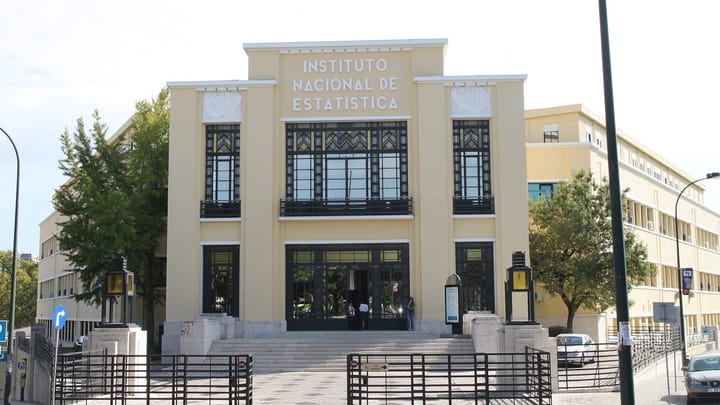
The Instituto Nacional de Estatística (INE — Statistics Portugal) released the Índice de Custos de Construção de Habitação Nova (ICCHN — New-Housing Construction Cost Index) at 11:32 on Tuesday 9 June, putting April 2026 at +5.9% year-on-year. The reading is a 0.2 percentage-point acceleration on March and the steepest annual print of 2026 to date, extending the eight-month trend of building cost pressure that has been narrowing developer margins across the construction value chain.
The composition tells the underlying story. Labour costs climbed 7.3% YoY in April, contributing 3.4 percentage points to the headline rate. Materials costs rose 4.7%, contributing 2.5 percentage points. The labour split has now exceeded the materials split for fifteen consecutive months — a clean inversion of the 2022–2023 cycle, when imported steel, cement and timber drove most of the headline burn. The current pattern reflects a chronic skilled-trades shortage that AICCOPN (Associação dos Industriais da Construção Civil e Obras Públicas — Association of Civil Construction and Public Works Industrialists) has flagged at every quarterly outlook since 2024, against a backdrop of Portuguese builders losing skilled crews to higher-paying jobsites in France, Germany and Switzerland.
The ICCHN tape lands alongside three structurally connected datapoints from the same week. Idealista's May asking-price tape, released Monday, put the national median at €3,142 per square metre — a seventh straight historic peak, with Lisbon at €6,124 and the Algarve year-on-year price growth at 10.7%. The Banco de Portugal's Boletim Económico flagged on Monday a national minimum wage now at 91% of the median wage — the highest compression ratio in the modern series, narrowing the income headroom that absorbs higher housing input costs. The IHRU's external evaluation of the Programa de Apoio ao Arrendamento (Rental Support Programme) surfaced last week noted seven years of operations without on-site inspections, with the IRS exemption on landlord rental income standing as the headline structural prop.
For the housing-supply pipeline, the persistent input-cost climb at the developer end keeps cost-of-construction estimates running ahead of the regulatory build-cost figures that anchor the Imposto Municipal sobre Imóveis (IMI — Municipal Property Tax) Valor Patrimonial Tributário formula. The 2026 cost-per-square-metre reference used in the VPT calculation was lifted to €570/m² earlier this year, but real new-build costs in mid-tier urban metros are running materially above that — closer to €1,100–€1,500 finished, depending on finish quality and zone, according to industry estimates surfacing on construction-cost trackers earlier this spring.
The April reading also exposes the wedge between the demand and supply sides of the Portuguese housing equation. The Programa de Construção a Custos Controlados — the public-financed affordable-construction track under the Plano de Recuperação e Resiliência (PRR — Recovery and Resilience Plan) — locks contractor pricing at controlled-cost ceilings that get squeezed as ICCHN climbs. Each percentage point of construction-cost inflation eats into the deliverable unit count that municipalities can hit under their PRR allocations without supplementary funding, putting the construction-cost tape directly on the housing-policy delivery clock.
The next ICCHN release lands in early July with May 2026 data, and will be the first to set against any post-ECB-decision adjustment in financing costs across the development chain.