IMO Adopts the World's Largest Emission Control Area Covering Mainland Portugal — North-East Atlantic ECA Caps Bunker Sulphur at 0.10% From 2028 With Tier III NOx for New Builds, Madeira and Açores Left Out
MEPC 84 adopted the North-East Atlantic ECA on 1 May 2026, covering mainland Portugal, Spain, France, the UK, Ireland, Iceland, the Faroes and Greenland. The 0.10% sulphur bunker cap and Tier III NOx for new builds bite from 2028 — Madeira and the Açores are explicitly excluded.
The International Maritime Organization's Marine Environment Protection Committee closed its 84th session in London on 1 May 2026 by formally adopting the North-East Atlantic Emission Control Area — a zone the IMO and its NGO observers describe as the largest ECA ever designated. The amendment to MARPOL Annex VI enters into force on 1 September 2027, with the operative emission limits taking effect twelve months later, on 1 September 2028.
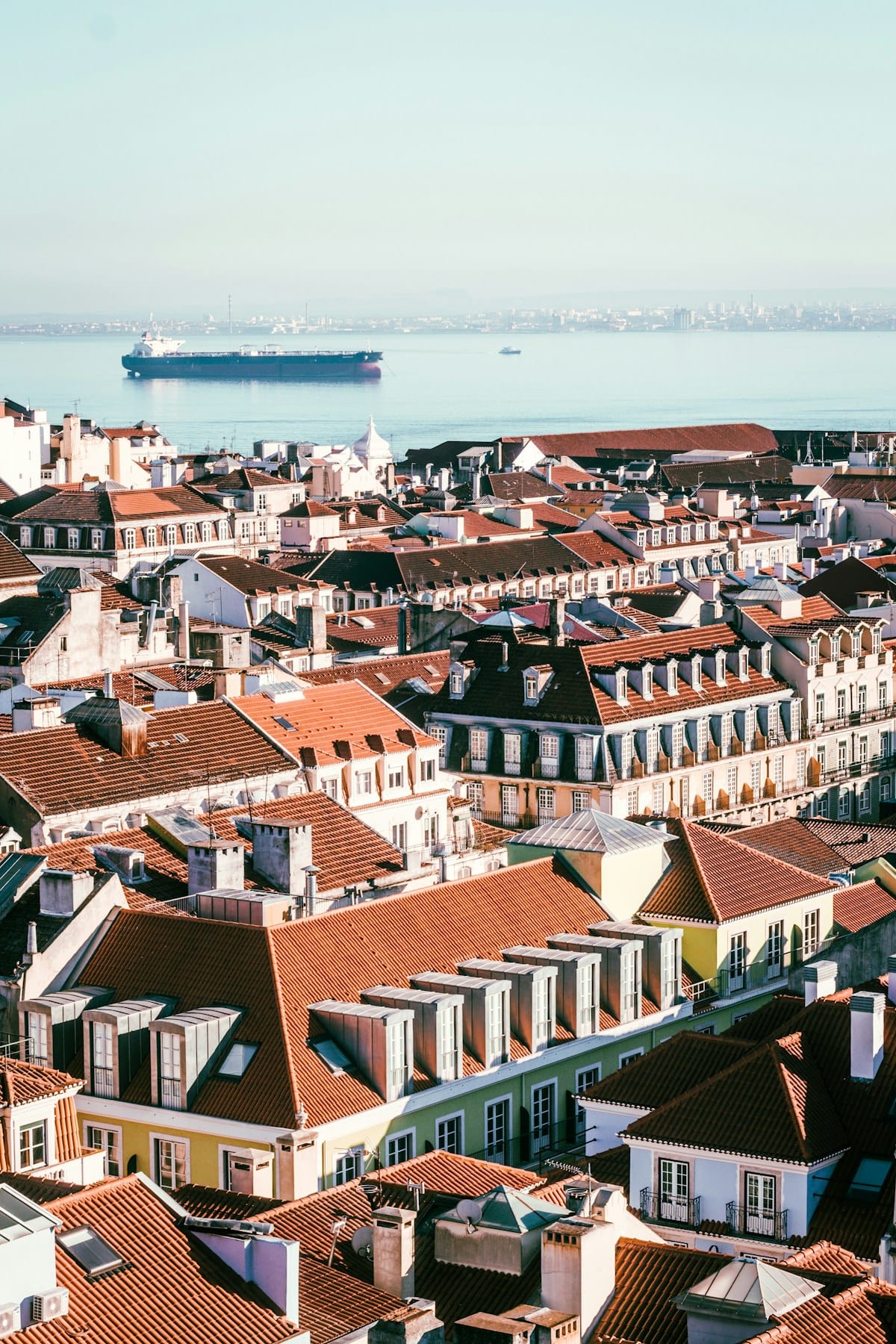
The new ECA covers the exclusive economic zones and territorial seas — extending up to 200 nautical miles from baselines — of mainland Portugal, Spain, France, the United Kingdom and Ireland, alongside Iceland, the Faroe Islands and Greenland. The Atlantic-facing waters off Lisboa, Sines, Leixões, Setúbal and Aveiro now sit, for the first time, inside an emission-controlled zone alongside the existing Baltic, North Sea, North American and US Caribbean ECAs.
What Actually Changes — and When
- 0.10% sulphur cap on bunker fuel from 1 September 2028 — five times stricter than the global IMO 2020 cap of 0.50%. Vessels transiting the zone will need to switch to ultra-low-sulphur fuel oil (ULSFO), marine gas oil (MGO), LNG, methanol, or run on equivalent scrubber technology with closed-loop discharge.
- Tier III NOx for new builds — engines on ships contracted on or after 1 January 2027, keel-laid on or after 1 July 2027, or delivered on or after 1 January 2031, must meet IMO Tier III nitrogen-oxide standards inside the zone, roughly an 80% reduction from Tier I.
- Tighter particulate-matter regime bundled with the SOx step-down, since lower-sulphur fuels emit far less PM2.5.
According to figures circulated by sponsoring states and reported by Portuguese newsroom Público, the zone is projected to cut sulphur-oxide emissions by 82%, fine particulate matter (PM2.5) by 64% and black carbon by 36% by 2030, prevent 2,900 to 4,300 premature deaths by 2050, and generate up to €29 billion in healthcare savings across a coastal population exceeding 190 million people. Russia filed a formal reservation at MEPC 84, signalling its fleet will not initially apply the new limits.
Why This Matters for Portuguese Ports — Sines First
Portugal sits inside the new zone in two ways that bunker-fuel buyers and refiners will feel quickly. First, every container, ro-ro and tanker transit through Lisbon's Tagus channel and the Sines deepwater port — Portugal's largest by tonnage and one of the few European ports able to take fully laden post-Panamax container ships — will fall under the 0.10% cap from 2028. Second, the bunkering market that surrounds those ports will need to switch product mix.
That has direct implications for the Galp refinery at Sines, which produces both high-sulphur fuel oil (HSFO) and low-sulphur marine fuel grades. The Sines refinery's product slate has already been reshaped by IMO 2020 and by Galp's broader pivot toward biofuels and renewables ahead of the planned Moeve merger. The 2028 step-down inside the ECA reinforces the same direction: less HSFO, more 0.10% sulphur ULSFO and MGO, and a longer-dated push toward methanol-ready and ammonia-ready bunkering at Iberian ports.
The cost picture is the second-order effect. ULSFO and MGO trade at a meaningful premium over HSFO with scrubbers; bunker brokers in Rotterdam and Amsterdam currently quote spreads of $80–$150 per tonne depending on grade, and short-sea operators on the Iberian-North-European rotation will absorb that gap from late 2028 onward, partially passing it through to freight rates. Cabotage operators serving the Iberian peninsula and the Bay of Biscay will be the most exposed because their entire route sits inside the zone — unlike a deep-sea container line whose ECA mileage is a small fraction of total voyage.
The Madeira and Açores Carve-Out
The MEPC 84 adoption text is explicit that the EEZs adjacent to Madeira, the Açores and the Canary Islands are not included. Two Portuguese archipelagos — both regiões autónomas with their own ports and maritime traffic — therefore remain outside the regulatory perimeter even though Lisbon's mainland waters do not.
Portuguese environmental NGO Zero, which lobbied through the European Sustainable Shipping Forum for a wider designation, is now explicitly campaigning for a follow-on amendment that pulls Madeira and the Açores into the zone. The technical case is straightforward: the Açores sit on a major mid-Atlantic shipping lane between Northern Europe and the Americas, and Funchal's container and cruise traffic have rebounded sharply since 2024. The political case will be harder — extending an ECA requires sponsoring-state filings and an MEPC vote, and the carve-out reflects Madeira's reliance on cargo and cruise trade where any fuel-cost differential lands directly on island consumer prices.
For now the asymmetry creates a legally peculiar map: a vessel sailing from Leixões to Funchal will leave the ECA when it crosses out of the mainland EEZ and re-enter regulated waters only on the return leg into the Tagus.
How the Adoption Sits Alongside Brussels' Other Maritime Files
MEPC 84 is not the only maritime-emission item moving on Portugal this spring. The European Commission is already pressing the country at the Court of Justice for failing to transpose the RED III renewables directive, including its renewable-fuels-of-non-biological-origin (RFNBO) maritime sub-targets that nudge ports toward shore-power, methanol and green-hydrogen bunkering. The EU's FuelEU Maritime regulation already prices well-to-wake greenhouse-gas intensity for ships calling at EU ports. The IMO ECA stacks on top: it does not duplicate the EU instruments but tightens local air-quality standards in waters that the EU files do not directly govern.
That convergence is consequential for Portugal's broader decarbonisation arithmetic. Domestic shipping is a small share of national emissions, but coastal air quality — particularly downwind of Sines and Lisbon during prevailing north-westerlies — is meaningfully affected by bunker SOx and PM. The 2028 step-down lands squarely on the same vintage as the 2030 milestones in the national biomethane and renewable-gas roadmap, and on the renewable-power milestones reflected in the recent renewables-share record.
What This Means for Expats
- Air quality near coastal cities should improve from late 2028. Households in Lisbon, Setúbal and the Sines hinterland that have flagged port-related particulate exposure are the first beneficiaries. The 64% PM2.5 reduction projected by sponsoring states is delivered inside the zone — that is, exactly where coastal residents live.
- Cruise and ferry costs will edge up from 2028. Operators serving Lisbon, Funchal and Ponta Delgada will absorb a higher fuel bill on the leg inside the ECA. Expect modest fare increases on Iberian-Northern-Europe ferry rotations and on cruise itineraries that touch Lisbon during the 2029 season onwards.
- Imports through Sines and Leixões will see a small uplift. Ocean-freight rates on European short-sea routes pick up the bunker-premium differential, partly passed through to landed cost. The effect is small per container but visible on bulk commodities.
- Madeira and Açores residents are not directly affected — yet. The carve-out means islander fuel pricing, ferry economics and cruise calls remain under the existing global IMO 2020 0.50% cap. Watch Zero's lobbying campaign and any sponsoring-state filing — extension, if it comes, would be a multi-year MEPC process with its own consultation window.
- New-build vessels in the Portuguese register face Tier III NOx from 2027–2031. Owners contracting after 1 January 2027 will need to specify Tier III engines or selective-catalytic-reduction systems. The cost of marinas and small-vessel ownership for foreign residents who own a registered yacht is unlikely to move materially in the short term — Tier III applies to engine power thresholds well above pleasure-craft sizing.
The next IMO milestone is MEPC 85 in the autumn, where the entry-into-force gazettal text and any technical clarifications will be finalised. Portuguese-flagged shipping and the bunker market at Sines will use the eighteen-month grace window between September 2027 and September 2028 to retrofit, switch product slates and price contracts. The carve-out around Madeira and the Açores is now the live political question — and the one Lisbon's environmental ministry will face from Brussels and from Zero through the second half of 2026. On the rail-freight / modal-shift rail, our 20 May Medway read — the MSC-controlled rail-freight operator runs up to three block trains a week out of Palmela carrying completed Volkswagen Autoeuropa T-Roc and SEAT-CUPRA Formentor units to Leixões and Santander, with Carlos Vasconcelos reading the railway option as 'gaining strength' inside the Portuguese 23% rail-share target on inland freight tonne-kilometres by 2030 sets the latest reference. On the green-cities, sustainability and climate-adaptation side of the file, Porto's shortlisting for the 2028 European Green Capital sets the latest reference. On the ports, shipping and trade-logistics side of the file, the Port of Sines' record container month sets the latest reference.