Copernicus and the WMO Confirm Europe Is Warming Twice as Fast as the Global Average — State of Climate Report Names Portugal a 'Microcosm of the Continent', 1.034 Million Hectares Burned and 95% of Europe Above the 1991-2020 Average in 2025
Copernicus and the WMO confirm Europe is warming twice as fast as the global average, with 2025 logging 1.034 million hectares burned and 95% of the continent above the 1991-2020 mean. Portugal posted a fifth-hottest year and six heat waves, including a 16-day August stretch.
The Copernicus Climate Change Service and the World Meteorological Organization published their 'State of the Climate in Europe 2025' on Wednesday, 29 April, and the headline number is the one Portuguese climate scientists have been pointing at for half a decade: since the 1980s the European continent has warmed at roughly twice the global rate, and now sits at about 2.5°C above pre-industrial levels against a global figure of 1.4°C. The report — built off 45 datasets and signed by more than 100 scientists — identifies Portugal explicitly as a 'microcosm of the continent: vulnerable, exposed to extremes, and forced to manage an increasingly unpredictable territory'.
Inside Portugal the 2025 numbers line up almost exactly with the IPMA's own annual bulletin published on 7 January 2026. The mainland average air temperature came in at 16.47°C, an anomaly of +0.81°C against the 1991-2020 reference period, ranking 2025 the fifth-hottest year since records began in 1931 and tying it with 1997, 2022, 2023 and 2024 in the top cluster. Six full heat-wave events were logged — one in spring, three in summer, two in autumn — including a 16-day stretch from 29 July to 17 August in the interior north and centre that was the longest comparable event since the IPMA started measuring duration and frequency in 1941. Mora hit 46.6°C in June, a municipal record.
The continental ledger
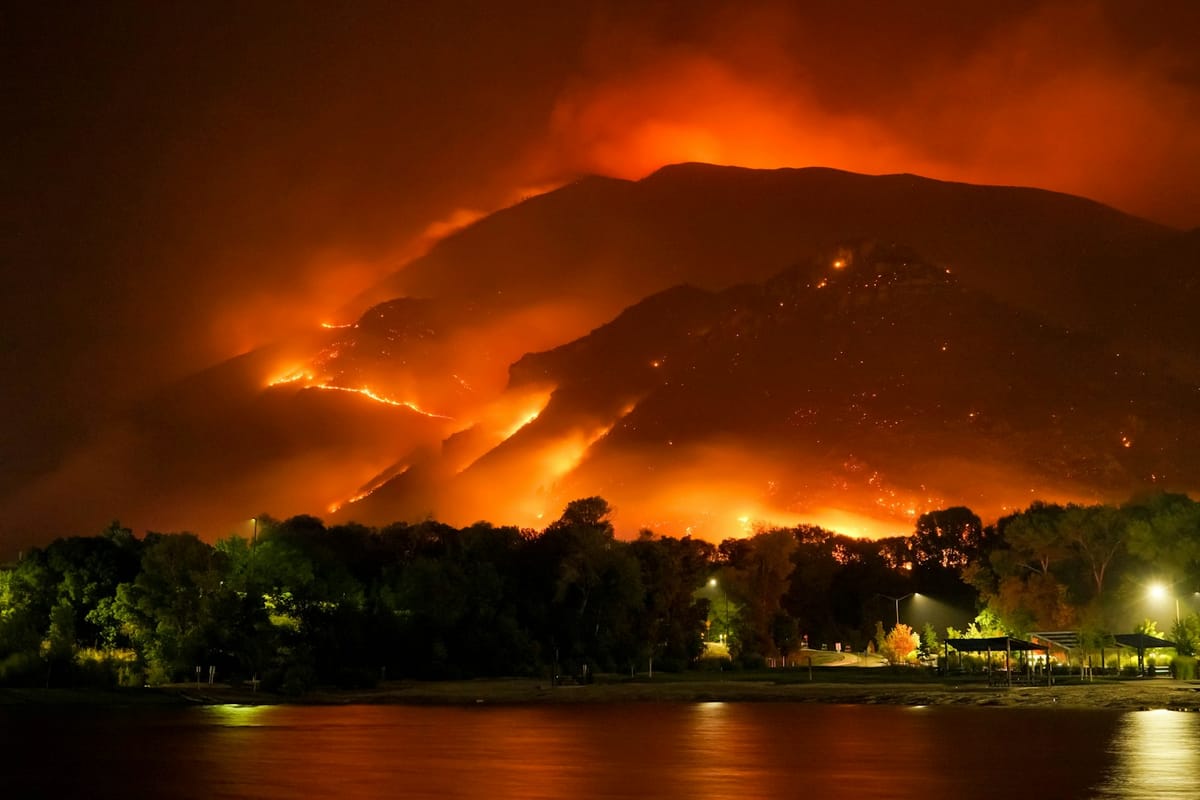
Across Europe the Copernicus-WMO ledger reads as follows. Ninety-five per cent of the continent ran above the 1991-2020 mean for annual temperatures. Total area burned by wildfire reached 1.034 million hectares — the highest figure since the European Forest Fire Information System began producing harmonised statistics. Eighty-six per cent of European ocean area experienced marine heatwaves at some point during the year. Seventy per cent of monitored rivers ran below their long-term average flow. And inside the Arctic Circle a three-week heatwave pushed temperatures above 30°C in parts of Norway, Sweden and Finland, peaking at 34.9°C in Frosta, on the Trondheim fjord — a Nordic record that has no precedent in the modern instrumental era.
What the report says about Portugal specifically
The Iberian Peninsula features in three of the report's chapter framings: extreme summer heat (with Spain and Portugal both posting individual stations above 46°C), water stress (Portugal had a meteorological drought running across 60-99% of the mainland between July and October 2025), and what the authors call 'compound events' — periods where extreme heat, dry vegetation and ignition risk overlap. The Pedrógão Grande fire complex of 2017 still sits as the deadliest reference point, and the report flags that the conditions that produced it now appear in roughly four out of every five summers in central Portugal.
For Portugal-watchers the politically relevant detail is that the State of Climate report comes out two days into the cabinet's PTRR rollout, where €660 million has been earmarked for forest-management measures. Copernicus and the WMO do not score national policy, but the report's framing — that Mediterranean Europe is now in a 'compound risk' regime — is the technical underpinning the government has been pointing to when it argues the forest spending is no longer optional. The next milestone in the European climate-data calendar is the Copernicus summer outlook in late May, which will produce the first official forecast for the 2026 fire season.