Government Drafts a Sixth Lei dos Estrangeiros Amendment to Stand Up Centros de Triagem Ahead of the 12 June EU Deadline — Ministério da Presidência Pencils a Fresh Residence-Authorisation Tightening
Portugal's screening centres are physically ready inside existing airport detention infrastructure, but the legal framework for the EU Screening Regulation that enters into force on 12 June 2026 is not — pushing António Leitão Amaro into a sixth foreigners-law rewrite in two years.

The Portuguese government is preparing its sixth amendment to the Lei dos Estrangeiros in two years, Público confirmed on Saturday 6 June 2026, this time to plug a hard EU deadline: the bloc's Regulamento Triagem (Screening Regulation), part of the Pacto em matéria de Migração e Asilo (Migration and Asylum Pact), enters into force on Thursday 12 June 2026 across all 27 Member States, including Portugal. The amendment is being shepherded by the Ministério da Presidência under António Leitão Amaro, the same desk that ran the previous five rewrites covering CPLP visas, the creation of UNEF (the PSP's foreigners and borders unit), the residence-authorisation overhaul, the family-reunification tightening and the regime de retorno for irregular migrants.
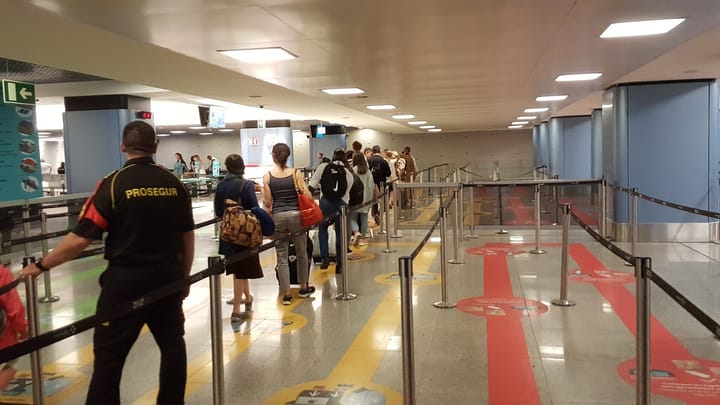
The physical infrastructure is already in place. Three centros de triagem (screening centres) have been provisioned by the government, co-located with the existing detention facilities at Portugal's main airports, where the bulk of irregular arrivals are intercepted, Público reported on 1 June. What is missing is the procedural law that gives Portuguese authorities — most prominently AIMA (Agency for Integration, Migrations and Asylum) and the Polícia de Segurança Pública's UNEF — the legal grip to run the screening procedure under EU rules: identity verification, vulnerability and health checks, security and fingerprint registration against Eurodac, and the rapid decision to channel an arriving non-EU national into either a regular asylum track, the new border procedure for manifestly unfounded claims, or direct return.
Brussels' design imposes hard clocks. The Screening Regulation caps the screening at seven days at the external border and provides reinforced safeguards for vulnerable persons, in particular unaccompanied minors. Decisions taken at the screening stage are not appealable in their own right, but feed directly into the subsequent border or asylum procedure where appeal rights attach. The Pacto's accompanying Border Procedure Regulation and Asylum Procedure Regulation tighten the timelines that follow.
The Portuguese amendment, when it lands on the Conselho de Ministros table, is also expected to carry a fresh restrição to residence-authorisation rules — the policy lever the XXV Governo Constitucional has pulled in every previous round since taking office. Specifics on the new restriction have not been disclosed in the available reporting; ministerial language has signalled a tightening rather than a loosening posture in line with the government's broader immigration tone.
The timing is politically taut. Portugal carries an open Comissão Europeia infringement risk if the legal framework is not in place by the 12 June switch-on date. The cabinet has the option of using a decreto-lei to move faster than the Assembleia da República's full legislative procedure — Leitão Amaro has used this route before — but parliamentary opposition has already signalled it will challenge any attempt to bypass the chamber on substantive immigration rule changes, especially after the May STM walkout at AIMA and the 37% Q1 jump in immigrant-process complaints to the Provedor de Justiça.
For arriving non-EU nationals, the practical change at Lisbon, Porto and Faro airport border posts will be sequencing: those without valid travel documents, refused entry, or signalling an asylum intent will be funnelled into the co-located triagem facility rather than the older arrangement of immediate detention or release pending interview. The substantive rights — to legal counsel, to an asylum claim, to challenge return — remain anchored in the broader Pacto framework, but the choke point shifts to the seven-day screening window the new regulation imposes.