Registering with the SNS in Portugal
Researched and written with AI tools from official sources. How we make our guides
How to get your SNS health user number and join your local health centre: who qualifies, what to bring, the steps, and how to get a family doctor.
Last verified: October 2026.
Who this is for
- You live in Portugal and want to join the public health service and a health centre.
- You hold an EU registration certificate, or a non-EU residence permit, or have applied for one.
- You have a health user number but no family doctor, or your record is marked incomplete.
Not for you if: you want to know how public and private care fit together, what care costs, or how insurance works. Read Healthcare in Portugal instead.
Updated October 2026. New register rules from March 2026 mean that if you have a family doctor but no contact with the SNS for more than five years, you lose the doctor. You keep your registration.
Your SNS health user number (número de utente) identifies you in Portugal's National Health Service, the Serviço Nacional de Saúde (SNS). Every legal resident can have one. Registration is free. You do it in person at the health centre for your address, and if you have no number yet, you get it at the same visit. Bring your passport, residence document, tax number (NIF), and proof of address. The number alone is not enough: your record must be complete for the SNS to pay for your care.
What the health user number is
The health user number is a national number in the National Register of Users (Registo Nacional de Utentes, RNU). The central health administration, ACSS, runs the register. Each person gets one number for life. It is never replaced, even if you move to the other end of the country.
Portuguese citizens get the number automatically. It is printed on the back of the citizen card (Cartão de Cidadão). Foreign residents get it the first time they go to a public health centre or hospital. You can also ask for it at any public health unit, even when you do not need care.
Having a number is not the same as having cover. Your record has a status, and only one status means the SNS pays.
| Status | What it means |
|---|---|
| Updated record (registo atualizado) | All required data is on file. The SNS pays for your care. You can enrol at a health centre and get a family doctor. |
| Record in progress (registo em curso) | Some data is missing, and you have 180 days to add it. You cannot enrol at a health centre yet. You, or a third party such as an insurer, pay for care. |
| Incomplete record (registo incompleto) | Data is still missing after 180 days. You keep the number, but you still pay for care and cannot enrol. |
Your goal on the first visit is an updated record.
Who can register
You can register, and have the SNS pay for your care, if you are:
- A Portuguese citizen.
- An EU, EEA, or Swiss citizen living in Portugal.
- A non-EU citizen with a residence permit of any type: work, study, D7, D8, family reunification, CPLP, and so on.
- An applicant for, or holder of, international protection.
If you are under 18, you need neither a residence permit nor a NIF for an updated record. After you turn 18, you have 90 days to provide them.
If you have no residence permit, you can still get a number. But until your record holds a valid residence permit, the SNS does not pay for most care. If you have lived in Portugal for more than 90 days, a certificate from your parish council (junta de freguesia) gives you urgent and vital care at SNS expense. Bring it each time you need care. Maternity and child health, family planning, and vaccinations are free whatever your status.
If you are a visitor, you do not register. EU visitors use the European Health Insurance Card (EHIC) for medically necessary care.
What to bring
For an updated record, the register needs your name, sex, date of birth, nationality, country of birth, identity document, NIF, full Portuguese address, and a valid residence permit. In practice, bring:
- Identity document. Passport or EU national ID card, or your residence card.
- NIF (tax number). Any document from the tax office showing it. Without a NIF you cannot get an updated record, unless you are under 18. See Getting a NIF (Tax Number) in Portugal.
- Residence document. Your AIMA residence card or permit. If you are an EU citizen, your EU registration certificate from the town hall (Câmara Municipal). If your AIMA application is still pending, bring the AIMA receipt.
- Proof of address. A rental contract, a loan-for-use agreement (contrato de comodato), or a water, electricity, or gas bill. The address decides which health centre is yours.
- Proof of any health benefits. For example, an exemption from user fees or an S1 form.
- Your children's vaccination records, if you are registering children.
Bring your social security number (NISS) if you have one, but it is not on the list of required data.
If you are an EU citizen in your first three months, you will not have the town hall certificate yet. You register for it within 30 days after your first three months. Until then you may get a record in progress. See Registering as an EU Citizen Resident in Portugal (CRUE).
If you need a parish certificate (atestado de residência), ask your junta de freguesia. Each parish sets its own rules and fee. Some ask for witnesses who live in the parish.
Where to go
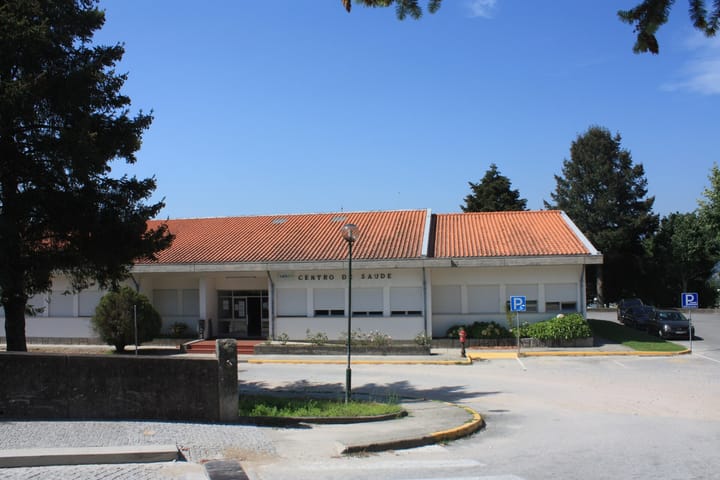
You register at the health centre (centro de saúde) that covers your address. Each area's health centres and hospital are run together by a local health unit (Unidade Local de Saúde, or ULS). Inside a health centre, care is given by family health teams, called USF or UCSP. Your address decides your team; you do not choose.
To find your health centre:
- Call SNS 24 on 808 24 24 24 and give your address.
- Check the list of health providers on the ACSS website.
- Ask at your junta de freguesia.
Opening hours vary. Check your centre's hours before you go, and go early in the day.
Step by step at the health centre
- Go to reception during opening hours. Say "Gostaria de me inscrever no centro de saúde" (I would like to register at the health centre).
- Hand over your documents. Staff enter your data in the national register.
- Give a Portuguese mobile number and an email address. The SNS uses them to reach you and to send prescriptions.
- Get your health user number. If you did not have one, it is issued at this visit. Ask for it in writing.
- Ask to be enrolled at the centre (inscrição nos cuidados de saúde primários). This is what puts you in line for a family doctor.
- Ask whether a family doctor is available. If yes, you are told the doctor's name and team. If not, you go on the waiting list.
- Check your record status before you leave. It should be an updated record. If something is missing, ask exactly what, and note the 180-day deadline.
Registration is free. No official time for the visit is published; allow for a queue.
If your record is in progress
If data is still missing, the SNS contacts you around 90 days later. After 180 days the record becomes incomplete. Do not let it drift. Take the missing document to your health centre as soon as you have it. An incomplete record means you pay for care and cannot be enrolled.
Three numbers in one visit
If you are a foreign resident, you can ask for your NIF, NISS, and health user number in a single request. The service is run by AIMA, the immigration agency, and it is free.
Who can use it. You must have a Portuguese address and no Portuguese citizen card. You must also meet one of these conditions:
- You have asked for, or already hold, a residence permit.
- You are a citizen of an EU country.
- You have applied for international protection, or hold refugee or international protection status.
Where. At 12 Espaços Cidadão (citizen service desks). They include Braga, two in Porto, several in the Lisbon area including Loures, Setúbal, Lagos, and Olhão. The Porto desk in the Cedofeita parish union is by appointment only, on 226 052 740 from 09:00 to 17:00. The service will spread to more desks; check gov.pt for the current list.
What to bring:
- Your passport, or EU national ID card.
- Your residence card or permit, or the AIMA receipt for your pending application, or your town hall certificate if you are an EU citizen.
- Proof of address, if your residence document does not show your current address.
How it works. At the desk you sign in with a Chave Móvel Digital (the digital mobile key) linked to your passport. If you do not have one, you can create it there with your passport. AIMA reviews the request and emails you the decision. You can then see your numbers in the gov.pt personal area or app.
What it does not do. It gives you the number, but it does not enrol you at a health centre. You still go to your centre with your documents (step 5 above).
Special cases
Pensioners and workers with an S1 form
If another EU country, the EEA, Switzerland, or the UK pays your state pension, that country usually pays for your Portuguese healthcare. The same applies to workers posted here for up to two years. Before you move, ask the paying country for an S1 form.
- Register the S1 at a Segurança Social office.
- Take the S1, your passport, residence document, and NIF to your health centre and register as above.
If you start working in Portugal, you normally move to Portuguese cover instead.
CPLP citizens
If you hold a CPLP residence permit, or any other AIMA residence document, you register on the same terms as other non-EU residents.
Long-term conditions and prescriptions
Register first, then book an appointment. Bring your prescriptions from home, recent test results, and any scans. The doctor can issue Portuguese prescriptions and refer you to SNS specialists.
Living somewhere else for a while
If you live temporarily in another part of Portugal, you can enrol at a health centre there for up to 12 months. Your enrolment at home is paused, not lost.
Getting a family doctor
This is the most common disappointment, so plan for it. In June 2026, about 1.67 million of the 10.8 million people enrolled at health centres had no family doctor. Your region matters most:
| Region | Share with a family doctor (June 2026) |
|---|---|
| North | 97.6% |
| Centre | 90.5% |
| Alentejo | 81.3% |
| Algarve | 78.2% |
| Lisbon and Tagus Valley | 70.0% |
Who gets priority. When a place opens, priority goes to pregnant women, people with several chronic conditions or a chronic disease, and households with children under 12. You need an updated record and contact with the SNS in the last five years.
While you wait, you can still:
- See the doctor on duty at your health centre for same-day problems.
- See a nurse and get vaccinations.
- Call SNS 24 on 808 24 24 24 for advice, an appointment, or a referral. If SNS 24 sends you to a hospital emergency department, you pay no fee.
The five-year rule. If you have a family doctor but have had no contact with any SNS service for more than five years, you lose the doctor. You keep your updated record and your enrolment. You cannot be given a new doctor while you are classed as a non-user. In a household with children under 18, at least one adult keeps the family doctor.
What it costs
Registration, enrolment, and the family doctor list are all free. Most SNS care is free too: family doctor appointments, tests your doctor orders, hospital specialist appointments on a referral, surgery, and hospital stays.
The main charge left is an emergency department visit you make without a referral from SNS 24, your health centre, or the INEM ambulance service, when you are not admitted.
| Hospital emergency without a referral | Fee |
|---|---|
| Basic emergency service (urgência básica) | €14 |
| Medical and surgical emergency (urgência médico-cirúrgica) | €16 |
| Large central hospital (urgência polivalente) | €18 |
| Most you pay for one visit, including tests | €40 |
Some people pay nothing at all. They include pregnant women, everyone under 18, people with a disability rating of 60% or more, and blood and organ donors. Transplant patients, firefighters, asylum seekers and refugees, and low-income households are exempt too.
A household counts as low income in 2026 if its average monthly income per person is €805.70 or less. The low-income exemption is not automatic. Ask for it in your SNS 24 personal area or at your health centre. After that, it is checked again every year by 30 September using your tax data.
Medicines are separate. The State pays part of the price of most prescribed medicines, and you pay the rest at the pharmacy. Healthcare in Portugal explains the levels.
Common problems and fixes
"Come back when you have the residence card." If your AIMA application is pending, show the receipt. If the centre still cannot give you an updated record, ask for a record in progress and the list of what is missing. Children under 18 need no residence document at all.
No NIF yet. Get it first, at a tax office (Serviço de Finanças), or through the three-numbers service above.
The desk will not accept your proof of address. Ask which documents it accepts and bring one of those. A parish certificate can help if no bill or lease is in your name yet.
Language. Staff at smaller centres may speak little English. Bring a Portuguese speaker to the first visit, or write down the key phrases from the steps above.
Nobody called about missing data. Do not wait. Take the document to your health centre. The 180-day clock runs regardless.
You moved. Go to the health centre for your new address with proof of it and ask to transfer ("Gostaria de transferir a minha inscrição"). You can only be enrolled at one centre at a time. See Changing Your Registered Address in Portugal.
Complaints. Speak to the head of the health centre first. Every provider must have a complaints book (livro de reclamações). You can also complain to the health regulator, the Entidade Reguladora da Saúde (ERS), by letter or online. Its helpline is 309 309 309.
After you are registered
- Keep the number safe with your NIF and NISS. Pharmacies and doctors will ask for it.
- Set up the SNS 24 app. It shows your prescriptions, test results, and vaccinations, and you can book health centre appointments in it.
- Book a first appointment in your first couple of months. It opens your clinical file.
- Keep your phone number and address up to date at the health centre. An old phone number is how records end up incomplete.
- Ask for a Portuguese EHIC once you are registered with both the SNS and Segurança Social. It is free and you apply in Segurança Social Direta.
This guide is general information, not medical or legal advice. Rules change; check the official source before you act.
Sources
This guide is written from official sources and, where relevant, organisations' own websites.
- gov.pt, registering at a health centre (updated 12 May 2026): https://www.gov.pt/servicos/inscrever-se-no-centro-de-saude (who can register, documents, number issued at registration, SNS 24 to find your centre, link to the ACSS provider list), checked 1 October 2026
- gov.pt, getting an SNS user number (updated 12 May 2026): https://www.gov.pt/pt/servicos/pedir-o-numero-de-utente-do-sns (number on first visit or on request, data needed for SNS cover), checked 1 October 2026
- gov.pt, NIF, NISS, and health number for foreigners (updated 17 September 2026): https://www.gov.pt/servicos/pedir-os-numeros-de-identificacao-fiscal-seguranca-social-e-nacional-de-utente-saude-para-estrangeiros (eligibility, documents, proof of address list, 12 Espaços Cidadão, Porto appointment line, Chave Móvel Digital, free, email decision), checked 1 October 2026
- gov.pt, viewing your identification numbers: https://www.gov.pt/servicos/consultar-os-numeros-de-identificacao-fiscal-seguranca-social-e-nacional-de-utente-saude-para-estrangeiros (where to see the numbers afterwards), checked 1 October 2026
- ACSS, National Register of Users (page updated 30 September 2026): https://www.acss.min-saude.pt/2025/07/16/registo-nacional-de-utentes/ (record statuses and who pays, required data, minors, 90 and 180 days, five-year rule, household exception, priority groups; legal basis Despacho n.º 14830/2024, Despacho n.º 40/2025, and Despacho n.º 3118/2026 of 11 March), checked 1 October 2026
- ACSS, simpler access to the health user number for foreign citizens (17 March 2025): https://www.acss.min-saude.pt/2025/03/17/acss-reforca-simplificacao-no-acesso-ao-numero-nacional-de-utente-para-cidadaos-estrangeiros/ (three-numbers service, residence permit requested or obtained), checked 1 October 2026
- ERS, access of foreign citizens to the SNS: https://www.ers.pt/pt/utentes/perguntas-frequentes/faq/acesso-de-cidadaos-estrangeiros-a-prestacao-de-cuidados-de-saude-no-servico-nacional-de-saude/ (who can use the SNS, minors and 90 days after 18, parish certificate route, care free for all), checked 1 October 2026
- gov.pt, Migrantes: cuidados de saúde em Portugal (updated 23 June 2026): https://www.gov.pt/guias/migrantes-cuidados-de-saude-em-portugal (data for SNS cover, temporary enrolment up to 12 months, SNS 24, EHIC for residents), checked 2 October 2026
- SNS Transparency Portal, users enrolled in primary care (June 2026 data): https://transparencia.sns.gov.pt/explore/dataset/utentes-inscritos-em-cuidados-de-saude-primarios/ (1.67 million without a family doctor; regional shares), checked 1 October 2026
- ERS, user fees: https://www.ers.pt/pt/utentes/perguntas-frequentes/faq/taxas-moderadoras-do-sns/ (only unreferred emergency visits charged, exempt groups, €805.70), checked 1 October 2026
- ULS Santa Maria, user fees FAQ (July 2024): https://www.ulssm.min-saude.pt/wp-content/uploads/2025/05/2024.07.23_FAQ_taxas_moderadoras.pdf (€14, €16, €18, €40 cap, referral and admission rules), checked 1 October 2026
- gov.pt, low-income exemption from user fees: https://www.gov.pt/servicos/pedir-a-isencao-de-taxas-moderadoras-por-insuficiencia-economica (€805.70 in 2026, how to apply, yearly review by 30 September), checked 1 October 2026
- gov.pt, European Health Insurance Card: https://www.gov.pt/servicos/requerer-o-cartao-europeu-de-seguro-de-doenca-da-seguranca-social (apply in Segurança Social Direta, free), checked 1 October 2026
- AIMA, EU citizen registration certificate: https://aima.gov.pt/pt/nacionais-ue-e-familiares/nacionais-ue/certificado-de-registo-para-nacionais-ue (town hall, within 30 days after three months), carried from verified guide W2A-01, checked 30 September 2026
- Your Europe, health cover when living abroad: https://europa.eu/youreurope/citizens/health/when-living-abroad/health-insurance-cover/index_en.htm (S1 for pensioners and posted workers, cover moves when you work), checked 1 October 2026
- UK Government, healthcare in Portugal: https://www.gov.uk/guidance/healthcare-in-portugal (UK S1 registered at Segurança Social, then at the health centre with passport, residence certificate, and NIF), checked 1 October 2026
- ERS, complaints: https://www.ers.pt/pt/utentes/reclamacoes/ (complaints book, ERS form, 309 309 309), checked 1 October 2026
Last verified October 2026. Rules and fees change; check the official source before acting.