Faial Joins the Azores Infrasound Network That Detected the Tonga Eruption 16,000 Kilometres Away
Since 22 July, an infrasound station on Faial has joined sensors on Graciosa, São Jorge and Terceira, feeding the IVAR–CIVISA network that in 2022 detected the Hunga Tonga eruption more than 16,000 kilometres away.
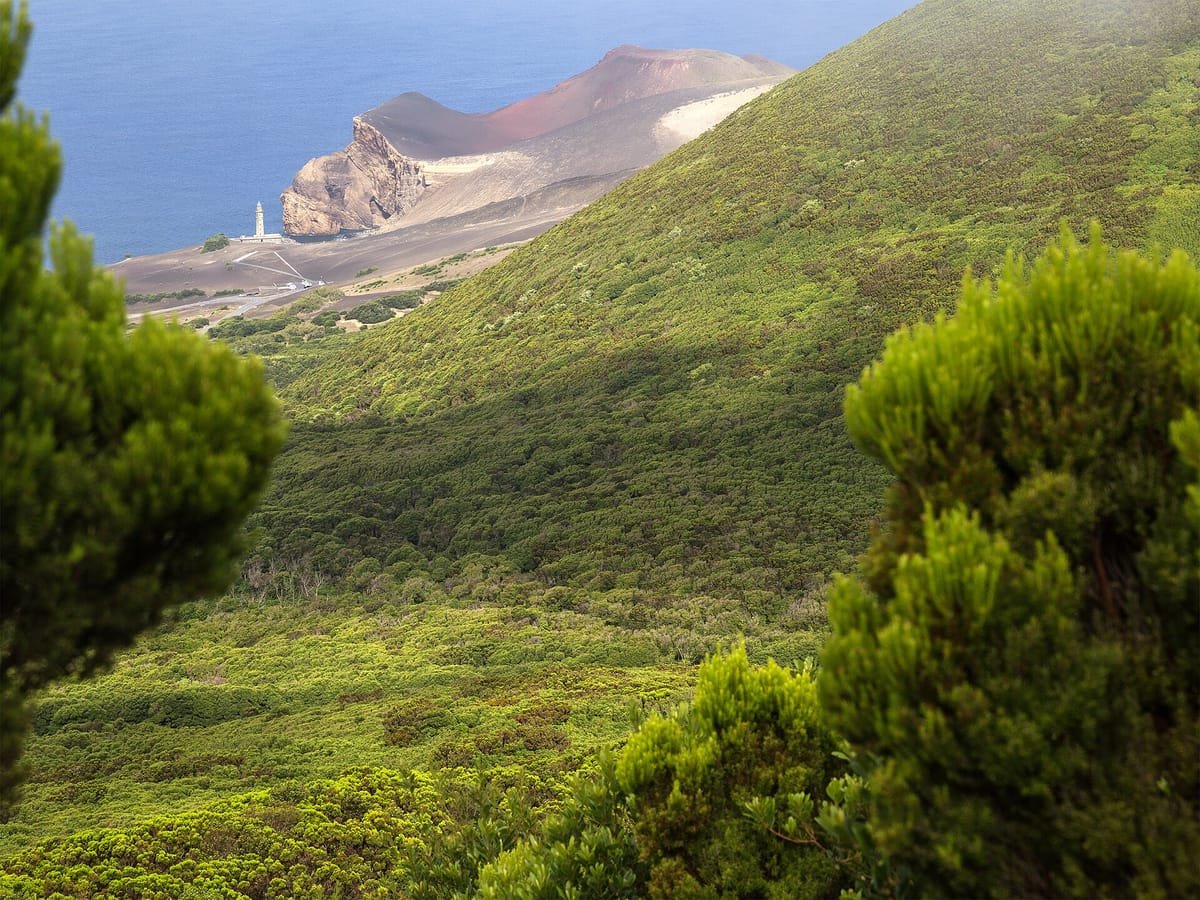
The island of Faial has joined a network of listening posts that can hear things no human ear can — from a distant volcano to a nuclear test on the other side of the planet. Since 22 July, an infrasound station on Faial has been feeding data into the Azores' monitoring grid, adding a fourth node to sensors already running on Graciosa, São Jorge and Terceira.
The network is operated jointly by IVAR (Instituto de Investigação em Vulcanologia e Avaliação de Riscos — the Institute for Research in Volcanology and Risk Assessment) at the University of the Azores and CIVISA (Centro de Informação e Vigilância Sismovulcânica dos Açores — the Azores Seismic and Volcanic Surveillance and Information Centre), the bodies responsible for watching one of Europe's most geologically restless regions.
Listening below the threshold of hearing
Infrasound is sound at frequencies below about 20 hertz — too low for people to detect, but able to travel across oceans and continents. The sensors pick up the faint pressure waves thrown off by "extreme atmospheric events," as the researchers put it, of both natural and human origin: explosive volcanic eruptions, large earthquakes, meteors, severe storms and the churn where powerful winds meet the sea, as well as nuclear and military detonations, rocket launches, heavy industry and air traffic.
The equipment on Faial was designed and built in-house by IVAR and CIVISA researchers, financed through the PRR (Plano de Recuperação e Resiliência — the Recovery and Resilience Plan), Portugal's slice of the EU's post-pandemic recovery fund. It transmits its readings in real time to IVAR's headquarters in Ponta Delgada, on São Miguel, where they are cross-checked against the other stations.
Proof it works
The network's reach is not theoretical. In January 2022, the station on Graciosa registered the colossal eruption of the Hunga Tonga-Hunga Ha'apai volcano in the South Pacific — a signal that had travelled more than 16,000 kilometres to reach the Azores. That same year, during the seismic-volcanic crisis that shook São Jorge and forced hundreds of residents to prepare for a possible evacuation, the Graciosa and São Jorge sensors captured the acoustic signatures of even low-magnitude earthquakes.
For an archipelago that sits astride the boundary of three tectonic plates, that sensitivity matters. Combined with the region's seismographs and ground-deformation instruments, infrasound gives scientists another independent way to distinguish, quickly, between a passing storm and the first tremors of an awakening volcano. Adding Faial — home to the Capelinhos volcano that erupted spectacularly in 1957 and 1958 — tightens the net over a part of the Atlantic where the ground has a long history of moving without much warning.