CP Pilots Elon Musk's Starlink to Plug Mobile-Signal Gaps on Its Alfa Pendular Trains
CP is testing Elon Musk's Starlink satellite internet on one Alfa Pendular trainset to fix patchy on-board Wi-Fi where the mobile network is weak. The €30,000 pilot runs four to six months, and the government has defended picking Starlink for its technological maturity.
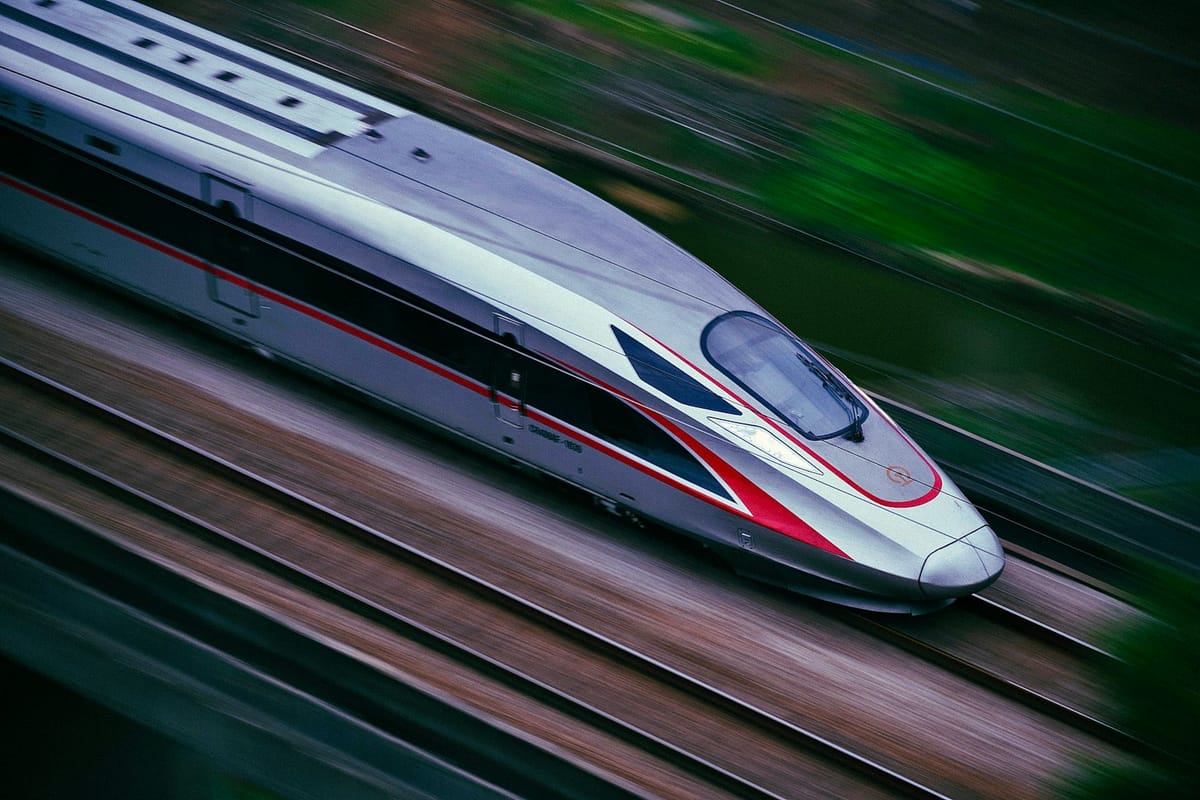
CP (Comboios de Portugal, the state railway operator) has begun testing Starlink, the satellite-internet network owned by Elon Musk's SpaceX, aboard one of its Alfa Pendular tilting trains, in a bid to fix the patchy on-board Wi-Fi that has long frustrated passengers on the Lisbon–Porto fast line. The trial was first reported in late June and defended by the government on 27 June.
The arrangement is modest in scale. CP has fitted satellite communication antennas to a single trainset, where the technology works as a complement to the existing on-board system, which relies on Portugal's national mobile networks. When the train runs through stretches of line where the terrestrial signal is weak — long a complaint on the route through the interior — the satellite link is meant to pick up the slack and keep passengers connected.
Early data are described as encouraging. In the opening tests, the Starlink connection accounted for roughly 19 percent of all data traffic recorded on board, a share CP says was concentrated precisely on the sections where the mobile network performs worst. The operator has framed the first results as "positive," while cautioning that the pilot is still running.
The test is budgeted at about €30,000, a figure that covers installation, equipment, data and monitoring, and is expected to last between four and six months — a window CP considers long enough to judge whether the satellite solution meaningfully improves the customer experience. Depending on the outcome, the company says it will weigh a wider rollout across its services.
Choosing Starlink was not without political sensitivity, given Musk's increasingly contested public profile, and the government was pressed to explain the decision. On 27 June it justified the selection by pointing to the "technological maturity" of Musk's company and its readiness to be tested in a railway setting, arguing that no comparable system was as available for trial. Officials stressed that this is an experiment rather than a permanent contract, and that the antennas supplement — rather than replace — the conventional network.
For travellers, the practical promise is straightforward: fewer dead zones on a journey that many take precisely because they want to work or stream along the way. The Alfa Pendular is Portugal's flagship intercity service, and reliable connectivity has become one of the features passengers most often ask for, especially business travellers who treat the train as a rolling office.
Whether the experiment scales will depend on the numbers that come back over the next several months. If the satellite link keeps closing coverage gaps at an acceptable cost, CP could extend it to more trains; if not, the operator will have spent a comparatively small sum to learn that the answer lies elsewhere. Either way, the pilot is a sign that Portugal's railway is looking skyward to solve a problem that the ground-based network has not.