Building, Renovating, and Restoring Property in Portugal: What Expats Need to Know in 2026
The dream is irresistible: buy a crumbling stone farmhouse in the Alentejo or a derelict townhouse in Porto's centre, restore it beautifully, and live in your own piece of Portuguese heritage. Thousands of expats pursue this dream every year. Some...

The dream is irresistible: buy a crumbling stone farmhouse in the Alentejo or a derelict townhouse in Porto's centre, restore it beautifully, and live in your own piece of Portuguese heritage. Thousands of expats pursue this dream every year. Some emerge delighted with their new home. Others emerge years behind schedule, tens of thousands over budget, and significantly more sceptical about the word amanhã.
The difference between the two outcomes almost always comes down to preparation.
The Permit System (Licenciamento)
Portugal's building permit system is administered by the local Câmara Municipal (municipality). The process varies significantly between municipalities — what takes 3 months in one town may take 12 in another. This inconsistency is one of the system's most frustrating features.
Types of Work and Required Permits
- Comunicação Prévia (prior notification): For minor works that don't alter structure, facade, or building footprint. Interior renovations, painting, replacing windows like-for-like, kitchen/bathroom refits without moving walls. Submit notification and wait 30 days — if no objection, proceed. Cost: €50-€200 in fees
- Licença de Obras (building licence): Required for structural alterations, extensions, changes to external appearance, new construction. Requires architectural project submitted by a licensed architect, structural engineering project if applicable, and speciality projects (electrical, plumbing, thermal, acoustic). Timeline: officially 45-90 days; in practice, 3-12 months. Cost: varies by municipality and project size, typically €500-€3,000 in municipal fees
- Licença de Construção (construction licence): For new builds on empty land. Requires all of the above plus proof of land classification (urban vs rural — you cannot build on rural-classified land without reclassification, which is a separate lengthy process)
- Autorização de Utilização (habitation licence): Required before you can legally inhabit a completed or renovated property. Final inspection by the Câmara confirms the work matches the approved project. This is where problems surface if you've deviated from plans
Heritage and Conservation Areas
Properties in historic centres, conservation zones (zonas de proteção), or near classified monuments face additional requirements:
- DGPC (Direcção-Geral do Património Cultural) approval for properties near national monuments
- IGESPAR review for classified buildings
- Restrictions on materials, colours, window styles, and facade alterations
- These reviews add 2-6 months to the permit timeline
Porto's Ribeira, Lisbon's Alfama, Évora's centre, and most old-town areas of smaller cities fall under heritage restrictions. The restrictions preserve Portugal's extraordinary architectural heritage but require patience and specialist architectural knowledge.
Finding and Managing Contractors
This is where most expat renovation stories become cautionary tales. The Portuguese construction sector has specific dynamics:
The Contractor Landscape
- Large construction companies (construtoras): Reliable, insured, more expensive. For major projects (new builds, complete rehabilitations). Expect proper contracts, warranties, and adherence to safety regulations
- Small builders (pedreiros/construtores civis): The backbone of Portuguese renovation. Quality ranges from excellent craftsmen to unreliable operators. Personal recommendations are essential
- Specialist trades (canalizadores, electricistas, pintores): Plumbers, electricians, painters typically work independently or in small teams. Finding reliable specialists is often the hardest part
Essential Rules
- Get multiple quotes (orçamentos): Minimum three. Compare not just price but detail — a vague one-page quote is a red flag. Good contractors provide itemised breakdowns
- Written contracts: Always. Include scope of work, materials specifications, timeline with milestones, payment schedule tied to completed stages (never pay everything upfront), penalty clauses for delays (rare in Portugal, but worth trying), and warranty terms
- Payment structure: Industry standard is 20-30% upfront for materials, then staged payments at 25%, 50%, 75%, and 100% completion milestones. Never pay more than the value of completed work
- Check registration: Legitimate contractors should be registered with the IMPIC (Instituto dos Mercados Públicos, do Imobiliário e da Construção). Check Alvará status online. Unregistered builders are common for small works but offer no regulatory protection
- Site visits: Visit the contractor's current or recent projects. Talk to previous clients. This single step prevents most disasters
Common Pitfalls
- Timeline optimism: Whatever timeline a Portuguese contractor gives you, add 50-100%. This isn't dishonesty — it's a cultural norm around time estimation combined with the reality that many builders manage multiple projects simultaneously. A "3-month renovation" typically takes 5-7 months
- Scope creep: Old Portuguese buildings reveal surprises when you open walls. Budget 20-30% contingency for unforeseen issues (rotten beams, compromised foundations, outdated electrical, asbestos in older buildings)
- Communication: If you don't speak Portuguese, hire a project manager or bilingual architect. Miscommunication is the second-biggest source of renovation problems after budget overruns
- The disappearing builder: Contractors who vanish mid-project to start another job is a genuine risk. Payment tied to milestones is your protection. Never pay ahead of completed work
Costs: What to Expect
Renovation Costs Per Square Metre (2026)
- Light renovation (cosmetic — painting, flooring, bathroom/kitchen refresh): €300-€600/m²
- Medium renovation (new electrical/plumbing, reconfigured layout, new windows): €600-€1,000/m²
- Full rehabilitation (structural work, new roof, complete gut renovation): €1,000-€1,800/m²
- Ruin restoration (rebuilding from walls only): €1,200-€2,500/m²
- New build (turnkey, standard quality): €1,200-€2,000/m²
- New build (premium/architect-designed): €2,000-€3,500/m²
These are broad ranges. Lisbon and the Algarve sit at the upper end; Alentejo and interior regions at the lower end. Material costs have stabilised after the post-COVID surge but remain 15-20% higher than 2019 levels.
Professional Fees
- Architect: 5-12% of construction cost for full project (design + permit submission + construction oversight). Minimum fees for smaller projects: €3,000-€8,000
- Structural engineer: €1,500-€5,000 depending on complexity
- Project manager: 5-10% of construction cost, or €500-€1,500/month. Highly recommended for expats who aren't on-site daily
- Topographical survey: €500-€1,500
- Energy certificate (SCE): €200-€350. Mandatory for sale or rental
Tax Benefits for Renovation
Portugal incentivises property rehabilitation through several mechanisms:
- Reduced IVA (VAT): Renovation work on residential properties qualifies for 6% VAT (instead of 23%) on labour costs. Materials are charged at the standard rate. This distinction matters — ensure your contractor separates labour and materials on invoices
- IRS deductions: 30% of renovation costs are deductible against rental income for properties in designated urban rehabilitation areas (ARUs). Check if your property falls within an ARU at your Câmara
- IMT exemption: Properties in ARUs that undergo certified rehabilitation may be exempt from IMT (property transfer tax) on purchase
- IMI exemption: Rehabilitated properties in ARUs can receive IMI (property tax) exemption for 3-5 years
- Reduced capital gains tax: Rehabilitation costs can be added to the acquisition cost for capital gains calculation, reducing tax liability on future sale
Sustainability and Energy Efficiency
Portugal's building regulations increasingly mandate energy efficiency:
- RECS/REH regulations: Renovations exceeding 25% of the building envelope must comply with current thermal efficiency standards (insulation, window U-values, ventilation)
- Solar panels: Portugal averages 2,800 hours of sunshine annually. Solar thermal for hot water is mandatory in new builds and major renovations. Photovoltaic installation costs have dropped to €1,000-€1,500 per kWp installed
- Heat pumps: Replacing gas boilers with air-source heat pumps is increasingly common and supported by incentive programmes (Fundo Ambiental subsidies of 40-65% of equipment costs, capped at €2,500)
Buying a Ruin: Special Considerations
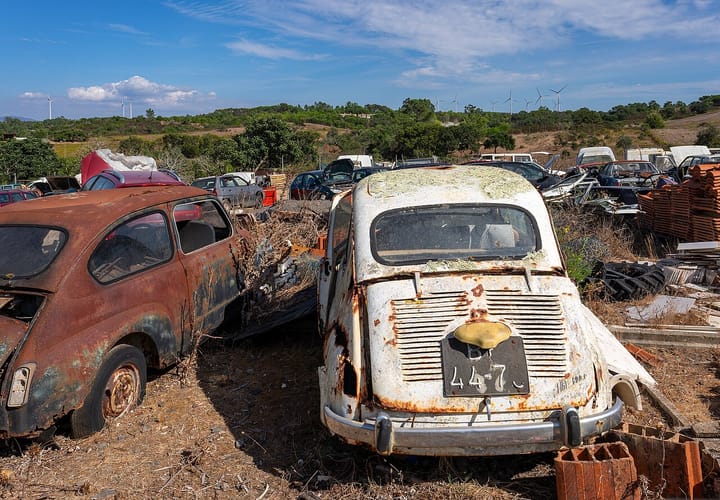
Portugal has hundreds of thousands of abandoned rural properties — stone farmhouses, quintas, and village houses that have been empty for decades as rural populations migrated to cities or emigrated. These ruins are often stunningly affordable (€10,000-€80,000 for a structure with walls and perhaps a partial roof).
Before buying, verify:
- Land classification: Is the land classified as urban (solo urbano) in the PDM (municipal master plan)? Rural land cannot be built on. Reclassification is possible but takes years and isn't guaranteed
- Caderneta predial: The property's tax registration at Finanças. Confirm the registered area matches reality. Many old properties have discrepancies
- Certidão predial: Land registry certificate from the Conservatória do Registo Predial. Confirms ownership, boundaries, and any encumbrances
- Access: Does the property have legal road access? Some rural properties are accessed via dirt tracks that cross neighbouring land — establish servitude rights before purchase
- Utilities: Water, electricity, and sewerage availability. Rural properties may need wells (poço/furo), septic systems (fossa séptica), and electricity connections that can cost €2,000-€10,000 to install
- Structural survey: Hire a structural engineer before purchase. Foundation problems, compromised load-bearing walls, or asbestos (common in roofing materials from the 1960s-80s) can make an apparently cheap ruin economically unviable
What This Means for Expats
Property renovation in Portugal rewards patience, planning, and local knowledge. The most successful expat renovation projects share common traits: they started with a realistic budget (including 25-30% contingency), hired a good architect before buying the property, used personal recommendations for contractors, maintained constant communication, and accepted that Portuguese timelines operate on a different rhythm.
The least successful projects share their own patterns: buying on emotion without due diligence, starting work without permits (the Câmara can and does issue stop-work orders and demolition requirements), paying contractors ahead of work, and assuming that what costs X in their home country will cost X in Portugal.
Portugal is one of the most rewarding countries in Europe to renovate property. The architecture is extraordinary, the craftsmanship tradition is deep, and the tax incentives are genuinely generous. But it demands respect for the process — and a willingness to learn the Portuguese meaning of amanhã (tomorrow, eventually, perhaps).